
Stop Failing at 0.1μm! How the TENCAN Double Planetary Ball Mill Multiplies Nano Grinding Efficiency
Double Planetary Ball Mill: High-Energy Grinding for Difficult and Advanced Materials
For laboratories working with hard ceramics, battery powders, alloys, minerals, magnetic materials or other difficult samples, a standard planetary ball mill may already provide strong grinding energy. However, some projects need a more intensive milling environment, especially when the goal is faster fine grinding, stronger mechanical alloying, or more aggressive size reduction in a compact laboratory platform.
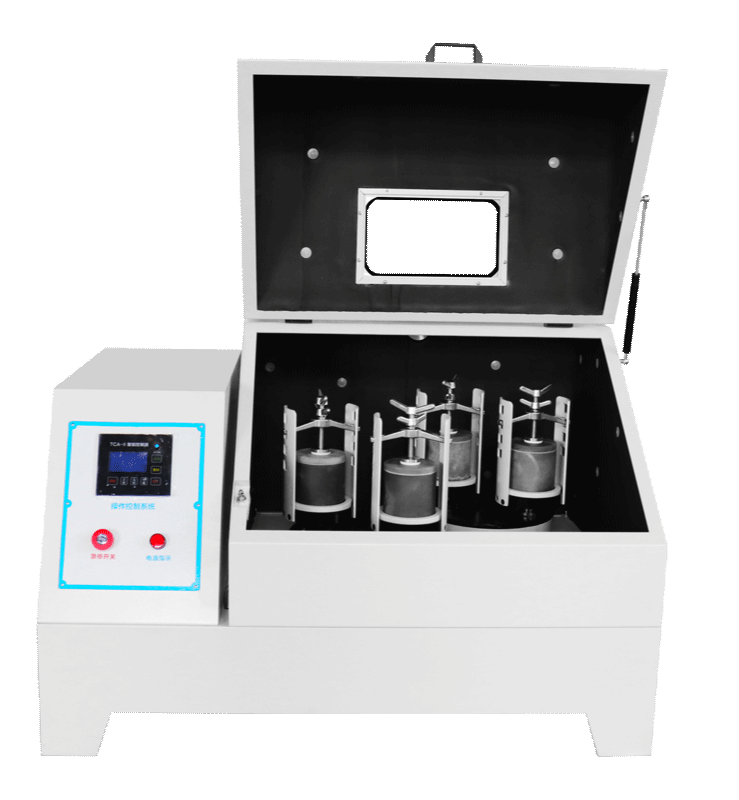
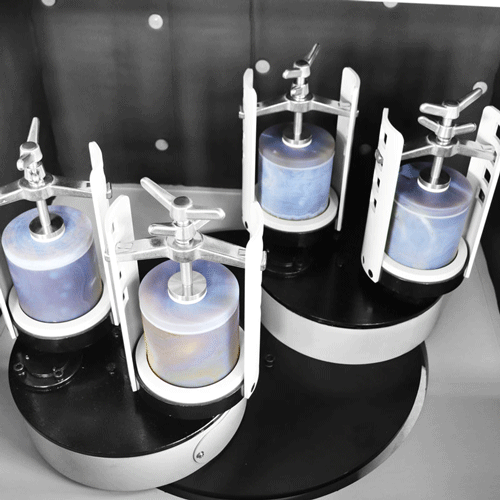
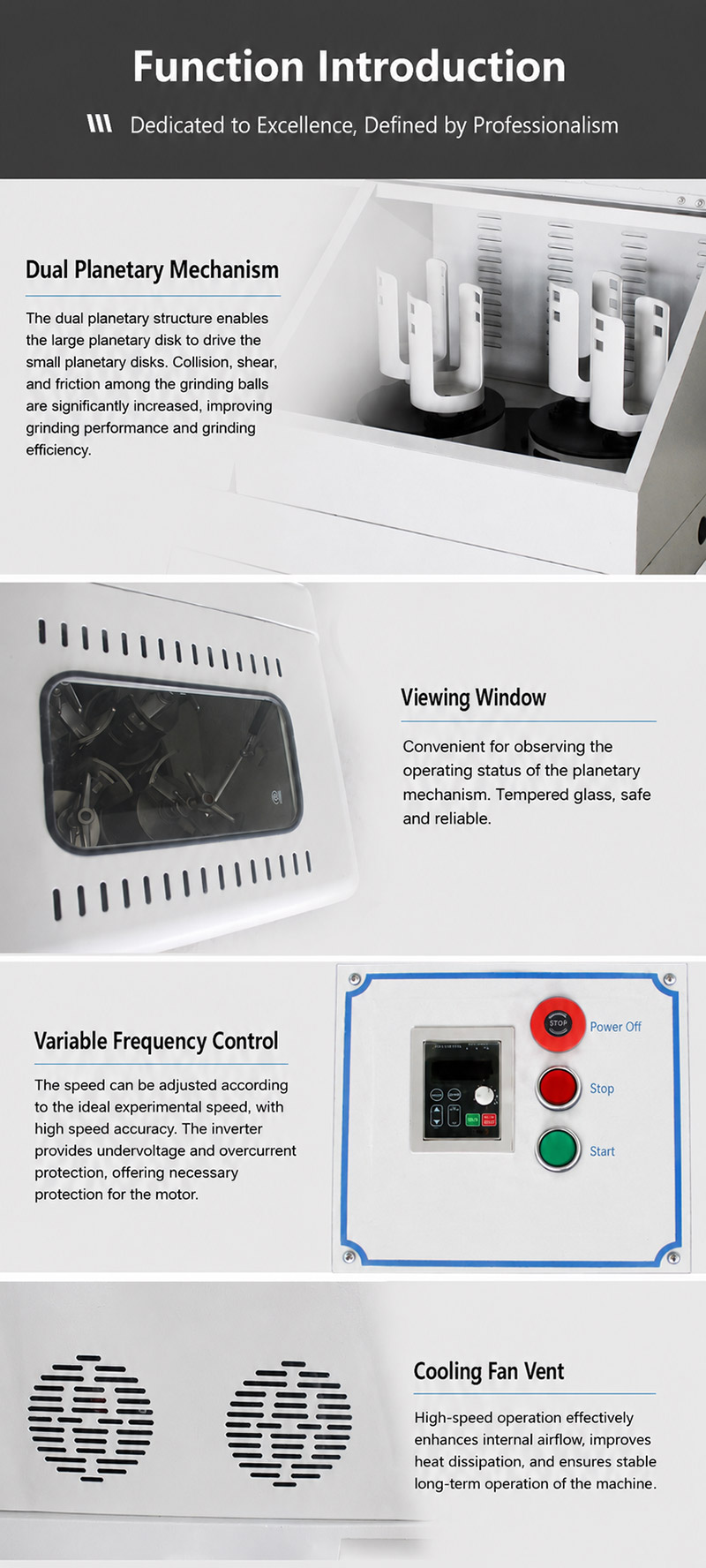
A double planetary ball mill, also called a dual planetary ball mill, increases grinding intensity by adding another planetary stage to the motion system. Instead of a single planetary disk directly carrying the grinding jars, the TENCAN SXQM design uses a larger planetary disk to drive smaller planetary disks, which then drive the jars. This creates a more complex compound trajectory and increases the collision, shear and friction acting on the material.
Quick answer: TENCAN's current SXQM double planetary ball mill is a high-energy laboratory and small-batch grinding platform with four grinding jars. The product line currently covers 0.4 L to 6 L total capacity. The published operating range is 70–560 rpm revolution speed and 140–1120 rpm jar rotation speed, with frequency-conversion speed control, programmable total running time and forward/reverse operation.
What Is a Double Planetary Ball Mill?
A double planetary ball mill is a high-energy milling machine that uses a multi-stage planetary transmission to increase the intensity of grinding-ball motion. It is designed for laboratory grinding, mixing, fine grinding, material homogenization, mechanical alloying and small-batch preparation of advanced powders.
The key structural idea is the double planetary mechanism. In the TENCAN SXQM design, the large planetary disk drives smaller planetary disks, and the grinding jars are mounted on those smaller disks. This creates a more complex motion than a conventional single-stage planetary system.
According to the current TENCAN product description, compared with an ordinary planetary ball mill of similar specification, the dual planetary structure provides:
- A larger effective revolution radius
- Higher grinding-jar rotation speed
- Greater centrifugal action on the grinding media
- More intensive collision between grinding balls and material
- Stronger shear and friction inside the grinding jar
- Improved grinding effect and grinding efficiency
TENCAN states that some materials can be ground to the nanometer level. That wording is important: the final particle size depends on the actual material and process rather than being a universal guaranteed 0.1 μm result.
How the Double Planetary Structure Works
1. The Large Planetary Disk Revolves
The main planetary disk rotates around the central axis of the machine. This creates the first level of planetary motion.
2. Smaller Planetary Disks Move with the Main Disk
Secondary planetary disks are mounted on the main disk. As the machine operates, these smaller disks move with the main planetary system while also participating in their own rotational motion.
3. The Grinding Jars Rotate on the Small Planetary Disks
The grinding jars are mounted on the secondary disks. The result is a compound trajectory involving multiple rotational and revolution components.
This structure increases the motion intensity of the grinding media without needing to describe the effect as an “exponential” or “geometric” force multiplication. From a customer-selection perspective, the important result is simpler: the jars and grinding balls experience a more intensive motion path, which increases impact, shear and friction compared with a conventional planetary configuration.
Current TENCAN SXQM Technical Parameters
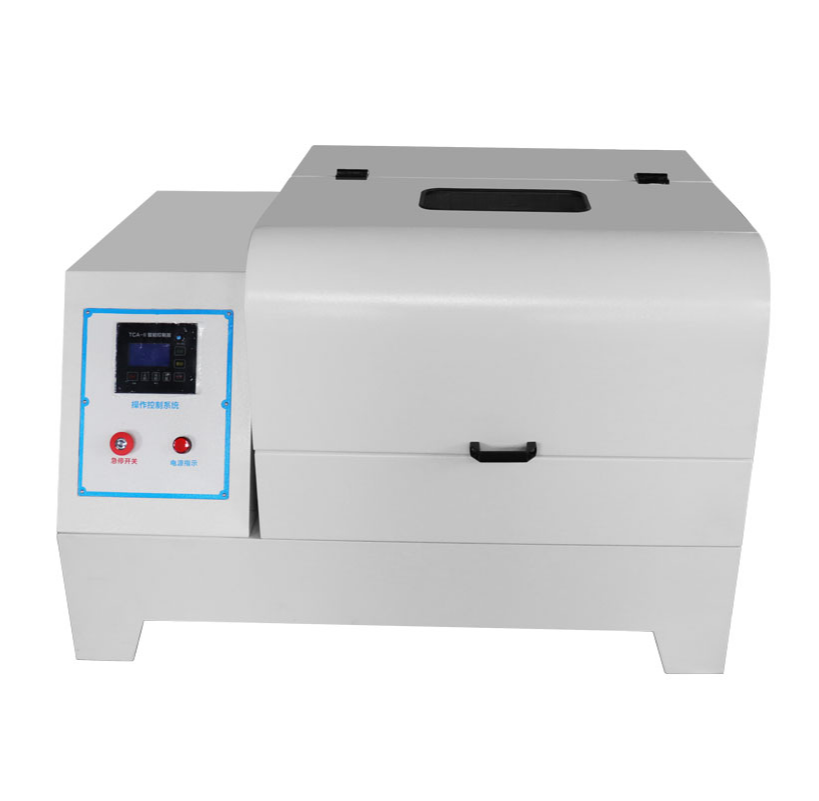
The following parameters are based on the current TENCAN Dual Planetary Ball Mill product page. They should be treated as published reference specifications and confirmed for the final configuration before ordering.
| Model | Total Capacity | Jar Size | Jar Qty. | Vacuum Jar Option |
|---|---|---|---|---|
| SXQM-0.4 | 0.4 L | 50–100 ml | 4 | 50 ml vacuum jar |
| SXQM-1 | 1 L | 250 ml | 4 | 50–100 ml vacuum jar |
| SXQM-2 | 2 L | 500 ml | 4 | 50–250 ml vacuum jar |
| SXQM-4 | 4 L | 1000 ml | 4 | 50–1000 ml vacuum jar |
| SXQM-6 | 6 L | 1500 ml | 4 | 50–1000 ml vacuum jar |
Drive and Control Parameters
| Parameter | Published Specification |
|---|---|
| Power supply | 220 V, 50 Hz |
| Motor power | 0.75 kW |
| Total running time | 1–9999 min |
| Forward/reverse interval | 1–999 min |
| Revolution speed | 70–560 rpm |
| Jar rotation speed | 140–1120 rpm |
| Speed regulation | Frequency-conversion speed regulation |
| Noise | 58±5 dB to 60±5 dB depending on model |
| Equipment weight | 250 kg |
| Equipment size | 1150 × 800 × 760 mm |
What Materials Are Suitable for a Double Planetary Ball Mill?
The SXQM is most useful when the user already needs the strong impact of a planetary mill but wants a more intensive grinding environment.
Hard and Brittle Materials
Typical candidates include:
- Alumina ceramics
- Zirconia ceramics
- Carbides
- Minerals and ores
- Glass and inorganic brittle materials
- Magnetic ceramics
For these materials, the dual planetary structure can increase the collision intensity between the grinding balls and the sample. Final efficiency still depends on the correct jar, media density, ball size, feed size and milling speed.
Battery and Energy Materials
Battery powders often require both fine grinding and strict contamination control. The SXQM can be considered for cathode, anode, precursor or solid-state material research when higher-energy planetary processing is needed.
For battery applications, contamination from Fe, Cr, Ni, Zr, Al, W or other grinding-contact materials should be reviewed before selecting the jar and balls.
Mechanical Alloying and Metal Powder Research
The high-energy motion of the double planetary structure can be useful for mechanical alloying, repeated cold welding and fracture, and fine mixing of metal or composite powders.
For ductile materials, however, it is incorrect to assume that every metal or fiber will automatically be “cut” to 0.1 μm. Ductile powders can flatten, weld or coat the grinding media depending on the alloy and process. Atmosphere control, process-control agents and temperature may become important variables.
Electronic Ceramics and Functional Powders
Electronic ceramics, dielectric powders, magnetic materials and other functional ceramics can benefit from the higher energy input when faster fine grinding or more intensive homogenization is required.
Pharmaceutical, Chemical and Other Specialty Materials
TENCAN lists medicine, chemical industry, light industry, environmental protection and related fields among the application areas. For regulated pharmaceutical work, the equipment should be evaluated as a grinding device only; regulatory, hygienic or GMP suitability must be confirmed separately for the user's process.
Double Planetary Ball Mill vs. Standard Planetary Ball Mill
A double planetary mill is not simply a standard planetary mill with a higher rpm number. The structural difference changes the trajectory and energy input of the grinding media.
| Comparison | Standard Planetary Ball Mill | Double Planetary Ball Mill |
|---|---|---|
| Motion structure | Single planetary disk + jar self-rotation | Large planetary disk + secondary planetary disks + jar rotation |
| Grinding intensity | High | Higher-intensity compound motion |
| Typical priority | General laboratory fine grinding, mixing and nano-material preparation | More demanding high-energy fine grinding and mechanical alloying |
| System complexity | Simpler | More complex transmission and larger machine |
| Equipment weight | Depends on model | Current SXQM listed at 250 kg |
If a standard planetary ball mill already reaches the target particle size and throughput, there may be no need to select the more complex SXQM system.
For general laboratory work, compare the SXQM with a standard semi-circular planetary ball mill before deciding.
Can the SXQM Reach 0.1 μm?
The current SXQM product page does not publish a universal minimum discharge size of exactly 0.1 μm. It states that some materials can be ground to the nanometer level.
That distinction matters because final particle size depends on:
- Material hardness and fracture mechanism
- Whether the material is brittle or ductile
- Initial feed size
- Grinding jar material
- Grinding-ball material and density
- Ball diameter and size distribution
- Ball-to-material ratio
- Jar filling level
- Revolution and rotation speed
- Milling time
- Dry or wet process
- Use of dispersants or process-control agents
- Temperature during milling
- Measurement method used for the final powder
Recommended approach: If the customer requires a specific D50 or D90 such as 0.1 μm, verify the result by sample grinding instead of treating 0.1 μm as an automatic machine guarantee.
Does Higher Energy Automatically Mean Less Contamination?
No. Higher grinding intensity can shorten the time needed to reach a target size in some applications, but contamination is still controlled mainly by:
- Grinding jar material
- Grinding-ball material
- Media wear rate
- Grinding time
- Impact intensity
- Cleaning procedure
- Sample handling
A shorter process may reduce total contact time, but a more energetic process may also increase wear under some conditions. Therefore, the correct statement is not that double planetary milling “eliminates contamination,” but that process time and contact-material selection should be optimized together to manage contamination risk.
Grinding Jar and Media Selection
| Jar / Media Material | Main Characteristic | Main Contamination Consideration |
|---|---|---|
| Zirconia | High hardness and density, low wear | Check Zr sensitivity |
| Corundum / Alumina | Hard ceramic contact surface | Check Al contamination |
| Agate | Low metal contact | Brittle and not ideal for every very hard feed |
| Stainless Steel | Strong and economical | Fe / Cr / Ni |
| Tungsten Carbide | Very hard and dense | W / Co |
| PTFE / Nylon / PU | Low metal contact for selected materials | Wear, solvent compatibility and lower hardness |
The correct jar is the one that gives enough grinding performance while keeping unwanted elements below the user's allowable contamination limit.
Vacuum and Controlled-Atmosphere Grinding
The current SXQM specification lists vacuum grinding-jar compatibility across the product range:
- SXQM-0.4: 50 ml vacuum jar option
- SXQM-1: 50–100 ml vacuum jar option
- SXQM-2: 50–250 ml vacuum jar option
- SXQM-4: 50–1000 ml vacuum jar option
- SXQM-6: 50–1000 ml vacuum jar option
Vacuum or inert-atmosphere jars are useful when powders are oxidation-sensitive, moisture-sensitive or reactive. The atmosphere requirement should be defined before selection because the jar, valve arrangement and sample loading procedure are part of the process.
Four Jars Do Not Mean 100% Identical Results
The current SXQM series uses four grinding jars. Running four jars on the same mechanical platform is useful for parallel experiments and can improve consistency compared with using four different machines.
However, it is not technically appropriate to promise 100% identical thermodynamic input or 100% reproducibility. Real experimental repeatability also depends on:
- Jar mass balance
- Grinding-media mass
- Sample mass
- Jar material and dimensions
- Initial particle-size distribution
- Loading procedure
- Powder moisture or slurry condition
- Sampling and measurement error
For comparative tests, use matched jars, equal media mass, equal sample mass and the same operating program.
How to Optimize a Double Planetary Milling Process
Step 1: Define the Target
Specify the real objective before increasing grinding energy:
- Smaller D50 or D90
- More uniform mixing
- Mechanical alloying
- Breaking hard agglomerates
- Reducing processing time
- Improving dispersion
Step 2: Choose Contact Materials
Select the jar and balls according to both hardness and contamination limits.
Step 3: Start with Moderate Speed
The SXQM supports a wide speed range, but maximum speed is not automatically the best setting. Higher speed can increase grinding intensity, temperature and media wear.
Step 4: Optimize Ball Size
Larger balls provide stronger individual impact. Smaller balls provide more contact points. Mixed ball sizes can be useful, but the correct distribution depends on the material and feed size.
Step 5: Control the Filling Level
Leave enough free volume for the grinding media to move effectively. Overfilling can reduce impact and increase heat.
Step 6: Use Forward / Reverse Programs When Useful
The current SXQM controller supports programmable forward and reverse intervals. Alternating direction can help redistribute material and grinding media during long runs.
Step 7: Measure at Intervals
Do not assume longer milling always improves the result. Particle-size reduction can eventually slow while contamination and heat continue to increase.
Step 8: Verify the Product
Depending on the application, use:
- Laser particle-size analysis
- SEM or microscopy
- XRD
- ICP or elemental analysis
- Specific-surface-area measurement
- Electrochemical or functional testing
When Should You Choose a Double Planetary Ball Mill?
The SXQM is a strong candidate when:
- A standard planetary mill does not reach the target quickly enough
- Very high grinding intensity is required
- Mechanical alloying is part of the process
- The material is hard and difficult to break
- Parallel four-jar processing is useful
- Vacuum jar operation is required
- The project is research, testing or small-batch production
When a Standard Planetary Ball Mill May Be Enough
A standard planetary mill may be the more practical choice when:
- The target fineness is already achieved with standard planetary motion
- The sample is easy to grind
- Lower machine cost and simpler operation are more important
- Extreme grinding intensity is unnecessary
- The project needs a broader range of machine sizes rather than the current SXQM 0.4–6 L range
Common Claims to Avoid
“Standard planetary mills cannot reach nano-scale.”
Incorrect. Standard planetary mills can reach nano-scale results for suitable materials and processes. The double planetary mill is selected for higher-intensity grinding, not because standard planetary milling is inherently limited to micron-level powder.
“The SXQM guarantees 0.1 μm for every material.”
The current TENCAN product page says some materials can reach nanometer level. Exact D50/D90 should be verified by sample testing.
“Double planetary motion exponentially multiplies force.”
The current product description supports increased revolution radius, jar speed, centrifugal force, collision, shear and friction. It does not provide a universal exponential multiplier.
“The machine eliminates cross-contamination.”
Contamination depends on media and jar wear, process intensity, milling time and handling. It can be controlled, but not automatically eliminated.
“Four jars guarantee 100% repeatability.”
Four jars on one platform improve parallel-process consistency, but repeatability still depends on loading and measurement control.
How to Choose Between SXQM-0.4, SXQM-1, SXQM-2, SXQM-4 and SXQM-6
Choose SXQM-0.4
For very small research batches, 50–100 ml jars and minimal material use.
Choose SXQM-1
For four 250 ml jars and general laboratory high-energy grinding.
Choose SXQM-2
For four 500 ml jars where more sample quantity is needed without moving to a larger 4 L system.
Choose SXQM-4
For four 1 L jars and larger laboratory or small-batch processing.
Choose SXQM-6
For four 1.5 L jars and the largest total capacity currently listed in the SXQM series.
What Information Should You Provide Before Requesting a Quote?
- Material name and composition
- Initial feed particle size
- Target D50 / D90
- Required batch quantity
- Dry or wet grinding
- Contamination elements that must be avoided
- Jar material preference
- Vacuum or inert atmosphere requirement
- Whether the material is heat-sensitive
- Local voltage and frequency
For demanding nano-scale or high-purity applications, sample grinding is strongly recommended before final equipment selection.
FAQ: Double Planetary Ball Mills
What is a double planetary ball mill?
It is a high-energy planetary ball mill that adds a secondary planetary motion stage. In TENCAN's SXQM design, a large planetary disk drives smaller planetary disks, which then drive the grinding jars.
What is the main advantage of the double planetary structure?
The structure increases effective revolution radius, jar rotation speed, centrifugal action, collision, shear and friction compared with a conventional planetary ball mill of similar specification.
What SXQM models are available?
The current range lists SXQM-0.4, SXQM-1, SXQM-2, SXQM-4 and SXQM-6.
How many grinding jars does it use?
The current SXQM series uses four grinding jars.
What is the maximum jar rotation speed?
The published jar rotation range is 140–1120 rpm.
What is the revolution speed range?
The published revolution range is 70–560 rpm.
Can it grind to nano-scale?
TENCAN states that some materials can be ground to nanometer level. The exact particle size depends on the material and grinding process.
Can it use vacuum jars?
Yes. Vacuum jar options are listed for every current SXQM model, with the available jar size depending on the machine model.
Does it eliminate contamination?
No. Contamination must be managed through jar/media selection, process time, cleaning and wear control.
Should I choose SXQM or a standard planetary ball mill?
Choose SXQM when higher grinding intensity, mechanical alloying or difficult-material processing is the priority. Choose a standard planetary mill when it already meets the target particle size and throughput.
Conclusion
The TENCAN SXQM double planetary ball mill is best understood as a higher-intensity planetary grinding platform, not as a machine that automatically guarantees a specific nano-scale result.
Its main advantage is structural: the large planetary disk drives smaller planetary disks, increasing the effective revolution radius and jar rotation intensity. This strengthens collision, shear and friction inside the grinding jars and makes the machine suitable for demanding laboratory grinding, mechanical alloying and small-batch advanced-material processing.
The current series provides 0.4–6 L total capacity, four grinding jars, 70–560 rpm revolution speed, 140–1120 rpm rotation speed, programmable forward/reverse operation and vacuum-jar options.
For hard ceramics, battery materials, alloys, magnetic powders or other difficult materials, the correct selection should be based on target particle size, batch quantity, contamination limit, jar material and atmosphere requirement. When the target is a specific nano-scale distribution, sample testing remains the most reliable way to confirm the process.
Need to evaluate whether SXQM is suitable for your material?
Send TENCAN your material, feed size, target D50/D90, batch quantity, contamination limits and atmosphere requirement. Contact TENCAN for a suitable high-energy grinding configuration »