
What is a Resin Ball Mill? A Specialized Grinding Equipment for Resins, Pigments, and High-Viscosity Materials
What is a Resin Ball Mill?
At its core, a resin ball mill is a specialized grinding and dispersing device tailored for materials with high viscosity, stickiness, or thermal sensitivity – such as synthetic resins, pigments, paints, inks, and adhesives. Unlike standard ball mills used for hard minerals, a resin ball mill focuses on efficiently breaking down agglomerates, achieving uniform particle dispersion, and preventing material buildup inside the jar. It is an essential tool for laboratories and small-scale production lines in the paint, coating, ink, electronics, and chemical industries.
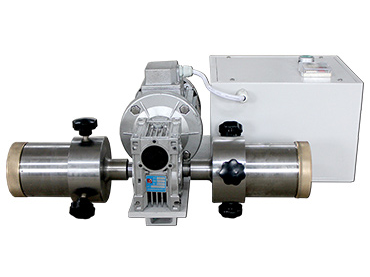
Core Function and Working Principle
The resin ball mill transforms coarse resin chunks or pigment aggregates into a finely dispersed, homogeneous paste or slurry. The working principle relies on a rotating jar (usually made of stainless steel, alumina, or zirconia) partially filled with grinding media – typically ceramic beads or zirconia balls. As the jar rotates, the media cascade and shear the material against the jar walls, applying impact and friction forces.
What sets a resin ball mill apart is its ability to handle high-viscosity and sticky materials. The mill often features a sealed, leak-proof design to prevent material escape, and may include a cooling jacket to dissipate heat generated during grinding – crucial for heat-sensitive resins. Speed control is precise, allowing operators to optimize the balance between shear force and residence time. Some models also support both dry and wet grinding, though wet grinding (with solvent or water) is common for resin-based formulations.
Key Components and Technical Features
A typical resin ball mill consists of:
- Grinding Jar (Mill Pot): Available in materials like 304 stainless steel, alumina, zirconia, or nylon to avoid contamination. Jars are designed with easy-clean interiors to prevent cross-contamination.
- Grinding Media: Zirconia beads, agate balls, or stainless steel balls of varying diameters. The choice depends on the target fineness and material hardness.
- Drive System: Variable speed motor (often inverter-controlled) for adjusting rotation speed from 30 to 400 rpm, enabling fine-tuning of the grinding intensity.
- Sealing & Safety: Teflon or rubber gaskets ensure leak-free operation even with volatile solvents. Emergency stop buttons and interlock switches protect users.
- Optional Accessories: Temperature control jackets, vacuum/atmosphere ports, and programmable timers for automated operation.
Key Performance Indicators and Selection Points
When choosing a resin ball mill, focus on these parameters:
- Processing Capacity: Typical jar volumes range from 0.1 L to 5 L for lab models. Ensure the mill can handle your batch size.
- Fineness Control: Most resin ball mills achieve particle sizes down to 1-10 µm, with some reaching submicron levels. The final particle size depends on grinding time, media size, and speed.
- Viscosity Handling: Look for mills that can handle materials with viscosities up to tens of thousands of centipoise (cP). Models with stronger motors and reinforced jar holders are better for high-viscosity pastes.
- Automation: Digital timers, programmable speed ramps, and frequency inverters improve reproducibility. Some units offer data logging for quality control.
- Cleaning and Maintenance: Quick-disassembly jars and smooth interiors reduce downtime. Removable jar stands and easy-access sealing systems are beneficial.
Application Fields and Selection Advice
Resin ball mills are widely used in:
- Paints & Coatings: Grinding pigments, resins, and additives for color development and dispersion uniformity.
- Printing Inks: Dispersing carbon black, dyes, and binders to achieve consistent viscosity and printability.
- Adhesives & Sealants: Homogenizing epoxy, polyurethane, and silicone formulations.
- Electronics & Ceramics: Milling conductive pastes, ceramic inks, and precursor powders.
- Pharmaceuticals & Cosmetics: Preparing ointments, creams, and nano-emulsions with controlled particle size.
For users working primarily with solvent-based paints and high-viscosity resins, a resin ball mill with a stainless steel jar and zirconia beads is recommended. For aqueous systems or applications requiring extreme purity, choose alumina or agate jars. Laboratories planning to handle multiple formulations should consider models with interchangeable jar sizes and easy-clean features. For more detailed specifications and model comparisons, visit the official Resin Ball Mill product page.
If your process also requires three-roll milling for ultra-fine dispersion of thick pastes, you may refer to the Three Roll Mill as a complementary tool.