
Small Grinder Selection for Lab Sample Prep
Sample preparation is often the first place where laboratory results become difficult to trust. A sample that looks homogeneous can separate during crushing, pick up contamination from worn tooling, or lose its volatile fraction before analysis. The difficulty is not finding a device labeled small grinder; it is finding a compact unit that produces a representative, uncontaminated sample at the scale the laboratory actually handles. That is why small grinder selection should start with the material, the analytical method, and the cleaning routine rather than with a single motor rating. The TENCAN small grinder is a compact laboratory size-reduction option, and like any bench-scale grinder it should be matched to feed size, target fineness, material behavior, and changeover requirements. This article explains those relationships in practical terms so that laboratory researchers, material engineers, and procurement teams can ask better questions before they test a unit.
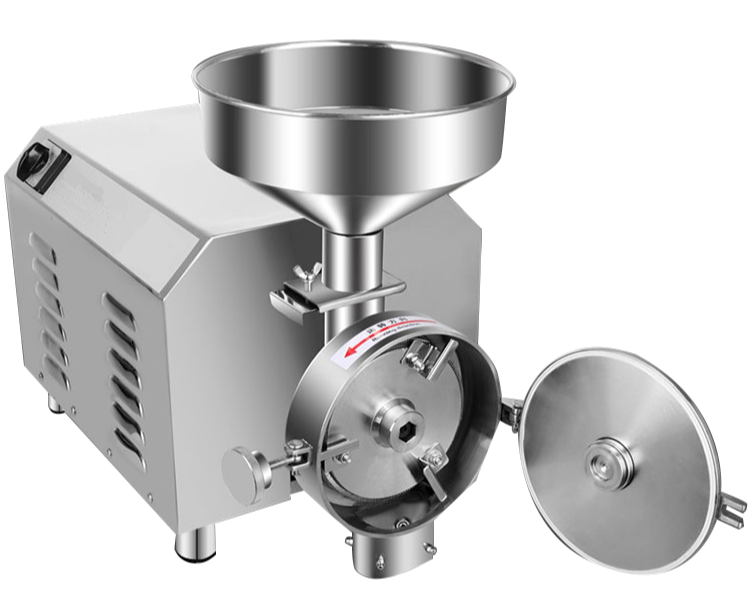
A compact small grinder for bench-scale sample preparation. Confirm chamber, tooling, and contact materials for the intended sample.
What a Small Grinder Does in a Laboratory Workflow
A small grinder is a bench-scale size-reduction tool used to bring a laboratory sample from a coarse or pre-crushed state to a finer, more uniform condition for analysis, formulation, or further processing. The name describes scale, not a single mechanism. Depending on the design, size reduction may rely on impact, shear, cutting, attrition, or a combination of these actions. Two machines with similar footprints can therefore behave very differently when they meet a brittle ceramic, a fibrous plant material, or a heat-sensitive polymer.
The useful starting point is to treat the grinder as part of a sample-preparation chain. Feed preparation, grinding, discharge, collection, cleaning, and storage all influence the result. A small grinder that performs well in one step can still create problems if the feed is too coarse, the discharge is incomplete, or the chamber cannot be cleaned between samples. For this reason, the small grinder product page should be read as a starting point for technical discussion, not as a substitute for material-specific testing.
Where a compact grinder fits
Compact grinders are appropriate when sample mass is limited, bench space is restricted, and repeatability across small batches matters more than throughput. They are common in geochemistry, ceramics, battery materials, environmental testing, food and feed analysis, pharmaceutical development, and polymer research. In these settings, the small grinder often bridges the gap between manual mortar work and larger pilot equipment. It can reduce operator fatigue, narrow the variation caused by inconsistent hand crushing, and make it easier to document a procedure.
Laboratory small grinder selection also affects downstream steps. A sample that is too coarse can segregate in a scoop, while an overheated sample can lose moisture or change its crystalline state. A grinder that is difficult to clean can carry previous material into the next batch. These are not minor housekeeping issues; they are sources of analytical bias. A grinder that is easy to inspect and clean is often more valuable than one with a higher nominal speed, because the routine sample-to-sample workflow depends on reliable changeover.
Where it does not fit
A small grinder is not a substitute for a production mill, and it is not automatically suitable for every laboratory material. Very large feed lumps may need jaw crushing or chipping first. Sticky, wet, or fatty materials may coat the chamber and discharge poorly. Highly elastic materials may deform rather than fracture. Abrasive samples may wear tooling quickly and introduce contamination. If the analytical method requires a specific particle-size distribution, the grinder must be validated against that requirement rather than selected from a general description.
It is equally important not to confuse a fine result with a controlled result. A grinder can produce a very fine powder while creating a broad distribution, excessive heat, or a non-representative split. The practical question is whether the unit can deliver the required distribution, recovery, and cleanliness for the sample mass in question. That question applies to the TENCAN small grinder just as it applies to any laboratory grinder, and it is best answered with the actual material.
Feed Size, Target Fineness, and Particle Distribution
Small grinder selection becomes much clearer when three quantities are defined before the equipment discussion: the feed size, the target particle size, and the acceptable particle-size distribution. These three values are linked, but they are not interchangeable. A grinder that accepts a certain feed size may not reach the required fineness in one pass, and a unit that reaches the target fineness may do so only with a narrow feed window, a specific residence time, or a particular tooling configuration.
Feed size limits are configuration-specific
Every small grinder has a practical feed-size window. The limit depends on the inlet geometry, the grinding chamber, the tooling, the required starting torque, and the way material is presented to the grinding zone. A soft, brittle material may break quickly from a relatively coarse feed, while a hard or tough material may stall, bounce, or overheat if the feed is too large. In many laboratory workflows, the most reliable approach is to pre-crush or split the sample to a consistent feed size before it reaches the small grinder. This extra step improves repeatability and protects the grinding chamber from unnecessary mechanical stress.
Feed rate is as important as feed size. Loading a compact grinder too quickly can cause the chamber to choke, increase residence time, generate heat, and produce an uneven discharge. Loading too slowly may reduce efficiency and expose the sample to more mechanical energy than necessary. The correct feed rate is usually found by trial, using the response of the motor, the temperature of the sample, and the appearance of the discharge as indicators. Since available configurations vary, the acceptable feed range for the laboratory small grinder should be confirmed with the supplier and verified with the actual material.
Target fineness is a specification, not a wish
Target fineness should be written as a measurable specification, such as a required median particle size, an upper size limit, or a distribution range determined by a stated analytical method. A request for a fine powder is not sufficient because fine can mean different things in different laboratories. One method may require particles below a few hundred micrometers, while another may require a much smaller median size. The grinder, the grinding time, the feed size, and the material behavior all have to be compatible with that target.
It is also useful to distinguish between one-pass size reduction and multiple-pass or timed grinding. A small grinder may reach a target in a single short pass for a brittle material, while a tougher sample may require staged reduction or a different tooling approach. If the target is close to the practical limit of the equipment, the result may be sensitive to small changes in feed mass, moisture, or tool wear. That sensitivity should be understood before the method is written into a standard operating procedure.
Particle distribution and sample representativeness
Particle-size distribution matters because analytical subsampling depends on it. A powder with a narrow distribution is easier to split reproducibly than one containing both fine dust and coarse fragments. The coarse fraction may carry a different composition from the fine fraction, especially in geological, ceramic, and composite samples. If the small grinder produces a broad distribution, the analyst may need to mill longer, screen the sample, or use a different size-reduction strategy. The goal is not simply to make the sample finer; it is to make the sample behave consistently when it is divided for analysis.
A practical validation should include a blank or cleaning check, a repeatability check with the same material, and a particle-size check using a method appropriate to the laboratory. Visual inspection alone can miss segregation, overheating, or contamination. When the sample is valuable or difficult to obtain, a small trial run is usually more informative than a long list of nominal specifications.
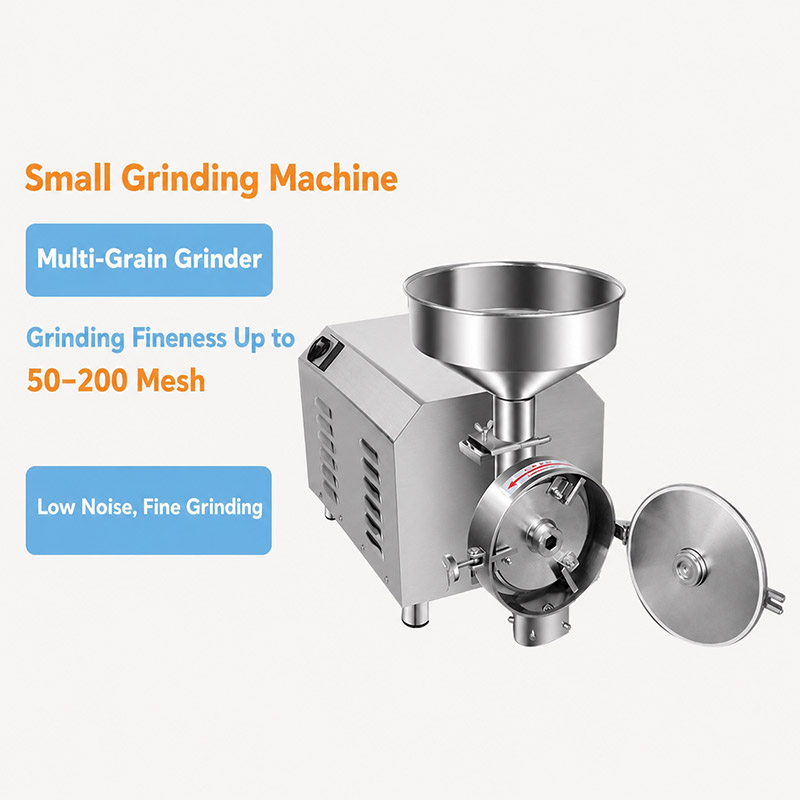
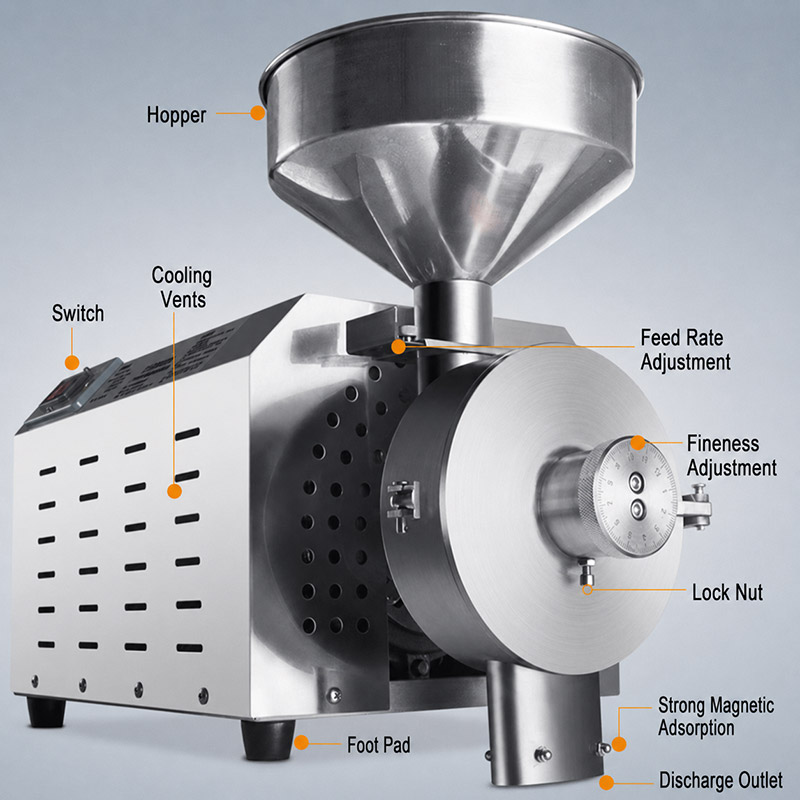
Small grinder configuration matters: feed path, grinding chamber, discharge, and cleaning access all affect sample recovery.
Material Properties That Change Small Grinder Performance
Material properties determine whether a small grinder works smoothly or becomes a source of variation. Hardness, toughness, abrasiveness, moisture content, thermal sensitivity, and static behavior all influence the result. A unit that performs well on a brittle glass or ceramic may struggle with a fibrous plant material, a rubbery polymer, or a damp soil. The reverse is also true. Selection therefore requires a material-first view rather than a machine-only view.
Hardness and abrasiveness
Hard materials require more energy to fracture and can accelerate wear on the grinding chamber and tooling. Abrasive materials add a second concern: wear particles may enter the sample and change its composition. This is particularly important for trace-element analysis, battery materials, and ceramic powders where contamination can affect the measured result. The material-contact parts, the tooling geometry, and the cleaning method should be reviewed together. If the sample is highly abrasive, a short grinding time and a conservative feed size may be more appropriate than an aggressive procedure that produces excessive wear.
Hardness also affects the relationship between grinding time and fineness. A hard sample may show little size reduction at first and then change rapidly as fines are generated. Operators should avoid assuming that a fixed time will work for every batch. A quick check of the discharge, combined with a consistent feed preparation routine, helps keep the process under control.
Toughness, elasticity, and heat sensitivity
Tough or elastic materials can deform, spring back, or smear instead of fracturing cleanly. Fibrous samples may wrap around tooling or bridge across the chamber. Polymers may soften with frictional heat and then re-solidify into an uneven mass. In these cases, the grinding mechanism and the energy input matter as much as the nominal fineness. A cutting action may be more suitable than impact for some fibrous materials, while a heat-sensitive sample may require short grinding intervals, lower energy input, or pre-conditioning such as chilling when the method allows it.
The small grinder should not be expected to solve a material problem that belongs to the sample preparation method. If the sample is thermoplastic, moist, or highly elastic, the laboratory may need to adjust feed size, use a different tooling approach, or choose another size-reduction method. The right conclusion may be that the small grinder is suitable only for a pre-limited feed or a specific stage in the workflow.
Moisture, stickiness, and static
Moisture changes both fracture behavior and discharge behavior. A damp sample may coat the chamber, clog the discharge path, and resist uniform grinding. In extreme cases, the sample may be better dried before grinding, provided that drying does not alter the analyte of interest. Static electricity can also cause fine particles to cling to surfaces, which reduces recovery and makes cleaning more difficult. The severity depends on the material and the laboratory environment, so it should be checked during the trial rather than assumed from the product description.
Sticky or fatty materials are especially demanding in a compact grinder because the working volume is small. A chamber that is easy to open, inspect, and clean is a practical advantage. The operator should be able to see the grinding zone and remove retained material without damaging the tooling. If the sample tends to coat surfaces, a cleaning verification step should be part of the method.
Contamination and cross-contamination
Contamination control is one of the strongest reasons to evaluate a small grinder carefully. There are two separate risks: wear from the equipment entering the sample, and carryover from a previous sample entering the next batch. The first risk depends on the material-contact parts and the abrasiveness of the sample. The second depends on chamber access, surface finish, discharge design, and the cleaning procedure. Neither risk can be judged from a general product photo alone.
A practical cleaning trial should include a visible check, a dry wipe or solvent wipe as appropriate, and a blank run if the analytical method is sensitive. The goal is not to claim that any grinder is contamination-free; it is to establish a cleaning routine that is adequate for the laboratory and to verify it with the actual materials. This is especially important when the same small grinder is used for samples with different trace-element profiles or different organic residues.
Small Grinder Configuration and Operation Variables
Once the material and target have been defined, the next step is to examine the configuration and operating variables that can be controlled. A small grinder is a system, not just a motor and a chamber. Feed presentation, grinding energy, residence time, discharge, collection, and cleaning all interact. The purpose of the evaluation is to find a combination that is repeatable at the laboratory scale, not simply to maximize speed or fineness.
Chamber, tooling, and material contact
The grinding chamber and tooling determine how the sample is stressed and how it leaves the working zone. Different materials and geometries suit different sample types, but the available options depend on the model. When reviewing a configuration, ask which parts contact the sample, how they are accessed, and whether they can be inspected for wear. Also ask how the sample is discharged and whether the collection method suits the required sample mass. For the TENCAN small grinder, the current configuration details should be confirmed directly because product options can change and because a general description cannot cover every material case.
Material contact also affects cleaning. A simple flow path with good access is easier to verify than a complex path with hidden ledges. If the laboratory handles high-value samples or regulated work, the ability to open the chamber, remove tooling, and clean individual surfaces may be more important than a small gain in grinding speed.
Load, residence time, and energy input
Sample load should be consistent from batch to batch. Underloading can expose the material to excessive energy relative to its mass, while overloading can reduce movement, increase heat, and produce an uneven result. Residence time has a similar effect. Longer grinding does not always mean a better result; it may broaden the distribution, heat the sample, or increase wear. A short, controlled pass with a consistent feed often gives better repeatability than a long grind with an uncertain endpoint.
Energy input is linked to speed, tooling, load, and material resistance. Higher energy may reduce particle size faster in a brittle sample, but it can also raise temperature and promote aggregation or degradation. The operator should watch for color change, odor, static buildup, or caking, since these are practical signs that the process is being pushed beyond the material's tolerance. The best operating window is usually the one that meets the target with the least unnecessary stress on the sample and equipment.
Discharge, recovery, and cleaning
Recovery is often overlooked during selection. A grinder that leaves a significant fraction of the sample inside the chamber can create a bias if the retained fines differ in composition from the discharged fraction. The discharge path should be inspectable, and the collection container should be appropriate for the sample mass and subsequent analysis. If the method requires quantitative recovery, the cleaning procedure should be tested as part of the method validation.
Cleaning is also a productivity issue. A grinder that takes a long time to open and clean may encourage shortcuts, which increases cross-contamination risk. A practical workflow should specify how the chamber is emptied, which surfaces are wiped, whether a solvent is used, and how the equipment is dried before the next sample. These details belong in the standard operating procedure, not in informal practice.
Matching a Small Grinder to Common Laboratory Applications
Different application families place different demands on a small grinder. The table below summarizes the main selection questions without implying that every material can be handled in the same way. Final suitability should be confirmed by testing the actual sample with the proposed configuration.
| Application family | Dominant selection issue | Validation question |
|---|---|---|
| Geological and mineral samples | Abrasion, feed size, representative splitting | Does the discharge represent the whole sample, and is wear acceptable for trace analysis? |
| Ceramics, glass, and inorganic powders | Hardness, target distribution, contamination | Can the unit reach the target without introducing unwanted contact-material wear? |
| Pharmaceutical and nutraceutical development | Recovery, cleaning, heat exposure | Is the active ingredient stable during grinding, and can carryover be controlled? |
| Food, feed, and plant materials | Moisture, fiber, stickiness | Does the sample discharge cleanly, or does it coat the chamber and resist homogenization? |
| Polymers and elastomers | Elasticity, softening, heat sensitivity | Does the material fracture, or does it deform and smear under the proposed grinding action? |
| Environmental and soil samples | Moisture, stones, organic matter | Is pre-drying or pre-crushing required, and does the final sample pass the required sieve? |
For brittle inorganic materials, the main questions are usually feed size, achievable fineness, and contamination. A small grinder can be a good fit when the sample is pre-crushed to a consistent size and the target distribution is within the practical range of the equipment. For geological work, the operator should pay particular attention to the coarse fraction and to wear because both can bias trace-element results. A short trial with a blank and a replicate is more useful than a visual comparison of powder fineness.
For food and plant materials, moisture and fiber often dominate. A sample that is too damp may press against the chamber instead of fracturing, and a fibrous sample may bridge or wrap around tooling. Pre-drying, chopping, or a different cutting action may be needed before the small grinder can produce a uniform analytical sample. The laboratory should not assume that a unit designed for brittle materials will handle a wet or fibrous matrix without adjustment.
For polymers and other heat-sensitive materials, the main risk is that friction raises the sample temperature enough to soften, degrade, or aggregate it. Short grinding intervals, smaller loads, and a conservative energy input are practical starting points. If the material still smears or cakes, the small grinder may not be the right primary tool, even if it is mechanically capable of turning the motor. The decision should be based on sample quality, not on the ability to run the machine.
A laboratory small grinder should be tested with the actual material and cleaning procedure before routine use.
Validation, Maintenance, and When to Reconsider the Setup
A small grinder should be validated in the workflow where it will be used. The validation does not need to be complicated, but it should answer four questions: does the unit produce the required particle size or distribution, does it recover the sample without unacceptable loss, does it avoid contamination, and can the laboratory clean it consistently. These questions are more important than a single demonstration on a convenient sample.
A practical pre-purchase test
- Prepare the sample in the same way the laboratory will prepare routine batches, including pre-crushing or drying if those steps are part of the method.
- Run a small representative portion and record feed mass, grinding time, visual appearance, and any temperature change.
- Check the discharge for recovery, caking, and coarse fragments, then measure the particle size or distribution using the intended analytical method.
- Clean the unit according to the proposed procedure and run a blank or a second material to check for carryover.
- Repeat the run at least once to see whether the result is stable across batches.
If the supplier can provide a demonstration, the test should use the actual material rather than a generic brittle reference sample. The TENCAN small grinder page can confirm the current product listing and contact route, while the technical discussion should focus on the sample, the target, and the cleaning requirement. A grinder that meets the target only under ideal conditions may still be unsuitable for a busy laboratory.
Routine maintenance and troubleshooting
Routine maintenance should include inspection of the chamber, tooling, seals if present, and discharge path. Wear is not always visible from the outside, and a part that looks acceptable may still affect contamination or fineness. The cleaning routine should be checked after maintenance because reassembly can change clearances or leave residues. Operators should also record the symptoms that accompany poor results: overheating, unusual noise, slow discharge, caking, or a sudden change in fineness. These observations help distinguish a material problem from a mechanical problem.
If the unit overheats, the first responses should be a smaller load, a shorter grinding interval, or a coarser feed, not simply a higher speed. If the sample does not reach the target, check whether the feed is too coarse, the load is too high, or the material is too elastic for the chosen action. If contamination appears, review the cleaning procedure and the wear condition of material-contact parts. If recovery is low, inspect the discharge path and collection method. These checks are more useful than adjusting several variables at once.
When to reconsider the small grinder
The small grinder may not be the right solution if the sample requires a very large feed, a very narrow distribution at a fine scale, or a highly controlled atmosphere that the unit cannot provide. It may also be unsuitable if the material smears, melts, or requires a cutting action that the available tooling cannot deliver. In those cases, the laboratory should consider pre-crushing, a different grinding mechanism, or a larger pilot-scale unit rather than forcing the sample through an incompatible process.
The most reliable selection decision comes from a material-specific trial and a clear cleaning plan. A compact grinder is valuable when it fits the sample mass, produces a representative discharge, and can be cleaned and inspected without ambiguity. For laboratories comparing options, the TENCAN small grinder should be assessed on those practical points, with feed size, target fineness, contamination control, and changeover treated as one connected system. That approach gives procurement teams a defensible basis for selection and gives laboratory staff a procedure they can actually repeat.