
Which Glove Box Configuration Is a Good Fit for Air-Sensitive Ball Milling?
Lithium foil, magnesium hydride powder and a sulfide solid electrolyte have one thing in common: their useful properties survive only until someone opens the milling jar in air. A planetary ball mill can deliver the phase, the crystallite size or the alloy the experiment needs, and a few seconds of exposure can undo it. That is the moment a glove box stops being general laboratory furniture and becomes the interface between the mill and the measurement.
The useful question is therefore not "which glove box is best" but "which configuration fits the way this powder is milled, transferred and analysed". Two laboratories milling the same material can need very different boxes. One transfers 50 mL jars twice a week; the other opens 500 mL jars daily and rinses jars with toluene in between. The same catalogue product will fit one and frustrate the other.
The conditions set out below are the ones that separate a good fit from a poor one. They are written so that a quotation from any supplier — including TENCAN, whose purifier-equipped glove box is the reference configuration discussed here — can be assessed against them in the same way.
Start with the powder, not with the box
Inert-atmosphere milling covers a wide range of sensitivities, and the differences matter for specification. Lithium, sodium and magnesium are not simply "air-sensitive": they react with nitrogen as well as with oxygen and water, forming nitrides that change the powder's composition. A box run on nitrogen is perfectly adequate for many oxide and polymer samples and a poor choice for these metals. Sulfide solid electrolytes hydrolyse in humid air and release hydrogen sulfide, so both the oxygen and the moisture specification matter, and so does the way failed samples are handled. Aluminium, titanium and copper powders oxidise more slowly but form surface layers that affect sintering and alloying behaviour, which is often the real reason a mechanical alloying campaign is moved into a box.
Write down three things before reading any specification: what the powder must not encounter (O2, H2O, N2, light, solvent vapour), how large a batch each campaign produces, and how often a jar is opened. Those three answers determine the purifier duty cycle, the transfer logistics and the working space far more reliably than a generic "ppm" headline figure does.
Five conditions that decide whether a glove box fits a milling workflow
1. The atmosphere specification your material actually needs
Suppliers quote achievable oxygen and moisture levels, and those figures are only comparable when the measurement point, the sensor type and the duty cycle are stated. A level maintained in an idle box overnight is not the same as a level recovered ten minutes after a jar was opened and a sample was transferred out. When comparing quotations, ask where the analyser sits, how often it is calibrated, what the recovery time is after a transfer, and which working gas the numbers refer to. For lithium and magnesium work, confirm that the box and the purification system are specified for argon, not only for nitrogen.
2. How the jar gets in and out
The antechamber is the most under-specified part of most glove box purchases. A 50 mL milling jar and a 500 mL jar with a clamping lid are different objects, and the antechamber diameter, length and door arrangement must be checked against the largest jar the lab actually uses — including any jar clamp or lifting handle. Equally important is the transfer cycle: a small antechamber that needs many vacuum-and-refill cycles per jar slows a busy workflow and encourages shortcuts. Count the jars per week, multiply by the cycle time, and see whether the result fits the technician's day.
3. Where the mill sits, and how much room the operator has
Most air-sensitive milling is done with the mill outside the box and the powder sealed inside the jar; the box is used for loading jars with sensitive starting materials, for opening them, and for subsequent handling. Sealed milling jars are the reason this works, and it is worth deciding early whether the whole mill will ever need to be inside. A planetary ball mill is heavy, generates vibration and heat, and needs power and cooling; placing it inside a box is a specialist decision that changes the box's structure, floor loading and internal volume. For the more common layout, the box needs enough internal width for a jar, a balance, tools and a sample vial without the operator fighting the gloves, and enough depth that gloves reach comfortably to the back panel.
4. Vapour load from solvents and from the powders themselves
Wet milling brings solvent into the workflow, and even small amounts of organic vapour load a purifier. Molecular sieve and catalyst beds used for gas purification are consumed by solvent vapour, so a box that handles toluene or hexane-soaked jars will need a regeneration schedule and probably a solvent trap or a dedicated small antechamber for solvent-bearing items. The same applies to powders that outgas — hydrides, some carbonates, and materials that release hydrogen sulfide when they hydrolyse. Ask how the purification system is regenerated, how long regeneration takes, and whether the box can keep working during it.
5. Sealing, monitoring and validation you can repeat
A glove box is a long-lived pressure vessel with gloves on it. Fit and finish matter less than the ability to prove that the box is still doing its job: a leak test at commissioning, a routine pressure-decay or leak-check procedure, glove-change instructions, and a documented analyser reading taken before each sensitive campaign. Ask for the acceptance test that will be run on site, who runs it, what counts as a pass, and which consumables — gloves, filters, sieve, catalyst — need a local stock. A box without a repeatable verification routine is an assumption, not a controlled atmosphere.
TENCAN's glove box with purification system: matching configuration to the need
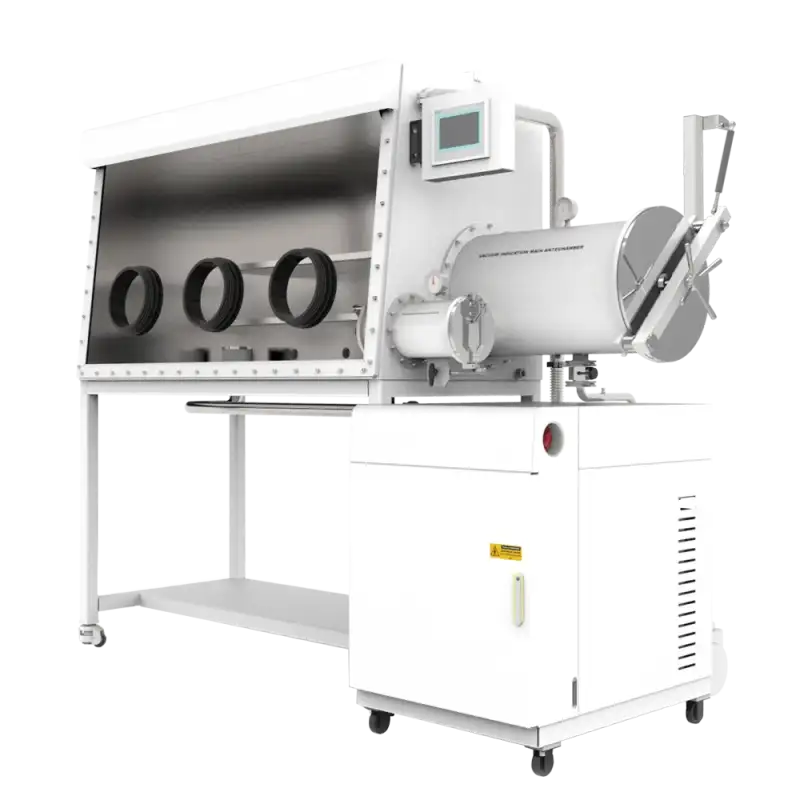
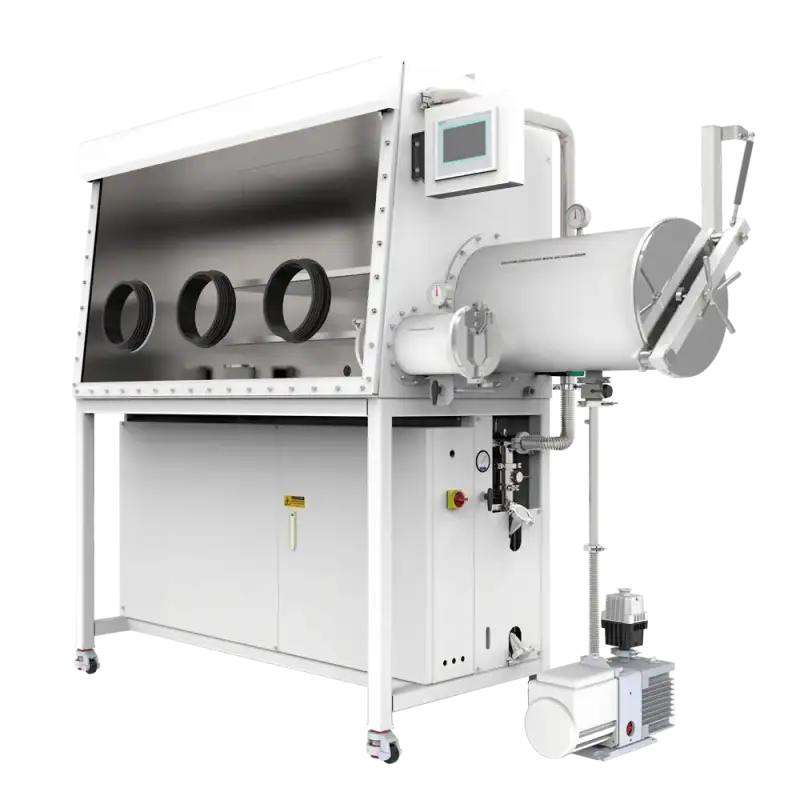
TENCAN supplies a glove box with purification system, in which the enclosure and the gas-purification loop are specified as one system rather than as two separate purchases. For a milling laboratory the practical value of that arrangement is that the atmosphere side and the powder-handling side are configured together: the box, the transfer antechamber and the purification unit are selected against the same duty cycle, and the same supplier is responsible for the interface between them.
Where this configuration fits first
The clearest fit is a laboratory that already mills air-sensitive powders and needs a controlled place to load jars, open them, subsample and prepare specimens — with the box, purifier and transfer hardware sourced from one supplier. That includes groups working on hydride materials, metal powders for mechanical alloying, and sulfide or halide electrolytes where oxygen and moisture are both critical. It also suits laboratories that are standardising a method: one supplier for the enclosure and the purification loop makes it easier to write a single operating procedure and a single acceptance test.
How to map the product to your specific need
Rather than treating the product name as a specification, work through five questions with TENCAN before quotation. First, which working gas will the box run on, and does the intended duty cycle support the oxygen and moisture level your material requires? Second, what is the largest milling jar that must pass through the antechamber, and does the standard transfer port accept it? Third, how many glove ports are needed for the number of people working at once, and where should they sit relative to the balance and the tools? Fourth, how will solvent-bearing items and hydrolysis-prone powders be handled, and what regeneration interval does that imply? Fifth, what acceptance test will be performed and what documentation accompanies it? The answers turn a catalogue item into a configuration.
Configuration archetypes worth pricing, compared on equal terms
Competing international suppliers exist for every one of these archetypes, but their published figures are not interchangeable without the same measurement conditions. The comparison below is therefore deliberately qualitative: it lets a TENCAN quotation and any other supplier's quotation be placed in the same frame, row by row, instead of comparing a headline number with a different headline number.
| Criterion | TENCAN glove box with purification system | Purifier box with enlarged transfer antechamber | Purifier box with solvent and vapour management | Purifier box with expanded glove port count |
|---|---|---|---|---|
| Primary role | Enclosure and purification loop specified as one system for sensitive powder handling | High jar throughput with large jars | Wet milling and solvent-bearing samples | Shared multi-user laboratories |
| Atmosphere management | Integrated purification system; confirm achievable O2/H2O for your gas and duty cycle | Purifier sized for frequent air ingress; confirm recovery time | Purifier plus trap; confirm regeneration interval and consumable cost | Purifier sized for more simultaneous glove use; confirm recovery after port use |
| Jar transfer | Antechamber specified against your largest jar and clamp | Larger chamber, fewer cycles per jar | Separate small port for solvent-bearing items | Standard chamber, but more simultaneous transfers |
| Solvent tolerance | Declare solvents in the enquiry so the purifier and trap are matched | Depends on chosen purifier; state solvents explicitly | Designed around solvent load; dedicated trap | Depends on chosen purifier; state solvents explicitly |
| Best fit | Labs wanting one supplier for enclosure and atmosphere side of a milling workflow | Labs opening large jars daily | Labs milling in toluene, hexane or similar | Teaching and shared-instrument laboratories |
Application scenarios and what each one demands
Hydride and reactive-metal milling. Titanium and magnesium hydrides, and lithium or sodium metal, need low oxygen and low moisture, and the metals need a nitrogen-free atmosphere. The design consequences are an argon-specified purification system, a transfer route that keeps the jar sealed until it is inside, and a procedure for opening jars without exposing the whole interior to a rush of air.
Sulfide and halide solid electrolytes. These hydrolyse readily, and the hydrolysis products are unpleasant as well as damaging to the sample. A box used for this work should have a clear protocol for failed samples and waste, and a moisture specification that is verified rather than assumed. A separate small antechamber for sealed vials helps keep the main chamber clean.
Mechanical alloying of oxide-forming metals. Aluminium, copper and titanium powders do not ignite in the way alkali metals do, but surface oxide and hydroxide layers change sintering and alloying results. Here the box is often used for weighing, blending and canning rather than for the mill itself, so working space and balance placement matter more than the lowest achievable oxygen figure.
Wet milling with organic solvents. Solvent vapour is the main threat to purifier life. If jars come out of the mill wet, either dry them before transfer or specify a trap and an honest regeneration interval. Ask what a regeneration costs in time and consumables, and plan milling campaigns around it.
An enquiry checklist that produces comparable quotations
Send the same information to every supplier, including TENCAN, and ask for the same figures back. A quotation built on this list can be compared line by line rather than by impression.
- Sample and hazard data: material class, sensitivity to O2, H2O and N2, whether the powder is pyrophoric, and what happens on exposure.
- Atmosphere target: required oxygen and moisture levels, the working gas, and the measurement point and method you will use to verify them.
- Duty cycle: jars opened per day or week, typical open time, and how quickly the box must recover afterwards.
- Hardware dimensions: largest jar diameter and height including clamp, balance footprint, tool and vial storage, and the door width on the route to the installation room.
- Solvents and outgassing: every solvent used, and any powder that releases gas on contact with moisture.
- Utilities and space: available gas supply and purity, power, floor loading, ceiling height and ventilation of the room.
- Purification details: purifier capacity, regeneration procedure and duration, consumable list and expected replacement interval.
- Verification and acceptance: leak test method, analyser calibration, on-site acceptance criteria, operator training and documentation.
- Validation sample: a representative powder you can run through the box and test afterwards, so that the atmosphere claim is checked against a real result.
Two further questions are worth asking even though they are not specification items: who performs the first service and where the spare gloves and sieve come from, and whether the supplier will review your operating procedure before installation. Both affect how quickly the box becomes useful rather than merely present.
Frequently asked questions
Can a planetary ball mill be placed inside a glove box?
It can be done, but it is a structural decision rather than a standard configuration. A planetary mill is heavy, vibrates, generates heat and needs power and often cooling; putting it inside changes the box's frame, floor loading, internal volume and noise level. Most air-sensitive milling is done with sealed jars outside the box and all powder handling inside, which keeps the box smaller and the mill serviceable.
Should the box run on nitrogen or argon?
Argon is the safer default when lithium, sodium or magnesium is involved, because those metals form nitrides in nitrogen. Nitrogen is often acceptable for oxides, polymers and many intermetallics, and it is usually more economical. Confirm the choice against the specific chemistry with your materials lead and with the supplier before the purification system is specified.
How do I know the atmosphere is good before opening a jar?
Use a documented routine rather than a glance at a display: a logged analyser reading taken after the last transfer, a leak check at the stated interval, and — for critical campaigns — an oxygen-indicator or witness sample placed in the box alongside the jar. If the reading is taken at a single point, remember that it describes that point, not every corner of the chamber.
What causes a purifier to fail early?
Solvent vapour, water carried in on poorly dried equipment, and frequent large air ingress through an undersized antechamber are the usual causes. Declaring solvents and transfer volumes at the enquiry stage is the simplest way to avoid specifying a purification system that is exhausted well before its expected service interval.
Sources and further reading
- TENCAN — Glove box with purification system, product page used for the configuration discussion in this article.
Statements about material behaviour, such as the tendency of lithium and magnesium to form nitrides in nitrogen or the hydrolysis of sulfide electrolytes, are general materials-chemistry considerations rather than claims about any supplier's product. Achievable oxygen and moisture levels, antechamber dimensions, purifier capacity and regeneration intervals must be confirmed in each supplier's quotation and verified at acceptance.
Next step
Prepare a short package — one representative powder, the required oxygen and moisture levels and working gas, the largest jar including its clamp, jars opened per week, and any solvents used — and ask TENCAN to confirm which glove box with purification system configuration meets it, with the acceptance test stated in writing.