
What is a Micro Airflow Pulverizer? A High-Efficiency Grinding Equipment for Ultrafine Powder Processing
Introduction
At its core, the micro airflow pulverizer is a specialized, high-efficiency grinding machine designed to reduce solid particles into ultrafine powders with precise particle size control. Industries such as pharmaceuticals, fine chemicals, advanced materials, and cosmetics rely on this equipment to transform coarse materials into micron or submicron powders without mechanical heat generation, preserving product purity and stability.
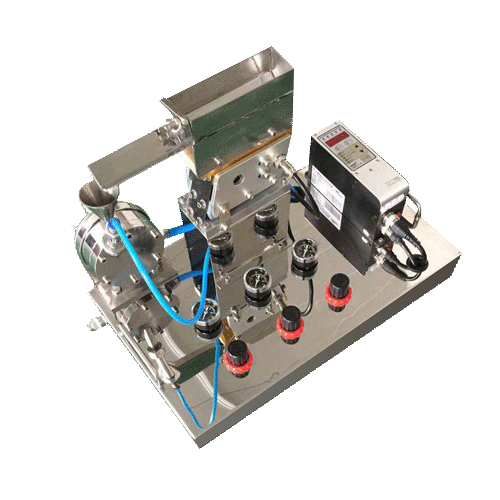
Core Function and Working Principle
How It Transforms Materials
The micro airflow pulverizer converts bulk or granular feed materials into ultra-fine powders through high-velocity particle collisions. Unlike traditional mechanical mills that rely on impact or shear from moving parts, this device uses compressed air or inert gas as the primary energy source.
Mechanism of Action
The process begins when feed material enters the grinding chamber via a Venturi nozzle at subsonic speeds (around 50 m/s). Inside the specially designed disc-shaped chamber, multiple nozzles accelerate the particles to supersonic velocities (up to 350 m/s), creating intense particle-to-particle and particle-to-wall collisions. This impact breaks the particles down to the desired fineness. An integral air classifier then separates the fine particles from the coarse ones, returning oversized particles for further grinding. The final product is collected in a cyclone or filter system.
Key Process Parameters
Critical parameters include grinding gas pressure, feed rate, nozzle geometry, and classification speed. Adjusting these allows operators to achieve target particle sizes ranging from a few microns down to submicron levels. Because the process is pneumatic and operates at a constant low temperature (due to the Joule-Thomson effect when gas expands), it is ideal for heat-sensitive or low-melting-point materials.
Main Types and Configurations
Although the micro airflow pulverizer is a single product category, it is available in different configurations to suit specific needs:
- Lab-Scale Models: Small footprint units with a feed capacity from grams to a few kilograms per hour, ideal for R&D, formula development, and small-batch processing.
- Pilot and Production Models: Scaled-up versions with throughput from tens to hundreds of kilograms per hour, maintaining the same grinding characteristics for seamless scale-up.
- Specialized Designs: Options include inert gas circuits for explosive or oxidative materials, closed-loop systems for toxic or sterile APIs, and isolation glovebox integration for potent compound handling.
All variants share the same core principle but differ in chamber size, nozzle layout, and automation level.
Key Performance Indicators and Selection Criteria
Processing Capacity and Throughput
Laboratory micro airflow pulverizers typically handle 100 g/h to 10 kg/h, while production units can exceed 500 kg/h. Select a model that matches your batch size and production schedule.
Particle Size Control and Precision
Most devices can achieve D90 from 1 µm to 50 µm with narrow distribution (span < 2). The ability to adjust classification speed and grinding pressure gives excellent control over the final particle size distribution.
Energy Efficiency and Contamination
Since there are no moving mechanical parts in the grinding zone, energy is used directly for particle breakage. Wear is minimal, and product contamination from metal abrasion is virtually eliminated—a crucial factor for high-purity applications.
Automation and Ease of Use
Modern micro airflow pulverizers feature PLC control with touchscreen interfaces, allowing recipe storage, data logging, and remote monitoring. Pneumatic controls ensure safe operation in explosive environments without electrical sparks.
Maintenance
The simple, modular design facilitates quick disassembly for cleaning and inspection. Wear components (nozzles, liners) are replaceable, and the system requires minimal routine maintenance compared to mechanical mills.
Application Fields and Selection Advice
Pharmaceutical Industry: Precisely micronize active pharmaceutical ingredients (APIs) to enhance dissolution rates and bioavailability. The closed, sterile design meets cGMP requirements for inhalation powders and injectable suspensions.
Fine Chemicals and Advanced Materials: Produce superfine powders for catalysts, pigments, battery materials, ceramics, and abrasives. The low-temperature process preserves material properties.
Cosmetics and Food: Grind natural ingredients, plant extracts, and functional additives to micro-scale for improved texture and absorption.
Selection Guidance: For laboratory R&D, start with a benchtop micro airflow pulverizer (see product details). For production scale-up, choose a model with proportional geometry and compatible automation. Always test your material with the manufacturer to verify achievable particle size and throughput before purchase.