
What Is a Zirconia Planetary Mill Jar? A High-Hardness, Wear-Resistant Grinding Container for Contamination-Free Fine Milling
What Is a Zirconia Planetary Mill Jar? A High-Hardness, Wear-Resistant Grinding Container for Contamination-Free Fine Milling
At its core, a zirconia planetary mill jar is a specialized grinding container designed to be used in planetary ball mills. Researchers and manufacturers in advanced materials, pharmaceuticals, and electronics use it to mill, mix, and homogenize powders down to sub-micron or even nanometer sizes while virtually eliminating contamination from iron or other metals. Its key material – yttria-stabilized zirconia (ZrO₂) – combines extreme hardness, high fracture toughness, and outstanding wear resistance, making it the preferred choice for demanding applications where sample purity is non-negotiable.
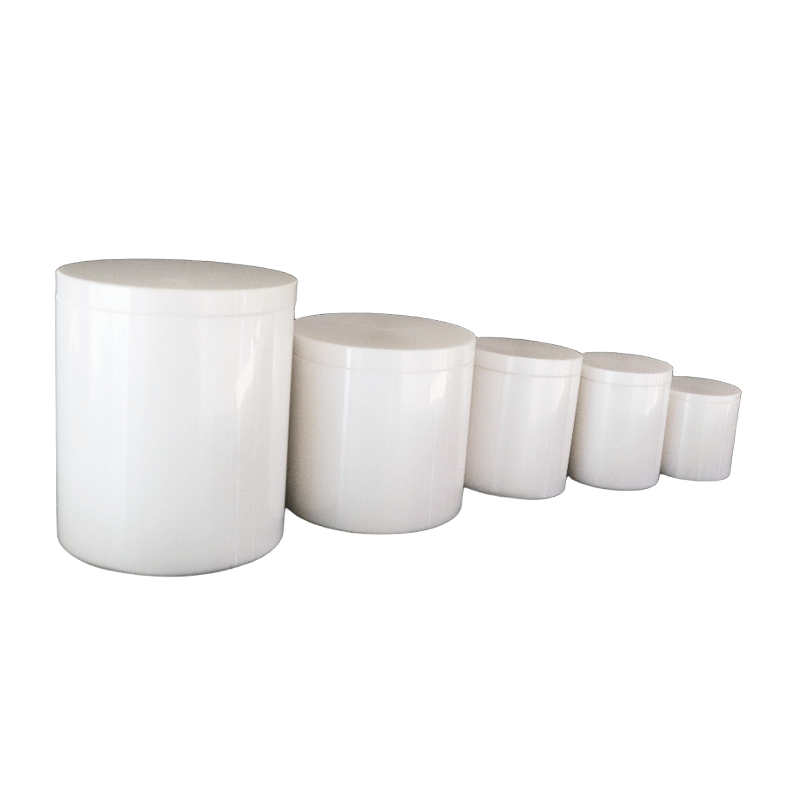
Core Functions and Working Principle
The primary function of a zirconia planetary mill jar is to serve as the reaction chamber where raw materials and grinding media (usually zirconia balls) interact under high-energy planetary motion. When the jar is fixed onto the planetary disk of a mill, it undergoes both revolution around the central axis and rotation around its own axis. This dual motion generates intense centrifugal and Coriolis forces, causing the grinding balls to collide repeatedly with the jar wall and the sample powder.
During the milling process, the jar’s inner surface must withstand continuous impact and abrasion without shedding contaminants. Zirconia’s low coefficient of friction and high density ensure efficient energy transfer to the sample. The sealed lid prevents powder leakage and, if equipped with a vacuum valve, allows milling under inert gas or vacuum conditions, protecting oxygen‑ or moisture-sensitive materials. Parameters such as rotation speed (typically 100–600 rpm), ball-to-powder ratio (e.g., 10:1 to 20:1), and milling time directly influence the final particle size, crystallinity, and phase composition of the product.
Key Characteristics and Material Advantages
Unlike porcelain, agate, or stainless steel jars, a zirconia planetary mill jar offers a unique combination of properties:
- Extreme Hardness – Mohs hardness of 8.5–9, allowing it to grind hard materials like silicon carbide, alumina, and zirconia itself without excessive wear.
- High Fracture Toughness – Zirconia can survive repeated high-energy impacts that would crack agate or corundum jars.
- Chemical Inertness – Resistant to most acids, bases, and organic solvents, ensuring no chemical reactions with the sample.
- Minimal Contamination – Only zirconium and oxygen are released during wear, which is acceptable for many ceramic, battery, and pharmaceutical formulations.
- Smooth Surface – The polished inner wall reduces material adhesion and makes cleaning easier.
These characteristics make the zirconia jar the de facto standard for high‑purity fine milling in research and small‑scale production.
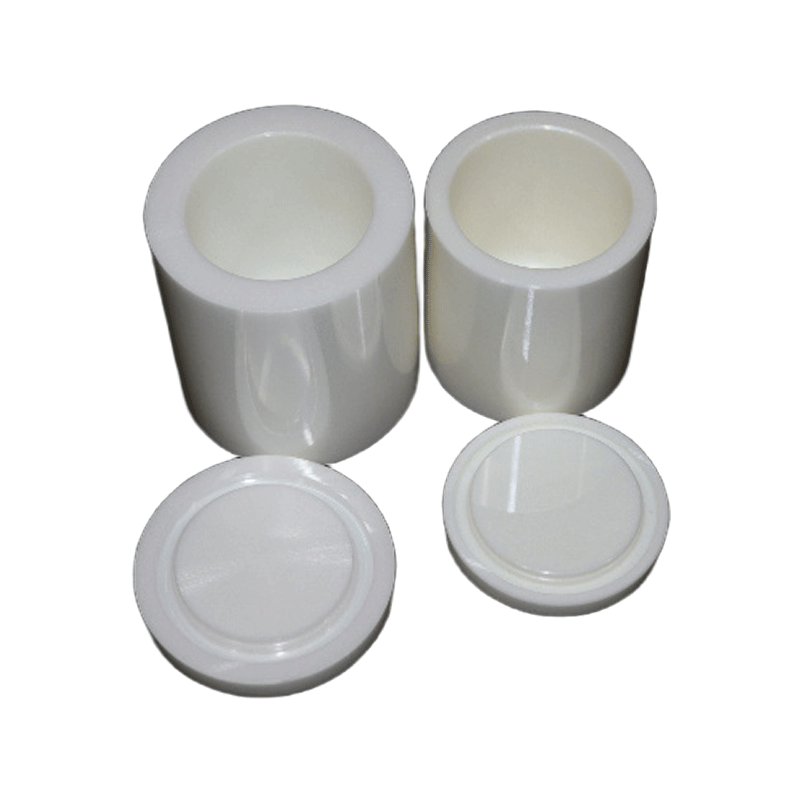
Key Performance Indicators and Selection Criteria
When choosing a zirconia planetary mill jar, consider the following technical parameters:
Capacity and Dimensions
Common capacities range from 50 mL to 500 mL per jar. The jar’s internal volume must match the required sample throughput and the planetary mill’s maximum load. For example, a 250 mL jar can process about 50–100 g of powder per batch (depending on density).
Grinding Efficiency and Particle Size
The jar geometry (cylindrical or square) and the lid sealing method affect the ball trajectory and energy input. A well‑designed jar can achieve D90 < 1 µm in a few hours when combined with appropriate milling parameters. Zirconia’s density (≈6.0 g/cm³) also increases the effective mass of the grinding media, boosting the kinetic energy transferred to the sample.
Wear Resistance and Service Life
High‑quality zirconia jars (e.g., 95% Y‑TZP) can endure hundreds of milling cycles with only negligible weight loss (<0.1% per 100 hours of operation). In contrast, lower‑grade zirconia or partially stabilized zirconia may wear faster and introduce trace impurities.
Compatibility with Milling Environment
Some zirconia jars come with a vacuum‑tight lid (e.g., vacuum planetary mill jar) for inert‑gas or vacuum milling. Others feature a simple screw cap for ambient air milling. Ensure the jar’s sealing system matches your process requirements (risk of oxidation, moisture sensitivity, etc.).
Maintenance and Handling
Zirconia jars are relatively easy to clean: rinse with solvents, then dry. However, they are brittle compared to steel; avoid dropping or applying excessive torque when tightening the lid. Regular inspection for cracks or chips is recommended.
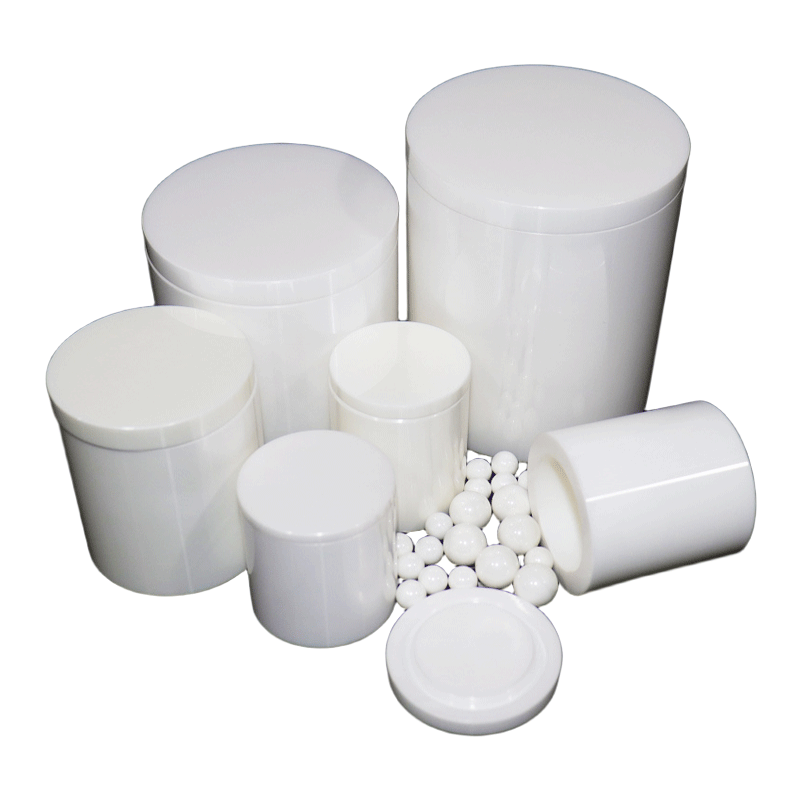
Application Fields and Selection Advice
Zirconia planetary mill jars are widely used in the following industries:
- Advanced Ceramics – milling of zirconia, alumina, silicon nitride, and other hard oxides/non‑oxides for structural and electronic components.
- Battery Materials – preparation of lithium‑ion cathode/anode powders, solid‑state electrolytes, and conductive additives where iron contamination would degrade performance.
- Pharmaceuticals – size reduction of active pharmaceutical ingredients (APIs) for enhanced bioavailability, especially in nanocrystal formulations.
- Catalysis – synthesis of supported metal catalysts and metal‑oxide nanocomposites.
- Geological and Mining Samples – grinding of ores, minerals, and rocks for subsequent analysis (XRD, XRF, etc.).
Selection advice: For routine grinding of hard ceramics and battery materials, a standard zirconia jar with matching zirconia grinding balls is the best choice. If you need to mill oxygen‑sensitive or vacuum‑only materials, opt for a vacuum‑sealed zirconia jar. For extremely hard samples (e.g., tungsten carbide), consider a tungsten carbide planetary mill jar instead. Always verify that the jar volume and closure mechanism fit your planetary mill model (most standard mills accept jars with a flange or lock‑clamp system).