
What is a Vacuum Planetary Mill Jar? A Specialized Vessel for Contamination-Free Grinding under Controlled Atmosphere
What is a Vacuum Planetary Mill Jar?
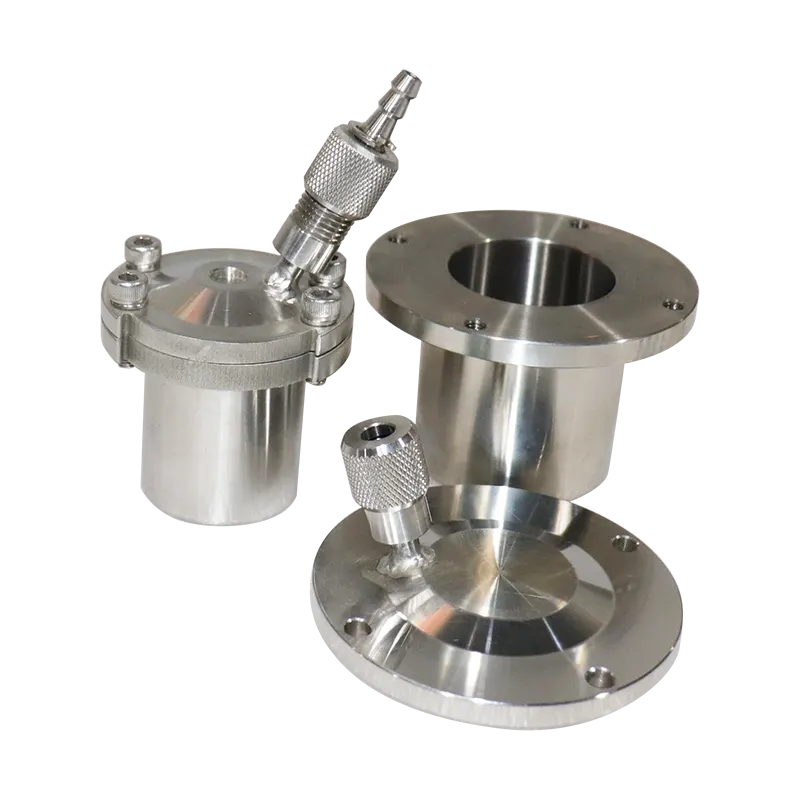
At its core, a vacuum planetary mill jar is a specialized grinding vessel used in planetary ball mills to perform fine grinding, mixing, and mechanical alloying under a controlled atmosphere or vacuum. Researchers and engineers in materials science, chemistry, and pharmaceuticals rely on it to process air-sensitive or oxidation-prone powders without contamination or undesirable chemical reactions.
Core Function and Working Principle
The vacuum planetary mill jar is designed to convert bulk solid materials into fine powders or homogeneous mixtures while maintaining a sealed environment free from air and moisture. The jar is mounted on the planetary disc of a mill, which rotates around a central axis while the jar itself rotates in the opposite direction. This planetary motion generates high centrifugal forces, causing grinding balls inside the jar to impact and shear the sample repeatedly.
The key difference from a standard grinding jar lies in its vacuum-tight sealing system. The lid includes an O-ring seal and a valve port that allows evacuation of air or introduction of inert gas (e.g., argon or nitrogen). By maintaining a vacuum or inert atmosphere, the jar prevents oxidation, moisture absorption, or volatile component loss during milling. This is critical for materials like metal powders, lithium battery materials, and catalysts that must remain pristine.
Key Components and Technologies
Sealing Mechanism
The vacuum seal is typically achieved with a silicone or Viton O-ring compressed by a threaded or clamp closure. A one-way valve or stopcock allows connection to a vacuum pump or gas cylinder. Some models incorporate a safety vent to relieve pressure if needed.
Material Construction
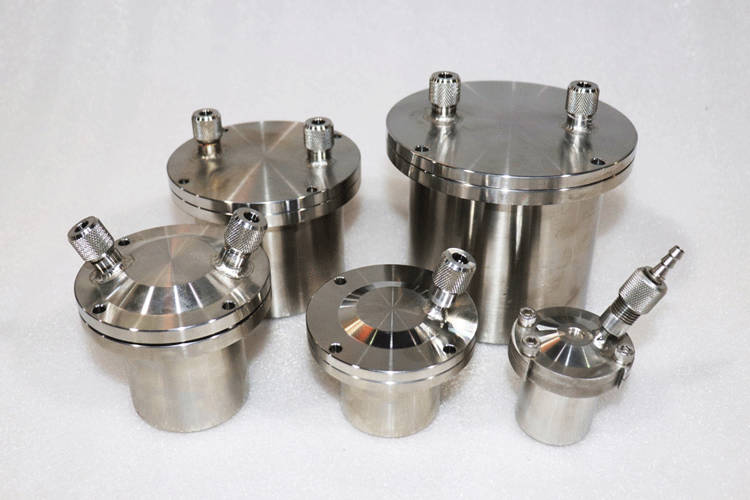
Vacuum jars are commonly made from 304 stainless steel, which offers excellent corrosion resistance and durability. For higher hardness or wear resistance, tungsten carbide or zirconia-lined stainless steel versions are available. The choice of material affects sample purity and grinding efficiency.
Key Performance Indicators and Selection Guide
When choosing a vacuum planetary mill jar, consider the following parameters:
- Volume capacity: Typically from 50 mL to 500 mL per jar. Select based on sample quantity and mill station configuration.
- Vacuum level: Most jars can hold vacuum down to 10-2 to 10-3 Pa. Ensure the seal integrity for your application.
- Leak rate: A low leak rate (<10-6 Pa·m³/s) is essential for long milling processes.
- Material compatibility: Stainless steel is suitable for most inorganic materials; PTFE or nylon jars may be used for organic or corrosive samples.
- Speed and temperature resistance: The jar must withstand the centrifugal forces and heat generated during high-speed milling (300–600 rpm).
- Easy maintenance: Look for designs with replaceable seals and smooth interior surfaces for easy cleaning.
For users who need to mill air-sensitive materials like metal hydrides or lithium compounds, a vacuum jar is indispensable. For general-purpose milling without atmospheric control, standard jars may suffice.
Application Fields and Recommendations
Vacuum planetary mill jars are widely used in:
- Battery research: Preparing electrode materials (LiFePO4, Si anodes) without oxidation.
- Metallurgy: Mechanical alloying of reactive metals and alloys.
- Catalyst synthesis: Milling catalysts under controlled gas environment.
- Pharmaceuticals: Processing hygroscopic or oxygen-sensitive compounds.
- Ceramics and advanced materials: Producing nano-powders with high purity.
For laboratories and R&D centers requiring high-purity milling, we recommend pairing a vacuum jar with a compatible planetary ball mill and appropriate grinding media. Always verify the jar dimensions match your mill's fixture before purchase.