
What is a Vacuum Kneading Machine? A Professional Kneading Equipment for Vacuum Deaeration of High-Viscosity Materials
What is a Vacuum Kneading Machine?
At its core, a vacuum kneading machine is a specialized mixing device designed for the homogeneous blending, kneading, and deaeration of high-viscosity, high-elasticity, and paste-like materials. Industries such as silicone rubber, sealant, adhesive, ink, and battery slurry rely on this equipment to achieve uniform dispersion while removing entrapped air, volatiles, and moisture under vacuum conditions. Unlike ordinary mixers, the vacuum kneading machine combines intense mechanical shear with a controlled negative-pressure environment, making it indispensable for producing bubble-free, high-purity products.
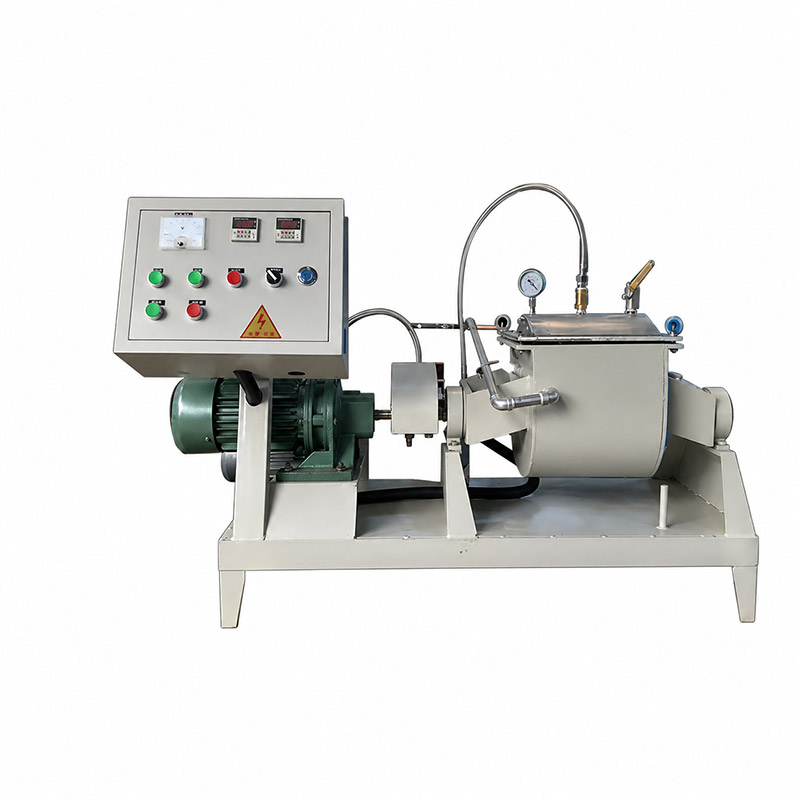
Core Function & Working Principle
The vacuum kneading machine transforms raw materials from a lumpy, sticky, or semi-solid state into a uniformly mixed, deaerated paste. The heart of the machine is a pair of counter-rotating Sigma (Z-shaped) blades that create intense shear, compression, and folding actions. These blades rotate at different speeds, forcing the material from the center toward the walls and back, effectively breaking agglomerates and distributing fillers, pigments, or additives evenly.
Meanwhile, a vacuum pump connected to the sealed chamber maintains a vacuum level typically down to -0.098 MPa or lower. This negative pressure causes dissolved air, bubble nuclei, and low-boiling volatiles to expand, rise, and burst, leaving a dense, void-free compound. Temperature control is achieved through a jacketed heating/cooling system that circulates thermal oil, steam, or water, maintaining the batch within ±1°C of the target. The entire process—from feeding to kneading to discharging—can be automated via a PLC control system, ensuring repeatable quality across batches.
Key Components & Technology
A vacuum kneading machine consists of six major subsystems: the kneading chamber (trough), the mixing blades, the hydraulic system, the transmission system, the vacuum system, and the electrical control system.
- Kneading Chamber & Blades: The trough is typically made of stainless steel (304 or 316L) for corrosion resistance and product purity. The blades are precision-cast and then polished to a smooth finish, ensuring no material hang-up and easy cleaning.
- Vacuum Sealing: The blade shafts are sealed using a vacuum-balanced stuffing box or mechanical seal to prevent air leakage. High-quality machines maintain a vacuum leakage rate below 0.5 mbar per minute at elevated temperatures.
- Discharge Options: Hydraulic tilting, screw extrusion, bottom ball valve, or hydraulic flap discharge are available, depending on the material viscosity and production flow.
- Drive System: The motor, gearbox, and gears provide stable torque. Some models offer variable frequency drives for speed adjustment (typically 15–40 rpm).
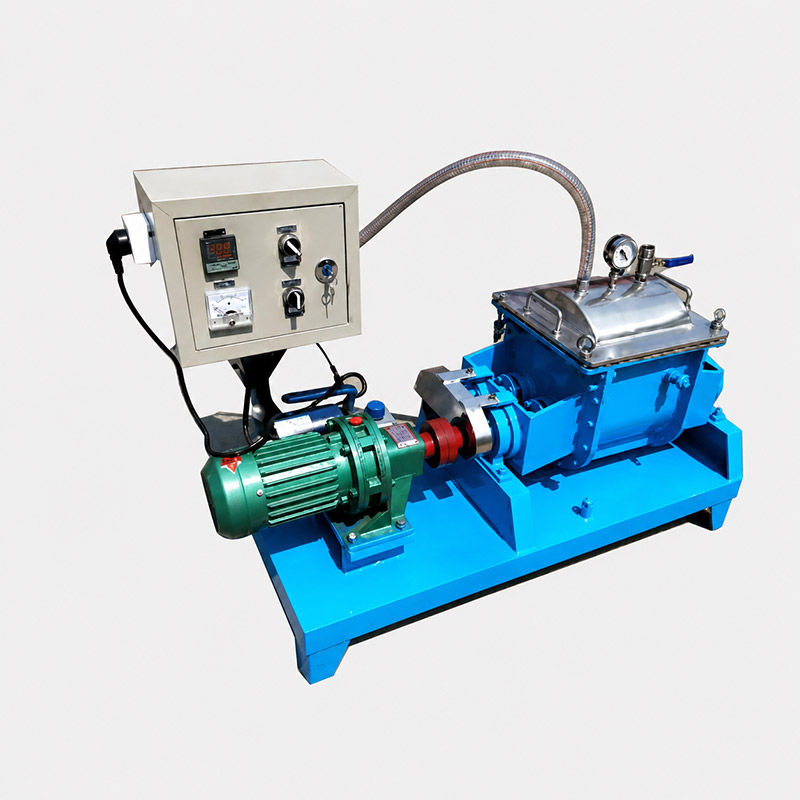
Types & Classification
Vacuum kneading machines can be categorized by construction, heating method, and discharge style:
- By Chamber Type: Standard, pressure-rated, and vacuum-only models. The vacuum type is most common for deaeration applications.
- By Material Contact: Carbon steel (for less corrosive materials), stainless steel (304 or 316L for food, pharmaceutical, and chemical uses), and special alloys.
- By Discharge Mechanism: Hydraulic tilting trough (for high-viscosity pastes), screw extrusion (for continuous or semi-continuous lines), and bottom valve (for low-viscosity fluids).
- By Control: Manual, semi-automatic, and fully automatic PLC-controlled systems.
- By Size: Lab-scale units (1–50 liters) for R&D, pilot-scale (100–500 liters), and production-scale (up to 10,000 liters).
Key Performance Indicators & Selection Guide
When selecting a vacuum kneading machine, consider the following critical parameters:
- Working Capacity: The effective filling volume is typically 60–70% of the total chamber volume to allow proper mixing action.
- Vacuum Level: A minimum of -0.095 MPa is needed for most deaeration tasks; high-end models achieve -0.098 MPa or better.
- Viscosity Range: The machine should handle from 1,000 to 10,000,000 cP (centipoise). Blade geometry and motor power must match the material's rheology.
- Temperature Control: Precision ±1°C is essential for heat-sensitive materials like silicone rubber and adhesives.
- Material of Construction: For food, medical, or high-purity chemical applications, 316L stainless steel with electropolished surfaces is preferred.
- Discharge Efficiency: Choose a discharge method that minimizes dead time and product waste. Hydraulic tilting is versatile; screw extrusion is best for extremely sticky compounds.
- Automation: PLC with recipe storage, data logging, and remote monitoring improves repeatability and reduces operator error.
- Maintenance: Look for easy access to seals, bearings, and heating elements. A reputable manufacturer offers local service support.
Applications & Industry Recommendations
Vacuum kneading machines are widely used in:
- Silicone Rubber & Sealants: Producing base materials for silicone sealants, RTV rubber, and conductive adhesives.
- Adhesives & Hot Melts: Deaerating epoxy, polyurethane, and acrylic adhesives.
- Battery Materials: Mixing electrode slurries for lithium-ion batteries, where air bubbles cause defects.
- Pharmaceuticals & Food: Kneading ointments, creams, and chewing gum base under vacuum.
- Chemicals & Pigments: Dispersing carbon black, titanium dioxide, and other fine powders into high-viscosity binders.
Selection Advice: For lab R&D, a small-capacity vacuum kneading machine (5–50 L) with tilting trough and manual control is cost-effective. For medium-scale production, a 100–500 L machine with PLC and screw discharge offers a good balance. For large-scale continuous manufacturing, consider a 1000 L+ machine with hydraulic tilting and integrated vacuum system. Always request a trial run with your actual material to verify performance.