
What are Tungsten Carbide Mill Balls? A High-Density Grinding Media for Ultra-Hard Material Processing
What Are Tungsten Carbide Mill Balls?
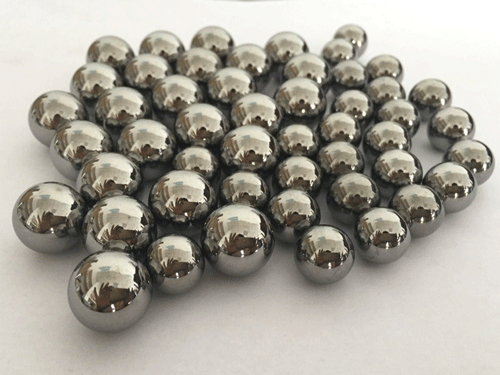
At their core, tungsten carbide mill balls are a specialized type of grinding media designed for high-energy ball mills, such as planetary ball mills, drum ball mills, and vibration ball mills. They are used by laboratories and industries to pulverize, mix, and mechanically alloy extremely hard and brittle materials—from cemented carbides and ceramics to refractory metals and mineral ores. With a density nearly twice that of steel and a hardness approaching that of diamond, these balls deliver unmatched grinding efficiency and wear resistance.
Core Function and Working Principle
Tungsten carbide mill balls transform coarse feed materials into fine or ultra-fine powders through a combination of impact and attrition. In a ball mill, the grinding jar containing the material and the balls is set into motion—typically by planetary rotation, jar rolling, or vibration. The high specific gravity (≈14.5–15.0 g/cm³) of tungsten carbide generates a much higher kinetic energy per ball compared to standard steel or ceramic media. This concentrated energy effectively fractures hard particles and reduces them to submicron sizes in shorter processing times.
Key parameters influencing the final particle size include ball diameter, ball-to-powder weight ratio, rotation speed, and grinding time. For instance, a typical 10 mm tungsten carbide ball can deliver impact forces sufficient to break down tungsten carbide waste, silicon carbide, or boron nitride powders. The spherical shape and smooth surface also minimize contamination, while the material's extreme hardness (HRA ≥ 90) ensures the balls themselves experience minimal wear, maintaining stable performance over hundreds of grinding cycles.
Core Characteristics and Why They Matter
Unlike other grinding media like stainless steel, zirconia, or agate balls, tungsten carbide mill balls offer a unique combination of properties:
- Highest Density: Specific gravity >14.5 enables faster grinding and finer results, especially for materials that require high impact energy.
- Exceptional Hardness: With a Rockwell hardness of HRA 90–92, they can grind almost any known material except diamond, making them ideal for hard and super-hard substances.
- Outstanding Wear Resistance: Tungsten carbide is one of the most wear-resistant materials; the balls maintain their spherical shape and size for many batches, reducing replacement frequency and cross-contamination risks.
- Chemical Inertness: They resist attack from most acids and alkalis, allowing use in corrosive environments where other media would degrade.
These properties make tungsten carbide balls the preferred choice when contamination from other metals or ceramics must be avoided, such as in semiconductor material research, battery electrode powder production, and precious metal recycling.
Key Performance Indicators and Selection Criteria
When choosing tungsten carbide mill balls, consider the following technical parameters:
- Diameter Range: Available from 1 mm to 30 mm or larger. Larger balls (≥10 mm) are best for coarse crushing, while smaller balls (≤5 mm) are suitable for fine and ultra-fine grinding.
- Ball-to-Powder Ratio (BPR): Typically 4:1 to 10:1 by weight. Higher ratios increase grinding energy but may cause excessive heating; optimization is needed for heat-sensitive materials.
- Compatibility with Jar Material: For best results, use tungsten carbide balls together with a tungsten carbide planetary mill jar to eliminate contamination from jar wear. Alternatively, zirconia jars can be used for less demanding applications.
- Durability: Under normal dry grinding conditions, tungsten carbide balls can last for hundreds of hours. Their service life can be extended by avoiding impact against jar walls at maximum speed.
Applications and Selection Advice
Tungsten carbide mill balls are widely applied in:
- Powder Metallurgy: Grinding and mixing of tungsten, titanium, and other refractory metal powders for cemented carbide and alloy production.
- Advanced Ceramics & Electronics: Pulverizing silicon carbide, aluminum nitride, ferrites, and piezoelectric ceramics for high-performance components.
- Geology & Mining: Grinding ore samples for XRF, XRD, and ICP analysis, where sample integrity is critical.
- Battery & Energy Materials: Milling of cathode and anode active materials, solid electrolytes, and carbon composites.
For R&D labs processing small batches of precious or hazardous materials, tungsten carbide mill balls from TENCAN offer the ideal combination of efficiency and purity. For larger production volumes, consider pairing them with a robust planetary ball mill such as the PM 400 series to maximize throughput while maintaining nanoscale results.