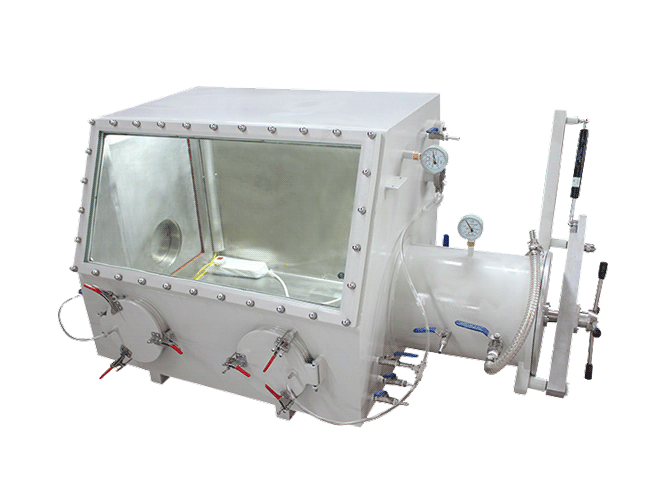
What is a Stainless Steel Vacuum Glove Box? A Sealed Enclosure for Handling Air-Sensitive Materials in an Inert Atmosphere
At its core, a stainless steel vacuum glove box is a highly sealed enclosure that provides a controlled, inert atmosphere for handling air-sensitive or moisture-sensitive materials. Researchers and manufacturers rely on it to create an environment with extremely low oxygen and water vapor levels (often below 1 ppm), enabling safe manipulation of reactive substances such as lithium battery electrolytes, nanomaterials, and organometallic compounds. The unit features built-in glove ports that allow operators to work inside the sealed chamber without breaking the inert atmosphere.
Core Functions and Working Principle
The fundamental function of a stainless steel vacuum glove box is to maintain a stable, ultra-pure inert gas environment (typically argon or nitrogen) inside the main chamber. The working principle involves continuous gas purification: the internal atmosphere is circulated through a purification system that removes oxygen and moisture using catalysts and molecular sieves. An integrated vacuum pump evacuates the transition chamber (antechamber) before samples or tools are moved in or out, preventing contamination of the main workspace.
Key process parameters include the purity of the inert gas, the circulation flow rate, and the regeneration cycle of the purification columns. These parameters directly affect the quality of the inert atmosphere and, consequently, the reliability of experiments. For example, a water vapor concentration below 1 ppm is critical for lithium-ion battery electrode assembly, while oxygen levels below 0.1 ppm are often required for advanced materials synthesis.
Core Components and Key Technologies
Main Chamber and Construction
The chamber is constructed from high-quality 304 stainless steel with a large tempered glass or polycarbonate viewing window. Standard dimensions range from 1220 mm to 2400 mm in length, 750–1200 mm in width, and 900 mm in height, providing ample workspace for different laboratory tasks. The stainless steel body resists corrosion and is easy to clean, ensuring long-term durability.
Gas Purification System
Many advanced models are equipped with an integrated gas purification system (e.g., GP-20). This system continuously recirculates the chamber gas through columns containing copper catalysts and zeolite molecular sieves, reducing H2O and O2 to below 1 ppm. The purification system can be automatically regenerated, ensuring uninterrupted operation.
Control and Monitoring
Modern stainless steel vacuum glove boxes feature Siemens micro-controllers and touch-screen interfaces, allowing users to set pressure, monitor gas purity, and log data. Internet-of-Things (IoT) intelligent systems can collect sensor data (moisture, oxygen, temperature, pressure, and extraction/replenishment frequency) for predictive maintenance and remote monitoring.
Accessories and Options
Common accessories include an Edwards RV8 vacuum pump, HEPA filters, gas flow pipelines, and an adjustable foot pedal for hands-free pressure control. Optional industrial air conditioners can maintain a temperature range of 15–36 °C inside the box.
Key Performance Indicators and Selection Criteria
When selecting a stainless steel vacuum glove box, consider the following critical specifications:
- Leakage Rate: A leakage rate ≤0.05 vol%/h ensures excellent sealing. This is essential for maintaining low oxygen and moisture levels over extended periods.
- Purity Capability: Look for systems that can achieve H2O and O2 concentrations below 1 ppm (some advanced models reach <0.1 ppm).
- Gas Circulation: A high-efficiency circulation fan (e.g., 90 m³/h with variable frequency drive) enables rapid purification and stable atmosphere.
- Chamber Size: Choose dimensions that match your workflow. Single-station glove boxes (1220×750×900 mm) are suitable for routine work, while multi-station units accommodate larger equipment or multiple operators.
- Automation: Touch-screen control, data logging, and remote monitoring options improve reproducibility and convenience.
- Ease of Maintenance: Modular components and accessible glove port rings (aluminum alloy with O-rings) simplify replacement and cleaning.
For users who need the highest purity, a glove box with purification system is recommended. For less critical applications, an acrylic glove box may be a cost-effective alternative, though it offers lower sealing performance and shorter service life.
Application Areas and Selection Advice
Stainless steel vacuum glove boxes are widely used in:
- Material Science: Nanomaterial synthesis, catalyst research, and thin film preparation.
- Lithium-Ion Battery R&D: Electrode assembly, electrolyte filling, and cell testing under inert conditions.
- Pharmaceutical and Chemical: Handling air-sensitive reagents, organometallic chemistry, and pharmaceutical intermediates.
- Semiconductor Manufacturing: Wafer bonding, encapsulation, and materials storage.
For laboratories just starting with inert atmosphere work, a basic stainless steel vacuum glove box with a manual purification system can meet most needs. For high-throughput or ultra-sensitive research, invest in a model with integrated IoT monitoring and automatic regeneration. Always verify that the glove box meets your target purity levels and has a sufficiently low leakage rate.
References
- Stainless Steel Vacuum Glove Box – TENCAN
- Glove Box with Purification System – TENCAN
- Purification System Box – TENCAN