
What is a Small Grinder? A Versatile Tool for Fine Grinding and Sample Preparation
Introduction to Small Grinder
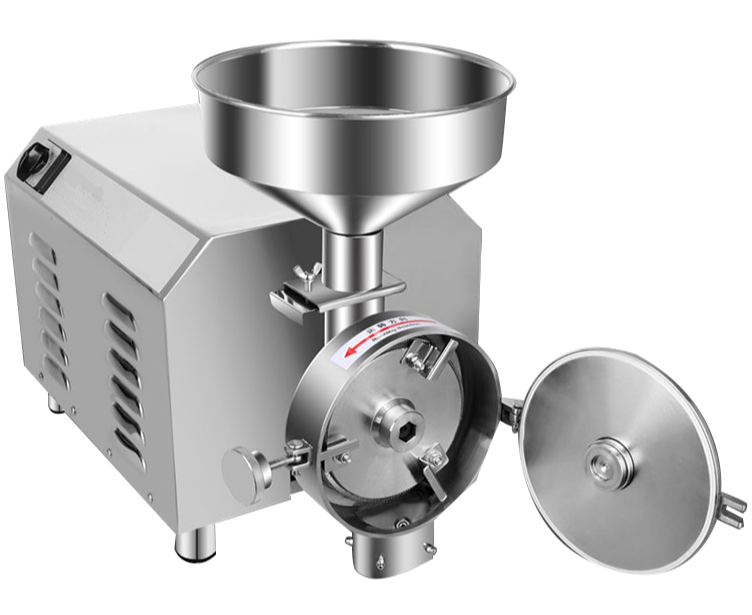
At its core, a small grinder is a compact, high-efficiency grinding machine designed for laboratories, research institutions, and small-scale production environments. It is used to reduce solid materials—such as ores, chemicals, ceramics, herbs, and polymers—into fine powders or uniform particulates. Unlike industrial-scale mills, the small grinder prioritizes precision, ease of cleaning, and minimal sample loss, making it an indispensable tool for sample preparation, quality control, and process development.
Core Functions and Working Principle
Small grinders operate on the principle of impact, shearing, or friction, depending on their design. In a typical model, the material is fed into a grinding chamber where rotating blades, hammers, or grinding media (e.g., balls or rods) collide with the material, breaking it down into smaller particles. The grinding action continues until the particles are fine enough to pass through a mesh screen or reach the desired size distribution.
Key process parameters include:
- Grinding speed (RPM): Higher RPM yields finer particles but may generate heat that can degrade heat-sensitive materials.
- Grinding time: Longer durations produce finer powders, but over-grinding can lead to contamination or particle agglomeration.
- Feed size and moisture content: Coarse or moist materials may require pre-drying or pre-crushing for optimal performance.
The versatility of small grinders lies in their ability to handle both dry and wet grinding, and many models offer adjustable speed controls to suit a wide range of material hardness and brittleness.
Types and Classification
Small grinders are available in several configurations, each optimized for specific applications:
1. Blade Grinders (Swinging Knife Type)
These use high-speed rotating blades to cut and shear materials. Ideal for fibrous or soft materials such as herbs, leaves, and food products. They are easy to clean and suitable for batch operations.
2. Ball Mill Style (Mini Planetary or Vibration Ball Mills)
Small-scale ball mills use grinding jars and balls (e.g., zirconia, agate) to achieve ultra-fine grinding through impact and attrition. Perfect for hard, brittle materials like minerals, ceramics, and electronic powders.
3. Impact Mills (Hammer/Crusher Type)
Equipped with rotating hammers, these grinders can break down larger, harder particles quickly. Commonly used for preliminary crushing of ores or polymers before fine grinding.
4. Jet Mills (Micro Airflow Pulverizers)
These use compressed air or inert gas to create high-speed particle collisions inside a milling chamber, producing very fine powders without mechanical heat. Ideal for temperature-sensitive or high-purity materials.
Choosing the right type depends on the material’s hardness, abrasiveness, moisture content, and desired final particle size.
Key Performance Metrics and Selection Tips
When selecting a small grinder, consider the following technical indicators:
- Throughput (output capacity): Typical lab grinders handle from a few grams to several hundred grams per batch. For high-volume testing, consider models with larger feed openings or continuous feeding features.
- Fineness range: Most small grinders can achieve particle sizes from 100 mesh (150 µm) down to 5 µm or less. Check the manufacturer’s data for achievable D50 or D90 values.
- Material of construction: Wear-resistant materials like stainless steel, ceramic, or polyurethane are essential for abrasive samples. For contamination-sensitive applications, choose grinder chambers and media made from agate, zirconia, or PTFE.
- Speed control and programmability: Digital controls with adjustable RPM and timer allow reproducibility across batch processes. Some advanced models feature touch screens and preset program storage.
- Safety and certification: Look for CE, FCC, or other certifications ensuring electrical safety and noise levels. Features like safety interlocks and overheat protection are critical.
- Cleaning and maintenance: Quick-release grinding chambers, dishwasher-safe components, and easy-access screens reduce downtime between different sample types.
Application Fields and Recommendations
Small grinders are widely used in:
- Chemical and pharmaceutical R&D: For preparing excipients, active ingredients, and catalyst powders with controlled particle size.
- Food and agriculture: Grinding grains, spices, herbs, and seeds for nutritional analysis or product development.
- Materials science: Processing ceramics, semiconductors, batteries, and pigments for lab-scale synthesis and testing.
- Environmental and geological analysis: Preparing soil, coal, ores, and minerals for XRF, XRD, or other spectrometric techniques.
- Cosmetics and biotechnology: Fine grinding of pigments, plant extracts, and bio-materials.
For first-time buyers, start with a mid-range blade grinder if handling general soft to medium-hard materials. For high-purity or reactive powders, consider a jet mill or planetary ball mill. Always request test grinding services from the supplier to ensure the machine meets your specific particle size distribution requirements.
References
Product page: Small Grinder
Related equipment: Three Roll Mill, Micro Airflow Pulverizer, Laboratory Rod Grinder