
What is a Purification System Box? A Specialized Device for Maintaining Ultra-Low Impurity Levels in Glove Box Environments
What is a Purification System Box?
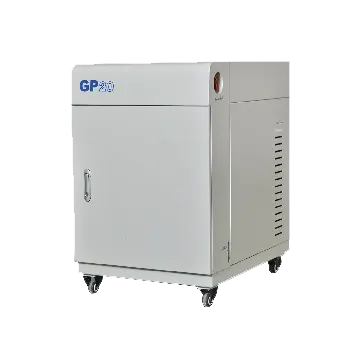
At its core, a purification system box is a specialized gas purification unit designed to maintain an ultra-low impurity environment inside a glove box. Laboratories, battery research facilities, and advanced materials manufacturers use it to continuously remove oxygen, moisture, and organic solvent vapors from the circulating inert gas (such as nitrogen or argon). By keeping H₂O and O₂ concentrations below 1 ppm, the purification system box enables sensitive operations that would otherwise be compromised by atmospheric contamination.
Core Function and Working Principle
The purification system box works as a closed-loop gas treatment station. The glove box’s internal atmosphere is continuously drawn into the purification unit by a circulation fan. Inside the unit, the gas passes through a purification column containing specialized adsorbents and catalysts that chemically bind oxygen and water molecules. After purification, the clean gas is returned to the glove box, maintaining the desired low-impurity level.
The core mechanism relies on two main processes:
- Chemical adsorption: The column contains a copper-based catalyst that reacts with oxygen at elevated temperatures, forming copper oxide, which is later regenerated.
- Physical adsorption: Molecular sieves or activated alumina trap water vapor molecules through physical adsorption.
For organic solvent removal, an additional absorber filled with activated carbon or specialized solvent-adsorbing media is often included. The entire system is controlled by a PLC (Programmable Logic Controller) that manages regeneration cycles, fan speed, and pressure to ensure consistent performance.
Key Components of the Purification System Box
Purification Column
The heart of the system: a stainless steel vessel filled with a mixture of oxygen-adsorbing catalyst and moisture-adsorbing molecular sieves. Typical capacities are 60 liters for oxygen and 2 kg for water, allowing long operation intervals before regeneration is needed.
Circulation Fan
A high-efficiency blower that moves the inert gas through the column at a controlled flow rate (e.g., 70 m³/h at 60 mbar pressure drop). The fan must be leak-tight to prevent ambient air ingress.
Regeneration System
When the purification column becomes saturated, the system automatically regenerates by heating the column while purging it with a regeneration gas (typically a mixture of nitrogen/hydrogen or argon/hydrogen). The regeneration process strips the adsorbed oxygen and moisture, restoring the column's capacity.
Control and Monitoring
Modern purification system boxes feature a touch-screen HMI (Human-Machine Interface) displaying real-time H₂O and O₂ levels, cycle status, and alarms. Automatic regeneration can be triggered by time or impurity concentration thresholds.
Key Performance Indicators and Selection Criteria
When choosing a purification system box for your glove box, consider the following:
- Impurity removal capability: Can the system achieve and maintain < 1 ppm for both H₂O and O₂? This is the industry standard for most sensitive applications.
- Column capacity: Larger capacity (e.g., 60 L oxygen, 2 kg water) means longer intervals between regeneration cycles, reducing downtime.
- Leak rate: The entire purification loop should have a very low leak rate (e.g., < 10⁻⁵ mbar·L/s) to avoid contamination from outside.
- Gas flow rate: Ensure the circulation fan can handle the volume of your glove box (typically 70–100 m³/h for standard boxes).
- Regeneration gas type: Most systems require a 3–5% hydrogen mixture in nitrogen or argon. Check availability and safety requirements.
- Automation level: Look for PLC control with automatic regeneration, pressure control, and remote monitoring capabilities.
Applications and Selection Advice
The purification system box is indispensable in any glove box operation where strict inert atmosphere control is required. Key application areas include:
- Lithium-ion battery research and production: Electrode preparation, electrolyte filling, and cell assembly must be done in H₂O < 1 ppm to prevent decomposition.
- OLED and organic electronics: Organic materials degrade rapidly in the presence of oxygen and moisture.
- Nuclear and tritium handling: Tritium fuel cycling requires detritiation and purification to prevent radioactive contamination.
- Pharmaceutical and chemical synthesis: Air-sensitive reagents and catalysts require a controlled atmosphere.
For small-scale R&D labs, a compact purification system box with a single column may suffice. For production or multi-box installations, look for systems with larger columns, higher flow rates, and network connectivity for centralized monitoring. Always verify compatibility with your glove box model and the intended working gas (nitrogen, argon, helium).