
What is a Plastic Crusher? An Efficient Crushing Equipment for Plastic Waste Recycling
What is a Plastic Crusher? An Efficient Crushing Equipment for Plastic Waste Recycling
At its core, a plastic crusher (also known as a plastic granulator or plastic shredder) is a specialized machine used in the plastics industry to reduce waste plastic materials—such as injection molding sprues, runners, defective parts, and scrap—into small, uniform granules. These granules can then be directly fed back into extruders or injection molding machines, or further processed through granulation lines for reuse. The plastic crusher plays a vital role in improving material utilization rates and reducing the environmental footprint of plastic manufacturing.
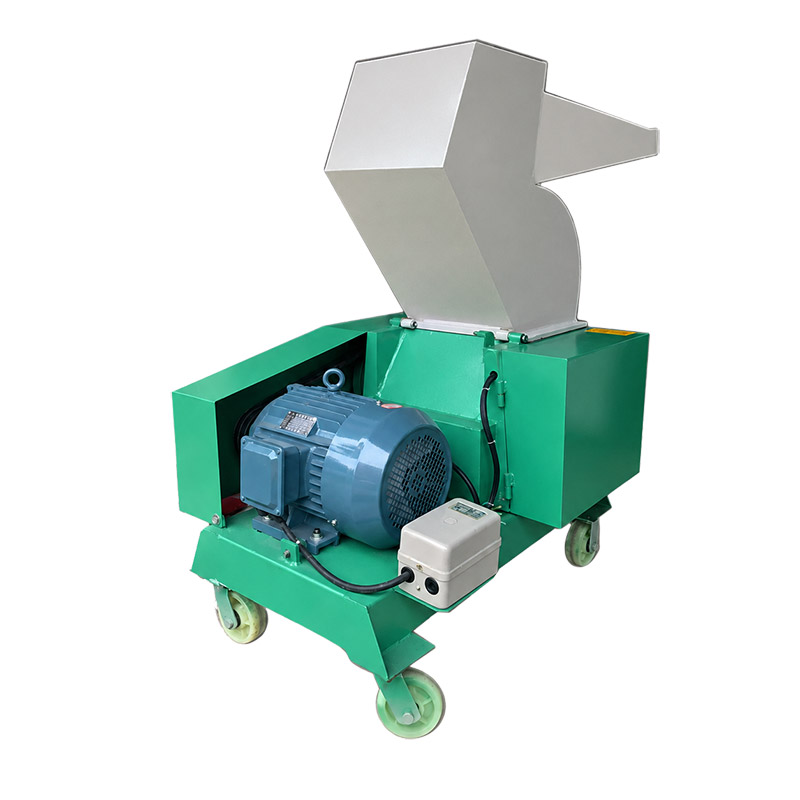
Core Function and Working Principle
The primary function of a plastic crusher is to convert large, irregular plastic pieces from a coarse state into finely crushed particles suitable for recycling. The machine typically consists of a sturdy hopper, a crushing chamber with rotating blades, a stationary screen mesh, and a discharge collector. When plastic waste is fed into the hopper, it enters the crushing chamber where a motor-driven rotor equipped with hardened steel knives rotates at high speed. The knives cut, tear, and shear the plastic against fixed blades, reducing the material's size until it passes through the screen mesh with predetermined apertures.
The working mechanism relies on impact and shear forces. The rotor speed (RPM), blade geometry, screen hole diameter, and the clearance between rotating and stationary knives all influence the final particle size and shape. For instance, a smaller screen mesh yields finer granules but reduces throughput because the material spends more time circulating inside the chamber. The heat generated during crushing can be managed by incorporating ventilation or cooling systems, especially for heat-sensitive plastics like PET or PVC that may soften or stick if temperatures rise too high.
Main Types of Plastic Crushers
Depending on the shape, thickness, and hardness of the waste plastic, plastic crushers are generally classified into three main categories:
1. Hard Plastic Crusher
This type is optimized for crushing rigid plastic sheets, boards, and plates—such as ABS, PE, and PP sheets. It features a rectangular feeding port designed for long, flat pieces, which improves feeding efficiency. The cutting blades are often made of alloy steel and undergo strict balance tests to ensure stable operation. Hard plastic crushers can be combined with suction fans and storage bins to form a complete recycling system.
2. Strong Plastic Crusher
Also known as the universal type, strong plastic crushers are suitable for a broad range of plastic forms, including sheets, pipes, profiles, film scraps, and packaging materials. The knife design is a hybrid between claw-type and flat-type blades, providing balanced performance. This type incorporates sealed bearings for extended service life and a robust motor to handle moderate to heavy loads.
3. Plastic Pipe Crusher
As the name suggests, this crusher is specially designed for processing plastic pipes, tubes, and profiles—such as PE, PVC, silicon core pipes, and conduit. Its circular feeding port accommodates long cylindrical materials, preventing blockages and ensuring smooth feeding. Like other types, it often includes an optional suction system and a soundproofed enclosure to reduce noise levels.
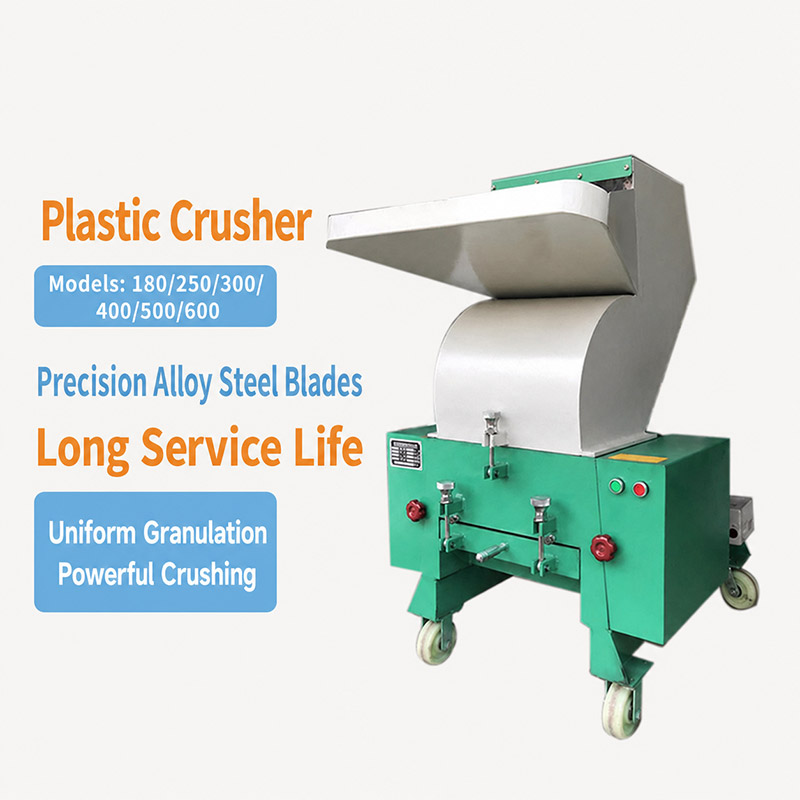
Key Performance Indicators and Selection Criteria
When selecting a plastic crusher, buyers should evaluate the following critical parameters to ensure the machine meets their specific needs:
- Motor Power (kW): Power is not simply