
What is a Multi Dimensional Mixer? A Versatile Mixing Equipment for Uniform Blending of Powders and Granules
What is a Multi Dimensional Mixer?
At its core, a multi dimensional mixer is a professional mixing device used in laboratories and small-scale production to achieve uniform blending of dry powders, granules, and occasionally small amounts of liquid. Unlike traditional single-axis mixers, this equipment employs multi-directional motion—combining rotation, translation, and inversion—to ensure that even materials with different particle sizes, densities, or shapes are thoroughly mixed without segregation. It is widely adopted in chemical, pharmaceutical, food, and material science research for its gentle yet effective mixing action.
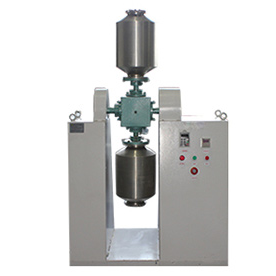
Core Function and Working Principle
The primary function of a multi dimensional mixer is to transform a heterogeneous mixture of solid particles into a homogeneous blend. The machine achieves this by mounting the mixing container—typically a cylindrical drum or a V-shaped vessel—on a mechanism that can rotate and tilt simultaneously in multiple axes. As the container moves, the internal material is continuously lifted, folded, and tumbled, undergoing both convective and diffusive mixing. The absence of internal agitators minimizes heat generation and particle breakage, making it ideal for fragile or abrasive materials.
Key operational parameters include rotation speed, tilt angle, and mixing time. Faster speeds increase the frequency of material turnover but may cause excessive friction for heat-sensitive samples. The optimal parameters depend on the bulk density, flowability, and desired homogeneity of the feed. Many modern multi dimensional mixers offer programmable speed and time controls, allowing users to replicate processes with high precision.
Key Components and Design Features
A typical multi dimensional mixer consists of a sturdy base frame, a multi-axis drive system (often using a combination of motors and gearboxes), and a replaceable mixing container. The container can be made of stainless steel, polyurethane, or other materials to suit different chemical compatibility requirements. Some models come with a vacuum or inert gas purge port for handling oxygen-sensitive or moisture-sensitive materials. The drive system is designed to be low-maintenance, with sealed bearings and belt drives that absorb shock loads.
Compared to other mixers in the same family, such as the V-type mixer or the double cone mixer, the multi dimensional mixer offers a more complex motion pattern that reduces dead zones and shortens mixing time. While a V-type mixer relies on the container's rotation around a single axis, the multi dimensional design adds a secondary tilting motion, dramatically improving the probability of particle collision and exchange.
Key Performance Indicators and Selection Criteria
When selecting a multi dimensional mixer, users should consider the following parameters:
- Working capacity: Typically expressed as a percentage of the total container volume (e.g., 30%-70% fill level). The actual batch size should be chosen to allow sufficient free space for material movement.
- Mixing uniformity: Measured by the coefficient of variation (CV) of a tracer component. High-quality mixers can achieve CV below 5% for most free-flowing powders.
- Speed range: A wider speed range (e.g., 10-50 rpm) provides flexibility for different materials. Variable frequency drives are common for precise control.
- Material of construction: Stainless steel 304 or 316 is standard for clean environments; polyurethane lining may be specified for abrasive materials.
- Automation and safety: Programmable timers, emergency stop, and interlock switches are essential for reproducible and safe operation.
- Maintenance access: Quick-release clamps for container removal and easy-to-clean internal surfaces reduce downtime between batches.
For example, a multi dimensional mixer from TENCAN offers a range of capacities from 1 liter laboratory units to 100 liter pilot models, with stainless steel containers and touch-screen control options.
Application Fields and Selection Advice
Multi dimensional mixers are used in battery materials (e.g., cathode/anode powder blending), ceramic powder preparation, pharmaceutical granule mixing, and additive manufacturing powder composites. They are also suitable for mixing small quantities of additives into bulk powders, where uniformity is critical. For laboratories that process materials with a wide particle size distribution or that require gentle mixing, the multi dimensional mixer is an excellent choice. If the material tends to agglomerate or requires high shear, a high speed dispersing homogenizer might be more appropriate.
For first-time buyers, start with a bench-top model with a 2-5 liter capacity to validate the mixing performance with your actual materials. Scale-up to larger units only after confirming the success at the lab scale. Always request a test report or sample from the manufacturer to confirm that the desired homogeneity level can be achieved.