
What is a Microwave Vacuum Drying Oven? A High-Efficiency Drying Equipment for Heat-Sensitive Materials
What is a Microwave Vacuum Drying Oven?
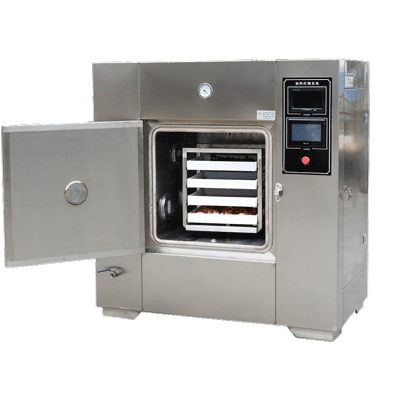
At its core, a microwave vacuum drying oven is a specialized drying device that integrates microwave heating with vacuum technology. Industries such as food processing, pharmaceuticals, chemical manufacturing, and agricultural product treatment use it to rapidly remove moisture from heat-sensitive materials at low temperatures, preserving their color, flavor, and nutritional value. Unlike conventional drying methods that rely on conductive or convective heat transfer, this equipment enables gentle, uniform drying with significantly reduced processing time.
Core Function and Working Principle
The fundamental function of a microwave vacuum drying oven is to transform materials from a wet or solvent-containing state into a dry product with controlled residual moisture. The working principle combines two synergistic technologies:
- Microwave Heating: Microwave energy is a form of electromagnetic radiation that directly interacts with polar molecules (such as water) within the material. This volumetric heating causes the entire mass to heat up simultaneously, eliminating the temperature gradient typical of conventional thermal drying. As a result, drying is faster, more uniform, and can be achieved at lower bulk temperatures (typically 30°C to 100°C).
- Vacuum Environment: By applying a vacuum, the boiling point of the solvent (usually water) is significantly reduced. This allows moisture to evaporate at much lower temperatures, preventing thermal degradation of heat-sensitive components. The vacuum also reduces the oxygen content in the chamber, minimizing oxidation reactions that can spoil the product.
Key process parameters that influence final product quality include microwave power level (adjustable from low to high), absolute pressure (typically in the range of 5–10 kPa), drying time, and temperature setpoint. These parameters are precisely controlled by an intelligent PLC-based system with a touchscreen interface, allowing operators to program complex drying curves tailored to specific materials. The equipment also features advanced microwave distribution technology to prevent arcing under extreme vacuum conditions.
Main Types and Configurations
While the basic principle remains the same, microwave vacuum drying ovens are available in several configurations to suit different scales and applications:
Laboratory-Scale Units
Compact models designed for R&D, pilot testing, and small-batch production. They typically feature a single material tray (e.g., 230 mm diameter), a small working chamber (e.g., 340×320×250 mm), and a water removal capacity of about 0.8 kg/h. These units are equipped with precise temperature control (±0.2°C via infrared sensor) and are ideal for universities, research institutes, and quality control labs.
Industrial-Scale Batch Dryers
Larger units with reinforced vacuum chambers (often constructed with a steel frame and 304 stainless steel interior) are built for continuous or semi-continuous operation. They feature multiple heating trays arranged in a rack system, an integrated condensate collection system, and a vacuum pump with check valves to prevent backflow. These dryers can be customized to handle various material forms—liquids, pastes, powders, granules, blocks, slices, or strips—and are suitable for heat-sensitive products like herbal extracts, beef paste, chemical intermediates, and agricultural products.
Static vs. Dynamic Systems
Most microwave vacuum drying ovens operate in a static mode (trays remain stationary). However, some designs incorporate a rotating or vibrating mechanism to improve material contact with microwave energy, enhancing uniformity for certain sticky or lumpy materials. The choice depends on the material's rheological properties and the desired final moisture content.
Key Performance Indicators and Selection Criteria
When selecting a microwave vacuum drying oven, buyers should evaluate the following critical parameters:
- Drying Capacity: Measured in kilograms of water removed per hour (e.g., 0.8 kg/h for lab units, higher for industrial models). Match the capacity to your production throughput.
- Temperature Range and Accuracy: Most units offer adjustable temperature from 40°C to 100°C, with PID control ensuring stability within ±1°C. Some advanced models use infrared pyrometers for non-contact measurement.
- Vacuum Level: The achievable vacuum pressure (e.g., absolute pressure down to 5 kPa) determines the boiling point reduction and drying speed. A reliable vacuum system with a strong pump and leak-proof chamber is essential.
- Microwave Power and Distribution: Adjustable power (e.g., 0–1000 W) and uniform field distribution prevent hot spots and ensure consistent drying. Special waveguide designs minimize arcing in high-vacuum conditions.
- Automation and Control: Look for PLC-based programmable logic controllers with touchscreen HMI. Features like recipe storage, data logging, remote monitoring, and fault alarms enhance usability and reproducibility.
- Material of Construction: 304 or 316L stainless steel chambers are preferred for food and pharmaceutical applications. The interior should be easy to clean, with rounded corners to prevent accumulation of residues.
- Safety Features: Microwave leakage should be below international standards (e.g., <5 mW/cm²). Automatic power shut-off when the door is opened, over-temperature protection, and vacuum relief valves are standard.
- Energy Efficiency: Microwave vacuum drying is typically 4–10 times more efficient than conventional vacuum drying because energy is directly absorbed by the material rather than heating the chamber walls.
Application Fields and Selection Advice
Microwave vacuum drying ovens are widely used in:
- Food Industry: Drying fruits (e.g., cranberries, blueberries), vegetables, spices, and instant soup mixes while preserving natural flavor and color.
- Pharmaceutical and Nutraceutical: Gentle drying of herbal extracts, traditional Chinese medicine concentrates, enzymes, probiotics, and other heat-sensitive active ingredients.
- Chemical Industry: Drying of specialty chemicals, catalysts, pigments, and solvents that are flammable or volatile, where low-temperature vacuum conditions reduce explosion risk.
- Agricultural Products: Dehydration of grains, seeds, tea leaves, and edible fungi (e.g., shiitake mushrooms) with minimal nutrient loss.
- Material Science: Preparation of advanced materials such as aerogels, nanocomposites, and porous ceramics where conventional drying would cause structural collapse.
For university labs and R&D centers, a compact lab-scale unit with precise control is usually sufficient. For industrial production, a larger batch dryer with robust construction and automation is recommended. If your material is extremely heat-sensitive or requires a very low final moisture content, consider a microwave vacuum freeze-drying oven, which operates at even lower temperatures. Always consult with the manufacturer to tailor the system to your specific material characteristics—every product has unique microwave absorption properties and drying kinetics.