
What is a Laboratory Cone Ball Mill? A Versatile Lab-Scale Grinding Equipment for Fine Material Processing
What is a Laboratory Cone Ball Mill?
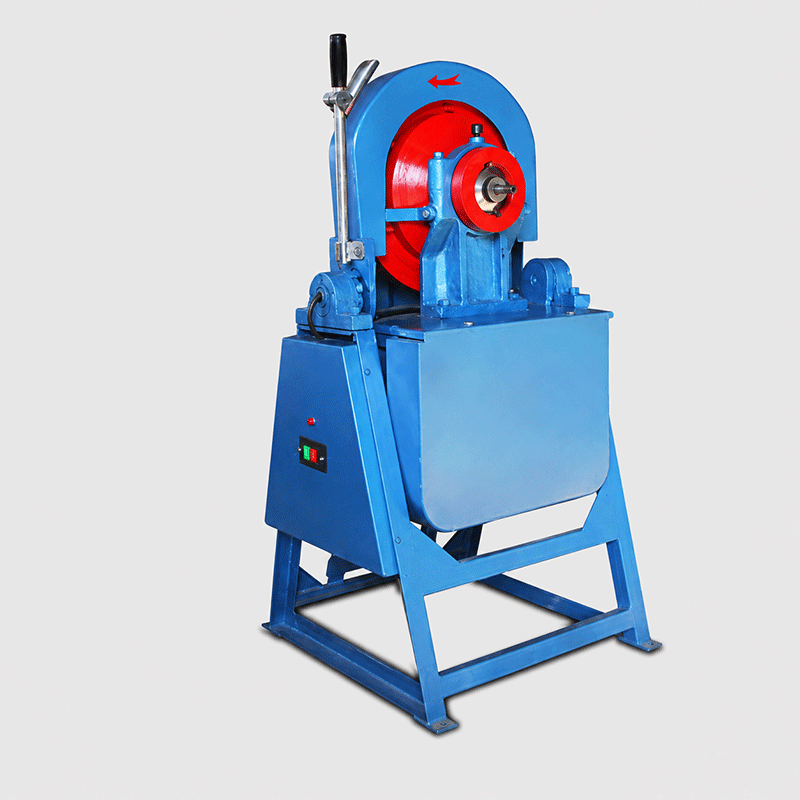
A laboratory cone ball mill is a compact, bench-top grinding device designed for fine milling of small batches of materials in scientific research, quality control, and small-scale production. At its core, it is a type of ball mill that uses a rotating cylindrical chamber partially filled with grinding media (balls) to reduce particle size through impact and attrition. Unlike conventional cylindrical ball mills, the cone ball mill features a short conical section at the discharge end that allows for efficient classification and finer product control. Laboratories in mining, metallurgy, ceramics, and chemical industries use it to prepare samples for analysis, develop new materials, or simulate industrial grinding processes.
Core Function and Working Principle
The primary function of a laboratory cone ball mill is to transform coarse feed materials (typically less than 1/4 inch) into fine powders with particle sizes ranging from 20 to 75 microns, or even finer when operated in a closed circuit with a classifier. The grinding mechanism relies on the rotation of a cylindrical-conical drum. As the drum rotates, the grinding balls (usually steel or ceramic) are lifted by the internal shell and fall back onto the material, causing repeated impact and grinding. The conical shape at the discharge end creates a gradient in ball size distribution: larger balls accumulate near the feed end for coarse crushing, while smaller balls migrate toward the cone for fine grinding. This design promotes a more efficient size reduction with less over-grinding compared to straight cylindrical mills.
Key operating parameters include drum rotation speed (typically 65%–75% of critical speed to avoid centrifuging), grinding media size and density, feed particle size, and milling time. The ball mill speed is critical: if too high, the balls stick to the wall (centrifugal regime) and no grinding occurs; if too low, the balls lack sufficient energy. Wet grinding is common for laboratory applications to reduce dust and enhance material flow, while dry grinding is also possible. The final particle size distribution can be controlled by adjusting the residence time, ball-to-material ratio, and slurry viscosity.
Key Components and Design Features
A laboratory cone ball mill consists of several essential parts: the drum (cylinder + cone), grinding media, drive system, discharge port, and optional accessories like a frame, safety cover, and speed controller. The drum is typically made of wear-resistant steel or stainless steel, with an inner liner (rubber or ceramic) to protect the shell and reduce contamination. The cone angle is optimized for material flow and classification. The drive system uses an electric motor coupled with a gearbox or belt drive to rotate the drum at adjustable speeds. Many laboratory models also include a timer and variable frequency drive for precise process control.
Unlike industrial ball mills, the laboratory cone ball mill is designed for small batch sizes (e.g., 1–20 kg per batch) and easy cleaning between runs. Some models offer a quick-release mechanism for the drum or a tilting frame to facilitate discharging and cleaning. For vacuum or inert gas grinding, a sealed jar with a vacuum adapter can be used. The compact footprint and low noise make it suitable for benchtop use in shared lab environments.
Key Performance Indicators and Selection Criteria
When selecting a laboratory cone ball mill, several performance indicators should be considered:
- Capacity and batch size: Typically ranges from 1 kg to 20 kg per batch. Smaller capacities suit R&D labs, while larger ones are for pilot-scale testing.
- Grinding fineness: Achievable particle size down to 20–75 µm in normal operation, and sub-micron levels with extended milling and appropriate media.
- Speed range and control: Variable speed drives allow optimization for different materials. A digital display of RPM is preferred.
- Material of construction: Stainless steel is standard for general use; ceramic-lined or polyurethane-lined drums reduce metal contamination for sensitive materials.
- Ease of cleaning and maintenance: Quick-dismantle drums, smooth surfaces, and accessible bearings simplify cleaning between samples.
- Noise and safety: Enclosed designs with soundproofing and safety interlocks improve lab working conditions.
Other considerations include the availability of different grinding media (e.g., steel, zirconia, agate) and the option to operate in batch or continuous mode. For most laboratory applications, a simple batch cone ball mill with variable speed and a dust-proof seal is sufficient.
Applications and Selection Advice
The laboratory cone ball mill is widely used in mineral processing laboratories for preparing ore samples for assay, flotation test, or leaching experiments. It is also common in ceramics and glass research for grinding raw materials like feldspar, quartz, and clay. Chemical and pharmaceutical labs use it for catalyst preparation, pigment dispersion, and fine chemical synthesis. For educational institutions, it serves as a teaching tool for demonstrating comminution principles.
For users who require extremely fine grinding (sub-micron) or high throughput, other lab grinding equipment like the lab air jet mill or laboratory rod grinder may be more suitable. However, for general-purpose fine grinding with good particle size control and low contamination risk, the cone ball mill offers an excellent balance of performance, simplicity, and cost-effectiveness.