
High Throughput Tissue Grinder Buying Guide
Anyone who has prepared a few hundred tissue samples for nucleic acid extraction or protein analysis knows where the schedule breaks. The extraction chemistry, the plate reader, and the thermal cycler all run at predictable speeds, but homogenization swings wildly with tissue type, sample mass, and how many tubes a single instrument can handle at once. When samples are disrupted one tube at a time, a full plate can consume an entire working day, and the variation between the first tube and the last becomes a variable nobody planned for.
A high throughput tissue grinder moves disruption out of the single-tube format and into a parallel, enclosed one. Several samples are processed at the same time inside sealed jars, so throughput scales with the number of positions on the instrument rather than with the operator's hands. The engineering questions that follow are straightforward: how the mechanical energy is generated, what limits it, and how to specify a machine that fits a particular sample mix.
Why Disruption, Not Detection, Sets the Pace of Sample Prep
Homogenization is the least standardized step in most molecular workflows, and for good reason. Leaf tissue with fibrous vascular bundles, liver with high lipid content, muscle with dense connective tissue, and seeds with a hard mineral phase all respond differently to the same mechanical input. A setting that produces a clean lysate from soft liver may leave leaf midribs intact, and a setting powerful enough to break seeds may shear the DNA in brain tissue.
Two failure modes dominate, and both are usually discovered only after a batch is finished. The first is incomplete disruption. Intact fragments retain nucleic acids and proteins that never enter the lysate, so yield drops and quantification becomes unreliable. The second is over-disruption. Excess energy, an unnecessarily long cycle, or a warm jar degrades exactly the molecules the assay was designed to measure, and it can fragment long DNA into sizes that complicate downstream library preparation.
The cost of these failures is not limited to the samples themselves. A batch that has to be repeated consumes reagents, instrument time, and operator attention, and in clinical or agricultural testing the delay can push a result past its reporting window. Because the failure appears at batch level rather than tube level, it is also harder to trace: the operator sees a low yield or a poor sequencing result days later, with no obvious single tube to blame. Standardizing the disruption step is therefore a risk-management decision as much as a time-saving one.
Before choosing equipment, it helps to answer four questions about the workflow itself:
- How many samples must be processed in a single working session, and how often?
- What is the hardest tissue in the mix — fibrous, fatty, mineralized, or frozen?
- Which analyte is most sensitive to heat — RNA, intact protein, enzymes, or long genomic DNA?
- Is trace-metal or polymer contamination a concern for the downstream assay?
Those four answers narrow the field faster than any single specification number, because they define both the mechanical energy required and the temperature and contamination limits the instrument must respect.
How a High Throughput Tissue Grinder Works
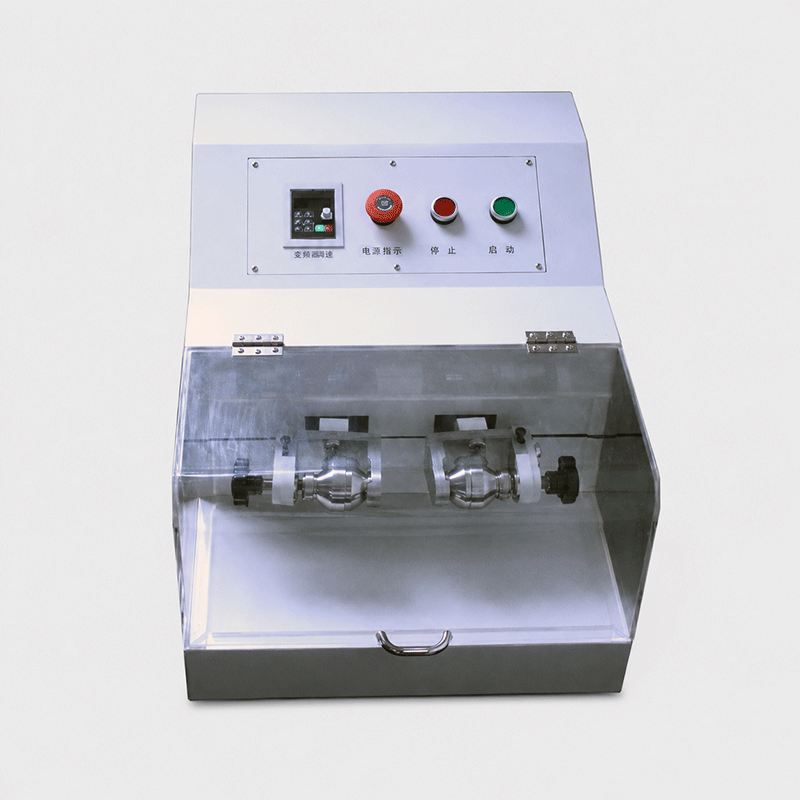
A high throughput tissue grinder is a ball-mill style instrument adapted for biological samples. Each sample sits in its own sealed jar or tube together with one or more grinding balls. The holder carries multiple jars at once, and the machine drives them through a rapid, repetitive motion — vertical oscillation, horizontal oscillation, or a planetary pattern, depending on the design. Disruption comes from impact, shear, and friction as the media repeatedly strike and roll across the tissue, rather than from a rotating blade cutting through it.
Three practical consequences follow from that arrangement. Samples stay sealed during processing, which limits aerosol formation and reduces the chance of material moving between positions. The same motion that breaks tissue also keeps the homogenate mixed, so the subsample taken for analysis is more likely to represent the whole. And because energy is delivered through the media rather than through a probe, jars can be disposable, autoclavable, or made from a material chosen to suit the sample — a meaningful advantage when trace analysis rules out metal contact.
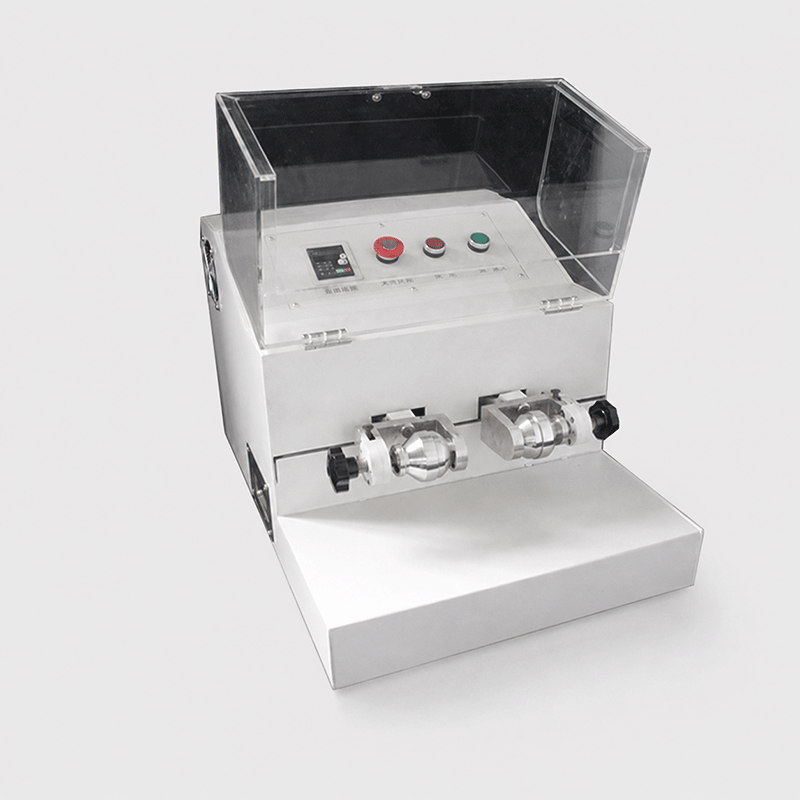
A high throughput tissue grinder disrupts multiple sealed samples in parallel rather than one tube at a time.
The motion type is worth understanding before comparing models, because it shapes both the grinding action and the wear pattern. Vertical oscillation produces a strong impact component and is effective on brittle, frozen material. Horizontal oscillation emphasizes friction and shear across the jar wall, which suits softer hydrated tissue. Planetary motion combines rotation and revolution, so the media travel a longer path and the sample is continuously redistributed inside the jar. None of these is universally superior; the right choice depends on whether the routine mix is dominated by tough fibrous samples or by delicate ones.
Impact, Shear, and Friction in a Sealed Jar
Impact is the dominant mechanism for brittle, frozen, or mineralized tissue. A dense ball traveling at speed transfers energy at the point of contact, and the tissue fractures along its weakest planes. Shear becomes important in softer, hydrated samples, where the tissue deforms before it breaks and the useful work happens at the interface between the ball surface and the sample. Friction acts continuously along the jar wall and between particles, and it is responsible for most of the heat generated during a run.
Because these three mechanisms are additive rather than interchangeable, changing one operating parameter rarely produces a predictable, linear change in the result. Increasing frequency raises impact energy but also raises the friction term, so a sample that is sensitive to heat may end up worse off even though more energy was applied. This is why protocols for a new tissue are usually built empirically, starting from conservative settings and working upward until disruption is complete but the analyte remains intact.
What "High Throughput" Means in Real Bench Terms
Manufacturers quote throughput as samples per run, but the number that affects a schedule is samples per working hour, including loading, cooling, cleaning, and quality checks. An instrument with many positions but a slow, awkward loading routine can be slower in practice than a smaller machine that accepts pre-filled tubes and starts immediately.
Throughput in a working laboratory therefore depends on several factors at once:
- The number of independent jar or tube positions available in the holder.
- Cycle time for the hardest tissue in the routine mix, not the average one.
- Whether jars can be loaded and unloaded while another batch runs.
- Cleaning time between batches, especially when working with RNA or with pathogenic material.
- Whether the protocol needs active cooling or intermittent cycles that extend total run time.
The high throughput tissue grinder from TENCAN is built around this parallel-processing principle, with jar formats and holder arrangements that can be matched to sample volume and analyte sensitivity. The relevant selection question is not how many positions exist in theory, but how many of them can be used routinely with the samples the laboratory actually receives.
Matching Grinding Media and Jar Materials to Sample Type
Media and jar material are the two choices that most often decide whether a protocol succeeds, yet they are frequently treated as an afterthought. The material determines density, hardness, wear behavior, and the type of contamination a sample may pick up. Stainless steel, zirconia, agate, tungsten carbide, and polymers such as PTFE are all used in laboratory grinding, and each occupies a different position on the trade-off between disruption power and cleanliness.
Mechanical disruption also sits on a spectrum with other lysis methods. Chemical and enzymatic lysis can be gentler and require no hardware, but reagents add cost per sample, enzymatic digestion needs an incubation step, and neither method copes well with tough fibrous or mineralized tissue. Mechanical grinding is faster and more universal, at the price of managing heat transfer, media wear, and cleaning. Many laboratories use a short mechanical step to break structure and then rely on detergent or enzyme chemistry to complete lysis, which keeps the mechanical cycle short and limits heat exposure.
Media Density, Size, and Sample Hardness
Denser media carry more kinetic energy into each collision, which is why they are preferred for tough or fibrous samples and for material that has been frozen. The penalty is twofold: more energy also means more heat, and harder media wear faster against hard samples, releasing trace material into the homogenate. Zirconia offers a useful middle ground for many biological applications because it is dense but chemically stable, while agate and polymer media are chosen when the analytical method is unusually sensitive to metal ions.
Ball size works in the opposite direction from density. Many small balls create more contact points and tend to produce a finer, more uniform homogenate at a given energy level, which suits small sample masses and delicate tissue. Fewer, larger balls deliver stronger individual impacts, which is more effective for seeds, bone, cartilage, or insect cuticle. The ratio of media mass to sample mass is the variable that most directly controls how quickly disruption is completed, and it is the first thing to adjust when a cycle finishes with visible intact tissue.
Contamination Control and Cross-Talk Between Positions
Contamination enters a sample preparation workflow in two ways: material released from the jar and media, and material carried over from a previous sample. The first is a materials question. Steel media in contact with acidic buffers can release iron and chromium, and ceramic media can shed small amounts of their own constituents. For trace-element analysis, polymer jars or acid-washed ceramic jars reduce the background, while ordinary DNA and protein workflows are usually unaffected by media wear at the levels involved.
The second is a handling question. Cross-talk between positions depends mainly on jar sealing, on how carefully samples are loaded, and on the cleaning protocol between batches. Sealed jars and disposable tube formats limit both aerosol and liquid carryover, and a written cleaning sequence — rinse, detergent, rinse, appropriate decontamination solution, dry — does more for reproducibility than any single piece of hardware. Confirm with your supplier which jar materials can be autoclaved and which cleaning agents are compatible, since aggressive alkaline solutions and some organic solvents attack certain polymers and coatings.
Temperature Control and Cryogenic Grinding
Most complaints about tissue grinders trace back to heat. The mechanical energy needed to break tissue does not disappear when the tissue breaks; a fraction of it converts to heat at the contact points, and because each sample is processed in a small, sealed volume with limited heat capacity, the temperature inside the jar can rise faster than intuition suggests. For RNA, for intact proteins, and for enzymes, that rise is the difference between a clean preparation and a degraded one.
Three approaches are commonly combined. The first is pre-freezing: samples are snap-frozen and processed while still cold, which makes brittle tissue fracture more readily and offsets some of the heat generated. Liquid nitrogen and dry ice are both used, and both require proper personal protective equipment and ventilation. The second is intermittent operation — short grinding intervals separated by cooling pauses — which is often more effective for heat-sensitive samples than one continuous run at reduced frequency. The third is active cooling of the jar holder itself, where the instrument and jar material support it.
Freezing changes the mechanics of grinding as well as the temperature. A thoroughly frozen sample behaves like a brittle solid and fractures cleanly; a partially thawed sample behaves like a soft solid and absorbs energy by deforming instead. Over-freezing a sample to the hardness of a mineral can accelerate jar and media wear, so the aim is a consistently frozen state rather than the coldest possible one. Because jar materials differ in how they behave at low temperature — some polymers become brittle — confirm cryogenic compatibility with the supplier before building a routine around liquid nitrogen.
It also helps to think about where heat accumulates. A full holder of jars generates more heat than a partially loaded one, and a batch of dense tissue generates more than the same number of soft samples, so a protocol validated with a half-loaded instrument may behave differently at full capacity. If a laboratory plans to run near the instrument's position limit, temperature behavior should be verified under realistic loading rather than assumed from small test batches.
Operating Parameters That Determine Homogenization Quality
Once the hardware is fixed, results are governed by a small set of variables. They interact, so the practical approach is to change one at a time and record what happens.
- Sample mass per jar. Overloading is the most common single cause of incomplete disruption, because the media cannot move freely through the sample.
- Media-to-sample ratio. More media mass speeds disruption but increases heat generation and wear.
- Ball number and diameter. Determines whether energy arrives as many small contacts or as fewer strong impacts.
- Oscillation frequency and amplitude. Sets the kinetic energy available per cycle and the rate at which heat accumulates.
- Cycle time and number of cycles. Longer stops helping once disruption is complete.
- Cooling intervals. Protect heat-sensitive analytes without reducing total mechanical work.
- Buffer volume and composition. Affects heat capacity, foaming, and how easily the homogenate is recovered.
- Pre-processing. Cutting tissue into small pieces, removing hard connective structures, and freezing consistently all reduce run-to-run variation.
Frequency and time are the two settings operators adjust first, and they are also the two most likely to be set too high. A useful rule is to find the shortest cycle that fully disrupts the hardest sample in the batch under realistic loading, then verify that the most sensitive analyte in that batch survives it. If those two requirements conflict, the conflict usually has to be resolved by changing media, sample mass, or cooling rather than by splitting the difference on time.
Buffer choice deserves more attention than it usually receives. Liquid in the jar increases thermal mass, which slows temperature rise, but too much liquid cushions the media and reduces the effective collision energy. Lysis buffer that foams under vigorous motion can also push sample onto the jar seal, where it may dry and later contaminate the next batch. Keeping the liquid volume modest and consistent, and choosing a buffer chemistry that resists foaming, makes the mechanical step more predictable without changing any instrument setting.
Building a Repeatable Protocol
Reproducibility comes from controlling inputs, not from controlling the instrument alone. Sample mass should be weighed or at least consistently estimated, tissue should be cut to a similar size, freezing time before processing should be standardized, and the same jar and media set should be used for the same tissue type. Recording the settings alongside the result — including any visible intact material — builds an internal reference that makes troubleshooting much faster when a new tissue type appears.
Verification matters more than appearance. A homogenate that looks uniform can still contain intact cells, and a fully disrupted sample can still have lost its RNA. Microscopic inspection of a stained aliquot, a quick yield comparison, or a check of fragment size on a subset of samples will tell you more than visual inspection of the jar. Whichever method is available, apply it to the first batch of a new protocol rather than to the tenth.
Selection Criteria for a High Throughput Tissue Grinder
Specification sheets tend to emphasize numbers that are easy to print and hard to compare. The criteria below are the ones that usually determine whether an instrument fits a laboratory, and each is worth confirming directly with the supplier rather than inferring from a catalog.
| What to evaluate | Why it matters | What to confirm |
|---|---|---|
| Number of processing positions | Sets the ceiling on samples per run and batch overlap | Usable positions with the jar format you plan to use |
| Jar and tube formats | Determines sample volume range and consumable cost | Available materials, sealing method, and autoclave limits |
| Motion type and programmability | Controls whether frequency, time, and cycles can be tuned per tissue | Number of stored programs and parameter range |
| Heat management | Affects RNA, protein, and enzyme integrity | Whether cooling accessories or cryogenic operation are supported |
| Contamination profile | Materials released by jar and media can interfere with trace analysis | Recommended jar and media material for your assay |
| Loading and cleaning routine | Often the real limit on throughput and reproducibility | Time to load a full batch and to clean between batches |
| Footprint, noise, and power | Determines where the instrument can sit in a working lab | Operating environment requirements for your facility |
Two of these criteria deserve more weight than they usually get. The first is the jar format, because it locks in sample volume, sealing behavior, cleaning method, and consumable cost for the life of the instrument. The second is heat management. A machine that meets a throughput target but cannot keep heat-sensitive samples cool simply shifts the problem back to the operator, who will end up running smaller batches with longer cooling pauses — and the throughput advantage disappears.
It is also worth matching the instrument to the plate or tube format the laboratory already uses. A machine whose positions align with existing extraction plates or tube racks avoids a manual transfer step at every batch, while a machine designed around a different format adds handling time that partially cancels the parallelism it provides. For a laboratory expanding into plant science or soil work, where samples are harder and more abrasive, the same preparation logic applies but heavier grinding equipment becomes the more appropriate choice.
Finally, consider how the instrument will be used in two years rather than today. Laboratories that start with one tissue type rarely stay there, and a TENCAN high throughput tissue grinder that supports several jar materials and a programmable parameter range is easier to adapt than one tuned to a single application. Changsha Tianchuang Powder Technology Co., Ltd supplies these units under the TENCAN brand, and configuration details such as jar materials, holder format, and cooling provisions are best confirmed against a specific tissue list before purchase.
Cleaning, Maintenance, and Long-Term Reproducibility
Mechanical wear is gradual, and its effect on results is subtle. Media lose mass over time, jar surfaces acquire micro-cracks, holders loosen, and clamps lose the consistent pressure that keeps jars seated during high-frequency motion. None of these changes produce an obvious failure; instead, cycle times that used to be sufficient become marginal, and results drift in a way that is easy to blame on reagents.
A simple maintenance routine covers most of it. Inspect jars and media after each batch for cracks, chips, and discoloration; retire media sets together rather than one ball at a time; check that holders and clamps seat jars squarely; and clean jar threads or sealing surfaces carefully, since residue there is a common cause of leakage and carryover. Where the protocol is RNA-based, designate separate jar sets or at least a separate cleaning sequence for RNA work, and use decontamination solutions that are compatible with the jar material.
Consumables planning is part of maintenance as well. Media and jars are wear items, and a laboratory running daily batches will consume them at a predictable rate. Keeping a spare media set and a spare jar or two on the shelf avoids the situation where a single cracked jar forces an entire plate to be delayed, and tracking how long each set has been in service makes it easier to replace them before results start to drift.
Documentation is part of maintenance too. Logging media lot, jar set, cycle settings, and observed result for each tissue type turns a working protocol into institutional knowledge, which matters in laboratories with rotating staff. A new operator who can start from a recorded protocol spends their first week producing usable data instead of rediscovering settings.
Common Questions About High Throughput Tissue Grinding
Can one instrument handle both soft and fibrous tissue?
Usually yes, but not with one set of conditions. Soft tissue such as liver or brain typically needs shorter, gentler cycles with smaller media, while fibrous or lignified tissue needs more impact energy, which can be delivered through denser or larger media. A programmable instrument makes this practical; what it cannot do is guarantee that the same cycle is optimal for both, and accepting that difference up front prevents a great deal of wasted sample.
Is a bead-mill style grinder better than a rotor homogenizer?
The two solve different problems. Rotor homogenizers work well for single, larger samples and give the operator direct control over the probe, but they process one sample at a time and require thorough cleaning between samples to avoid carryover. A high throughput tissue grinder trades that direct control for parallelism and sealed processing, which suits plate-scale workflows and sample sets where cross-contamination is a concern. Many laboratories keep both and use each where it fits.
How much sample is needed per jar?
Enough to be representative, small enough that the media can move freely, and consistent between samples. The exact range depends on jar volume, media size, and tissue density, so it is best confirmed against the specific jar format and justified by a test run on the tissue in question rather than assumed from a general figure.
Why do some samples still show intact fragments after a full cycle?
In most cases the cause is overloading, insufficient media mass, or media that is too small for the toughness of the tissue. Occasionally it is inconsistent pre-freezing, where some samples were still soft when the batch started. Increasing cycle time is the least efficient fix for a loading problem, because it adds heat without adding useful mechanical work.
How often should a protocol be re-validated?
A reasonable practice is to re-check the method whenever the tissue source, the jar or media material, or the extraction chemistry changes, and periodically during long routine campaigns. Because wear and consumable variation shift results slowly, a short verification run on a handful of representative samples is usually enough to confirm that the established settings still perform as expected.
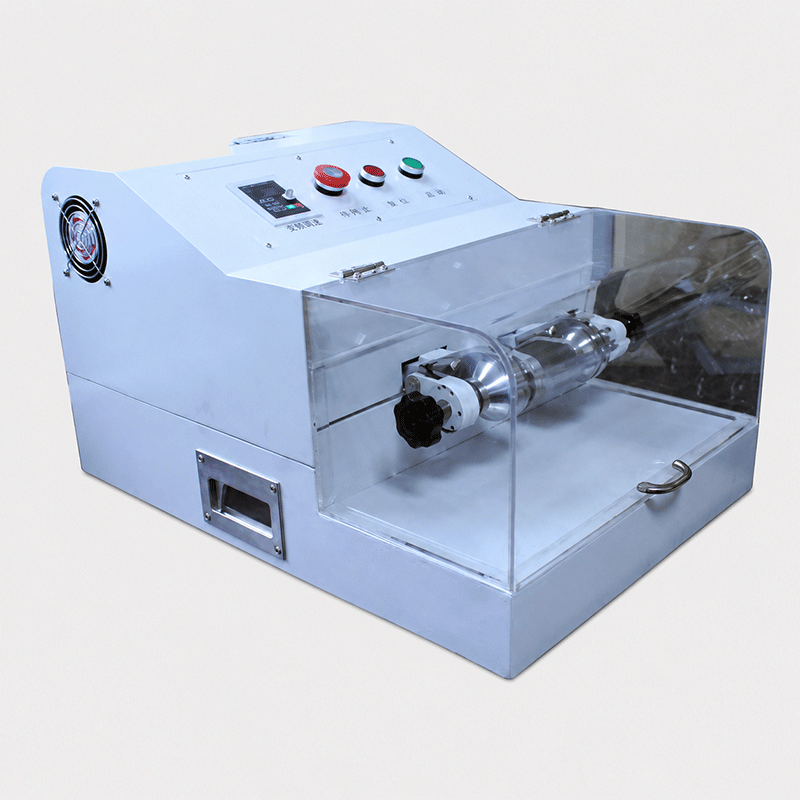
Setting up a tissue disruption workflow is ultimately a matter of matching mechanical energy to the sample and the analyte at the same time, and verifying both with data from the first batch rather than the last. Laboratories that treat the grinder as an analytical instrument — with recorded settings, defined media, and periodic checks — spend far less time repeating work. Those planning a new preparation line can review the available high throughput tissue grinder configuration options and confirm jar materials, cooling provisions, and parameter ranges against their own tissue list before committing to a routine.