
What is a Fast Ball Mill? A Laboratory Grinding Equipment for Rapid Pulverization
What is a Fast Ball Mill?
At its core, a fast ball mill is a professional laboratory grinding device that researchers and quality control technicians use to rapidly reduce solid materials into fine powders or homogeneous mixtures. Unlike traditional ball mills that rely on slow rotation and gravity-driven impacts, a fast ball mill achieves significantly higher milling speeds—often exceeding 1000 rpm—through a powerful motor and robust drive mechanism. This speed dramatically reduces process time, enabling efficient pulverization of hard, brittle, or fibrous samples within minutes.
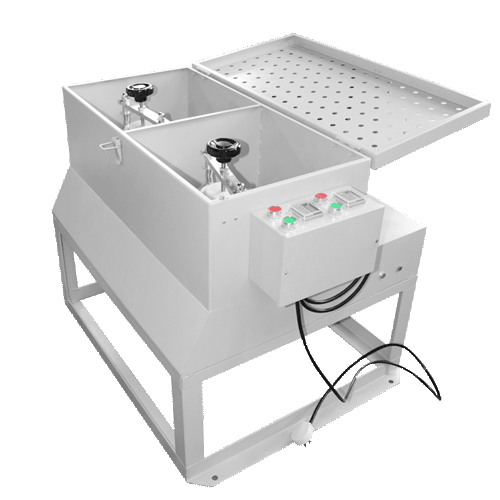
Core Function and Working Principle
The primary function of a fast ball mill is to transform coarse materials (e.g., granules, chips, or chunks) into fine powders with controlled particle size distribution. The equipment consists of a single grinding jar or multiple jars that rotate at high speed on a horizontal or vertical axis. Inside the jar, milling balls (typically made of stainless steel, zirconia, or agate) are set into motion by the jar's rotation. The centrifugal force generated by the high speed propels the balls against the inner wall, where they impact and shear the material trapped between them.
This mechanism is fundamentally different from the cascading action of conventional ball mills. In a fast ball mill, the balls are not lifted and dropped; instead, they are pressed against the jar wall by centrifugal force, creating intense friction and impact zones. This "planetary-like" motion (though not necessarily planetary in design) generates extremely high energy densities, leading to rapid particle size reduction. Key parameters include rotation speed, ball-to-material ratio, and milling time. Higher speeds produce finer particles but may also generate heat, which can be managed with cooling systems or by using intermittent operation.
Key Components and Design Features
Fast ball mills are designed with robustness and efficiency in mind. The main components include:
- High-speed motor and drive system: A powerful motor (typically 0.75–2.2 kW) coupled with a belt or direct drive enables speeds up to 1200 rpm or more. Some models offer variable speed control for optimizing results.
- Grinding jar and lid: Jars are made from wear-resistant materials such as stainless steel, tungsten carbide, or agate. The lid often includes a sealing gasket to prevent leakage and allow for wet or dry grinding.
- Milling balls: Balls of various diameters (e.g., 3–20 mm) are selected based on the material's hardness and target fineness. Common materials include zirconia, stainless steel, and agate.
- Safety interlock and timer: A lid safety switch ensures the mill only operates when closed, and a programmable timer allows for unattended operation.
Some fast ball mills also feature a digital display for speed and time, and a built-in cooling fan or water jacket to manage heat buildup during extended runs.
Key Performance Indicators and Selection Criteria
When selecting a fast ball mill for your laboratory, consider the following factors:
- Milling speed and range: Higher maximum speeds (e.g., 1000–1500 rpm) allow faster processing but may require more robust construction. Variable speed control is essential for optimizing results with different materials.
- Jar capacity and material: Choose a jar size that matches your sample volume (typically 50–500 mL). The jar material must be chemically compatible and hard enough to avoid contamination. For example, agate is ideal for silica-based materials, while stainless steel suits general use.
- Ball-to-material ratio and ball size: A typical ratio is 10:1 to 20:1 by weight. Larger balls (10–20 mm) are better for initial crushing, while smaller balls (3–5 mm) achieve finer grinding. The mill should accommodate multiple ball sizes.
- Noise and vibration: High-speed mills generate noise and vibration. Look for models with sound-dampening enclosures or rubber feet to reduce disturbance.
- Ease of cleaning and maintenance: Removable jars and easy-access components simplify cleaning between different materials. Some mills offer quick-release clamps for jar changes.
Applications and Selection Advice
Fast ball mills are widely used in materials science, chemistry, pharmaceuticals, geology, and food analysis. Typical applications include:
- Grinding of ceramics, minerals, and ores for X-ray fluorescence (XRF) or X-ray diffraction (XRD) analysis.
- Homogenization of pharmaceutical powders and dietary supplements.
- Mechanical alloying and synthesis of nano-materials.
- Preparation of soil samples for environmental testing.
For researchers who need rapid results with minimal sample loss, a fast ball mill is an excellent choice. If your work involves heat-sensitive materials, consider models with cooling capabilities. For routine quality control, a basic model with fixed speed may suffice, while R&D labs benefit from programmable speed and time settings. Always verify the mill's compatibility with your specific materials by consulting the manufacturer's recommendations.