
What is a Dual Planetary Ball Mill? A High-Energy Milling Equipment for Ultra-Fine Grinding and Mechanical Alloying
What is a Dual Planetary Ball Mill?
At its core, a Dual Planetary Ball Mill is a specialized high-energy milling device that researchers and engineers use to achieve ultra-fine grinding, mechanical alloying, and nano-material synthesis. Unlike conventional planetary ball mills with a single drive system, the dual planetary configuration incorporates two independent planetary drives, enabling simultaneous processing of multiple samples with enhanced energy input and better particle size control. This equipment is indispensable in laboratories requiring fast, reproducible, and contamination-free milling down to the sub-micron or nanometer scale.
Core Function and Working Principle
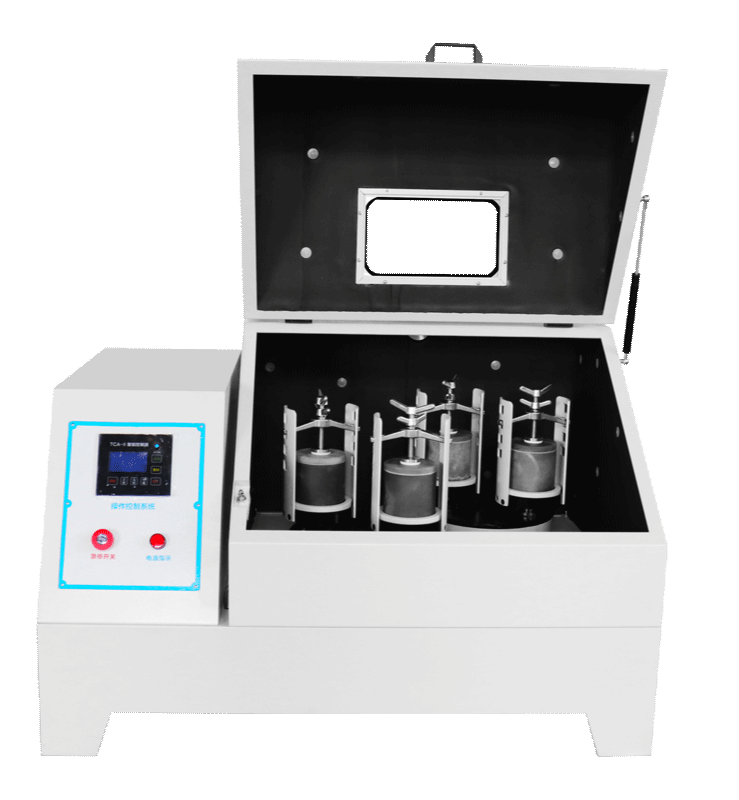
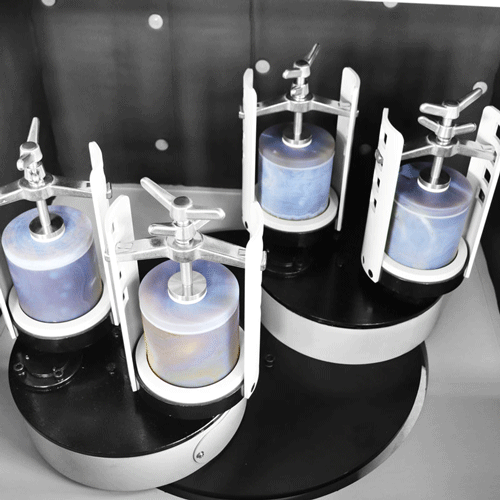
The fundamental function of a Dual Planetary Ball Mill is to convert coarse solid materials into fine powders or nanostructured products through intense mechanical impact and friction. The machine consists of a main sun disk that rotates at high speed, on which four milling jar stations are mounted. In the dual planetary design, each pair of jars is driven by a separate planetary gear system, allowing independent or synchronized rotation.
The working principle follows the planetary motion pattern: as the sun disk rotates, each jar rotates on its own axis in the opposite direction. This creates a centrifugal force that can exceed 60 times the acceleration of gravity. The grinding balls inside the jars are subjected to powerful impact, shear, and friction forces, crushing the sample trapped between them. The dual drive mechanism increases the effective milling energy and allows the operator to adjust the speed ratio between the sun disk and the jars, optimizing the collision frequency and energy per collision.
Key process parameters include sun wheel speed (typically up to 800 rpm), jar-to-sun speed ratio (commonly 1:-2 or adjustable), milling time, and ball-to-powder weight ratio. These parameters directly affect the final particle size, distribution, and phase transformation efficiency.
Core Components and Key Technologies
The Dual Planetary Ball Mill is built around several critical components that ensure its performance and reliability:
- Dual Drive System: Two independent motors and gearboxes drive the jar stations, providing superior torque stability and the ability to run asymmetrical loads without vibration.
- Planetary Gears: Precision planetary gears guarantee smooth, low-noise operation and consistent jar rotation, even under heavy load.
- Milling Jars: Available in various materials (stainless steel, zirconia, agate, tungsten carbide, nylon, PTFE, etc.) to prevent contamination and suit diverse sample types. Jars can be vacuum or atmosphere sealed for reactive materials.
- Control System: Modern touch-screen interface with programmable speed, time, cycle, and pause intervals. Many models allow storage of multiple standard operating procedures (SOPs) for repeatability.
- Cooling System: To dissipate heat generated during high-energy milling, some dual planetary mills include ventilation fans or even water cooling channels in the jar seats, enabling stable operation for long hours.
Key Performance Indicators and Selection Guide
When choosing a Dual Planetary Ball Mill, consider the following critical metrics:
- Processing Capacity: Typically for lab-scale models, the capacity ranges from 50 mL to 500 mL per jar. Total capacity (4 jars) can reach 2 liters or more.
- Final Particle Size: Can achieve particle sizes down to <0.1 μm (100 nm) for many materials. The actual fineness depends on the material hardness, milling conditions, and jar/ball material.
- Energy Input: Dual drive designs can deliver higher centrifugal forces (up to 60 g) compared to single-drive mills, enabling faster milling and better alloying.
- Speed Range and Ratio: Look for models with a wide speed range (e.g., 50–800 rpm) and adjustable sun-to-jar ratio for flexibility.
- Automation and Repeatability: Touchscreen control, programmable cycles, data logging, and automatic reverse rotation help ensure consistent results across batches.
- Noise and Vibration: High-quality gears and balanced drives reduce noise (typically <70 dB) and prevent bench vibration. Some models feature FFCS (Free Force Compensation System) for stability.
- Maintenance: Easy access to jar clamping mechanisms, replaceable wear parts (seals, belts), and user-friendly cleaning are important for long-term performance.
Application Fields and Selection Advice
Dual Planetary Ball Mills are widely used in materials science, chemistry, geology, mining, ceramics, electronics, pharmaceuticals, and nanotechnology. Specific applications include mechanical alloying for advanced alloys, nano-crystalline materials synthesis, catalyst grinding, battery material preparation, and soil sample pulverization.
For research labs focusing on mechanical alloying or nanomaterial synthesis, a dual-drive model with high speed (>600 rpm) and programmable control is recommended. For quality control labs processing routine samples, a model with moderate speed and easy cleaning features is sufficient. For production-scale tasks, consider vertical production planetary ball mills that can handle larger batches.