
What is a Dual Planetary Ball Mill? A High-Energy Milling Device for Advanced Material Synthesis and Nano-Grinding
What is a Dual Planetary Ball Mill?
At its core, a dual planetary ball mill is a specialized high-energy milling device used in laboratories and production settings for ultra-fine grinding, mechanical alloying, and advanced material synthesis. It employs two independent planetary disks that rotate simultaneously, generating significantly higher impact and shear forces compared to traditional planetary ball mills. This design allows researchers to achieve finer particle sizes and more efficient processing of hard, brittle, and heat-sensitive materials.
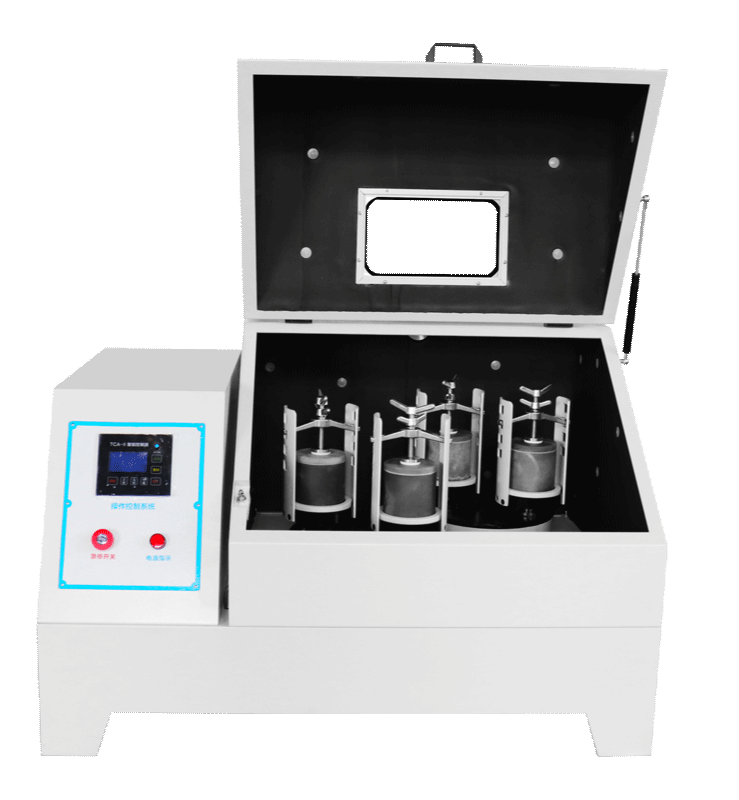
Core Function and Working Principle
The dual planetary ball mill transforms coarse material particles into nano-scale powders. Working on the planetary motion principle, grinding jars are mounted on two main disks. The jars rotate on their own axes while the disks revolve around a central sun wheel, creating a complex three-dimensional movement. This dual-disk configuration doubles the number of grinding stations and increases the kinetic energy imparted to the grinding media, achieving acceleration up to 64.4 g or more. Key parameters affecting final particle size include rotation speed (50–800 rpm), grinding time, ball-to-powder ratio, and jar material. The dual system allows independent control of each disk, enabling simultaneous processing of different materials or conditions.
Key Components and Technologies
The dual planetary ball mill consists of several critical components:
- Dual main disks with independent drive systems for precise speed control.
- High-strength grinding jars available in stainless steel, zirconia, alumina, agate, and other materials to minimize contamination.
- Automated touch-screen control for parameter setting, program storage, and real-time monitoring.
- Safety interlocks and cooling fans for stable long-term operation.
This design supports batch processing of up to 4 samples simultaneously (2 jars per disk), with jar capacities ranging from 12 ml to 500 ml. The robust gear transmission ensures low noise and high reliability.
Key Performance Indicators and Selection Guide
When selecting a dual planetary ball mill, consider the following factors:
- Processing capacity: Typically 2×220 ml per batch, suitable for R&D and small-scale production.
- Final particle size: Can reach <0.1 μm (100 nm) for many materials, with excellent reproducibility.
- Speed range: 50–800 rpm, with adjustable rotation-to-revolution ratio (e.g., 1:-2).
- Automation: Programmable cycles, stored SOPs, and real-time speed monitoring for consistent results.
- Maintenance: Easy jar clamping and cleaning, durable construction, and accessible service ports.
Additionally, consider the availability of vacuum or atmosphere grinding options, which are essential for air-sensitive materials.
Applications and Recommendations
Dual planetary ball mills are widely used in materials science, chemistry, pharmacy, geology, and nanotechnology. They are ideal for:
- Nano-grinding of ceramics, minerals, and metals.
- Mechanical alloying for advanced composites and intermetallic compounds.
- Mechanochemical synthesis of new materials and catalysts.
- Preparation of colloidal suspensions and dispersions for inks and coatings.
For research laboratories requiring high throughput and flexibility, a dual planetary ball mill with touch-screen control and multiple jar materials is recommended. For production-scale needs, consider the vertical production planetary ball mill or continuous planetary ball mill.
References
For more details, visit the official product page: Dual Planetary Ball Mill.