
Corundum Planetary Mill Jar Selection Guide
A planetary ball mill is often judged by its motor, speed setting, and control panel, but many milling problems begin inside the grinding jar. The jar contains the sample and media, transmits impact and friction, and contributes its own material to the wear system. When a laboratory moves from a soft organic powder to a hard ceramic, mineral, or glass sample, the jar that worked before may no longer be suitable. The corundum planetary mill jar is one option for laboratories that need a hard, alumina-based ceramic chamber and can accept the associated wear and contamination profile. This guide explains where a corundum jar fits, how to match it to the mill and media, and which operating limits deserve attention before routine use.
What the Corundum Planetary Mill Jar Does in the Milling System
A planetary mill jar is not a passive container. It is the process chamber, the sealing boundary, and part of the energy-transfer path. The mill rotates the jar around its own axis while the sun wheel turns in the opposite direction. Grinding balls rise against the jar wall, leave it, and strike the sample or shear across it. The jar wall must resist abrasion from both the sample and the media while keeping the charge contained.
Corundum is crystalline aluminum oxide, Al2O3. In a laboratory jar, its value comes from high hardness, useful wear resistance, and general chemical stability. Those properties make corundum a logical candidate for hard, brittle, inorganic samples when aluminum contamination is not the limiting analytical concern. Changsha Tianchuang Powder Technology Co., Ltd, known as TENCAN, lists the A grade Corundum planetary Mill Jar for this type of laboratory grinding duty. The jar should still be treated as one component in a system that includes the mill, media, sample, and cleaning procedure.
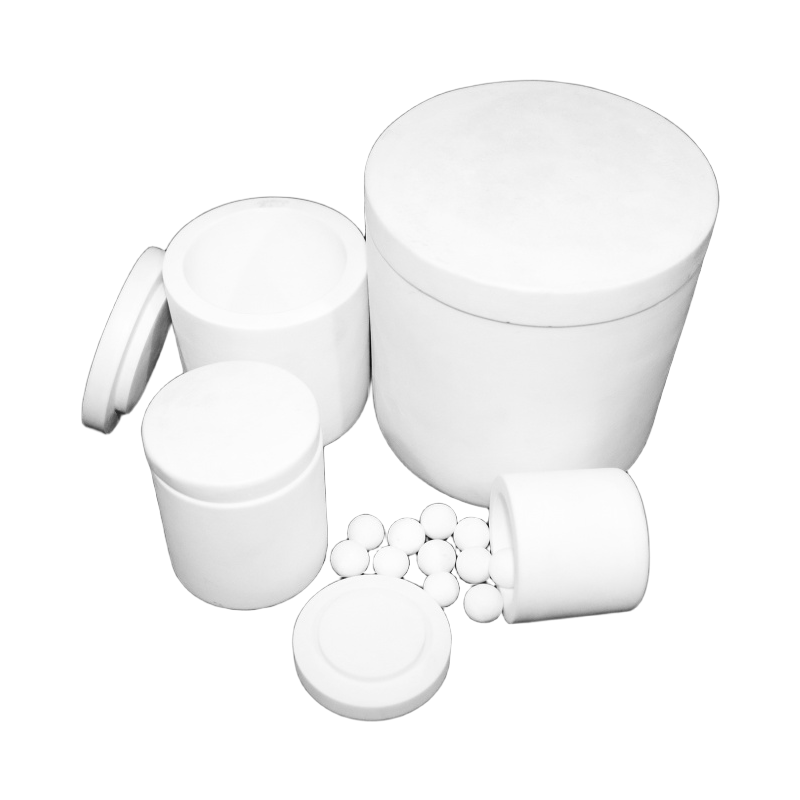
Corundum ceramic jars are selected for hardness, wear resistance, and chemical compatibility, not by volume alone.
The jar geometry matters because it sets the available ball travel, the contact pattern with the wall, and the way powder circulates. A jar that is narrow and tall behaves differently from a shallow, wide jar, even when both hold similar media. The lid, gasket, and clamping method also influence the result. A weak seal can release fine powder or solvent vapor during high-energy milling, while an over-compressed gasket may deform and become difficult to clean. These details are easy to overlook when a buyer compares only nominal volume.
The jar does not compensate for a poor ball charge, an unsuitable speed, or a sample that is already too coarse for planetary milling. It also does not guarantee a narrow particle size distribution. Its role is to provide a compatible wear surface, a reliable seal, and enough mechanical strength for the selected duty. If the jar is too brittle for the impact load, or too soft for the sample, the result will show up as contamination, poor reproducibility, or premature failure rather than as a simple change in grinding time.
When Corundum Is a Sensible Jar Material
Corundum is most likely to be considered when the sample is hard, brittle, and abrasive, and when an alumina-based wear product will not interfere with the analytical result. Mineral fragments, glass, technical ceramics, slags, and some inorganic compounds are typical candidate materials. These are starting points for evaluation, not promises that every such sample will mill well in a corundum jar. Feed size, target fineness, sample mass, and the mill model can change the decision.
| Jar material | General position | Main caution |
|---|---|---|
| Corundum, alumina ceramic | Hard, wear-resistant, and chemically stable in many environments | Aluminum contamination is possible; the ceramic is brittle under impact or thermal shock |
| Agate | Useful for softer samples and some contamination-sensitive work | Lower hardness than corundum; not ideal for very abrasive samples |
| Zirconia | Dense and tough ceramic option for demanding grinding | Zirconium contamination and higher jar mass must be considered |
| Tungsten carbide | Very hard and wear-resistant for severe duty | Binder and carbide elements can appear in trace analysis |
| Stainless steel | Mechanically robust and familiar in many laboratories | Iron, chromium, and nickel contamination are possible |
| Polymer jars | Lightweight and useful for soft or impact-sensitive materials | Low wear resistance and limited suitability for hard abrasives |
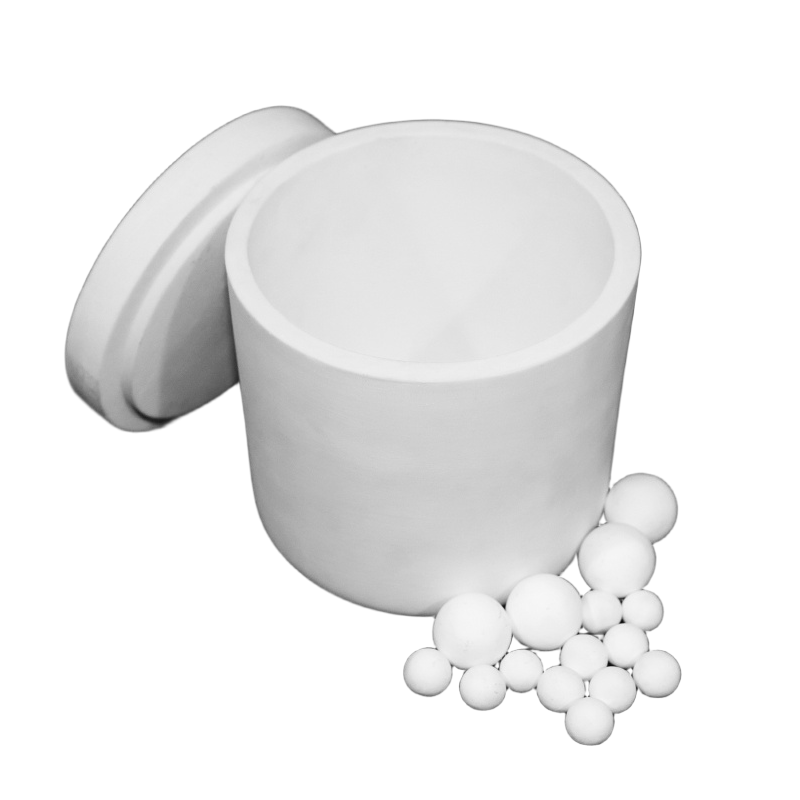
Jar material and grinding media form one wear system; both should be reviewed together.
A useful way to think about the choice is to separate hardness from contamination. Corundum is harder and more wear-resistant than agate, so it can be a better match for abrasive minerals. Zirconia may offer greater toughness, but it is denser and introduces a different contamination marker. Tungsten carbide can tolerate severe wear, yet cobalt or tungsten in the sintered material may be unacceptable for trace element work. Stainless steel is convenient but can add iron, chromium, or nickel. The question is not which material is universally best, but which wear product the laboratory can tolerate at the target detection limit.
For a laboratory that analyzes aluminum, a corundum jar deserves particular scrutiny. If aluminum is the analyte of interest, wear from an alumina jar can bias the result. If aluminum is a major matrix element and the method is designed around that matrix, the same wear may be less important. This distinction should be settled before the jar is ordered, not after a batch has been prepared. The same logic applies when the sample itself contains alumina: a small amount of jar wear may be difficult to distinguish from the sample signal.
Corundum is also not the first choice for every wet chemistry environment. Aluminum oxide has good resistance to many acids and solvents, but it is attacked by hydrofluoric acid and by hot concentrated alkalis. The gasket may be the weaker link even when the ceramic body is acceptable. A solvent that is harmless to corundum can swell, harden, or dissolve the sealing material. The supplier should confirm the jar, lid, and gasket compatibility for the intended liquid before a sealed wet-milling run.
Wear and Contamination: Reading “Inert” Correctly
Wear in a planetary mill is not a single event. It includes abrasion as the balls slide against the jar wall, impact as they strike the surface, fatigue as the ceramic cycles under load, and chemical attack from the sample or liquid. The relative importance of each mechanism depends on the sample, media size, mill energy, and run time. A jar that shows little wear in a short soft-powder trial can wear more quickly when the same mill is used with a hard abrasive for many hours.
Contamination is not limited to visible damage. Fine particles have a large surface area, and a small mass of jar material can be significant in a trace analysis. The amount depends on the hardness difference between the charge and the jar, the energy delivered, the number of runs, and the cleaning method. This is why a material described as inert should not be read as zero contamination. Inert means relatively unreactive under stated conditions; it does not mean that no material is transferred to the sample.
Chemical resistance follows the same conditional logic. Corundum is stable in many common environments, but hydrofluoric acid and hot concentrated alkali are well-known exceptions for alumina ceramics. Strong thermal cycling can also open cracks that were not visible after the first run. A sealed jar used with a volatile solvent may build pressure, especially if the fill level leaves little headspace. The jar may contain the liquid at first and still give poor results later if the gasket creeps or the lid loses torque.
Media selection is part of contamination control. Harder media can increase the wear rate of the jar, while softer media may wear quickly themselves and add their own elements to the powder. The jar and media should be selected as a pair, not in isolation. A corundum jar may be technically compatible with more than one media material, but the final choice should be confirmed with the jar supplier and checked with a blank run. If the process is sensitive to aluminum, iron, zirconium, or other elements, the media and jar should be reviewed against that list.
Visual inspection should be routine. Look for chips at the rim, cracks near the lid seat, a polished or roughened inner wall, and discoloration that does not clean off. A damaged jar should be removed from service. Continuing to use a chipped corundum jar can increase contamination and may lead to a sudden failure under load. The cost of a replacement jar is usually small compared with a lost batch or a contaminated analytical sequence.
Matching Jar Volume, Ball Charge, and Milling Energy
Jar volume is not the same as usable sample capacity. The jar must hold the media, the sample, and enough free space for the balls to move. A jar that is filled too completely may run quietly but grind poorly because the charge cannot cascade or impact. A jar that is too large for the sample may waste media and reduce the energy available per unit mass. The right balance depends on the mill, the density of the media, and the target fineness. The following factors should be reviewed together:
- Sample mass required for analysis or the next process step.
- Nominal jar volume and the practical working volume after media and headspace.
- Media diameter, number of balls, and material density.
- Feed size and the maximum particle size the mill can accept.
- Target particle size and acceptable particle size distribution.
- Dry or wet operation, solvent volume, and gasket compatibility.
- Jar mass and whether the mill is rated for that rotating load.
- Cleaning access and cross-contamination risk between samples.
Ball size controls the balance between impact and surface contact. Larger balls carry more impact energy and can break coarse, hard particles, but they provide fewer contact points. Smaller balls create more contacts and can improve fine grinding, yet they may not have enough energy to break a tough feed. A mixture of ball sizes can sometimes help, but it also makes the charge less reproducible unless the mix is controlled. For a corundum jar, the media should be hard enough to do the work without being so aggressive that jar wear becomes the dominant contamination source.
Ball charge and headspace are equally important. Too little media may leave the sample as a static layer on the wall; too much media may leave no room for motion. The sample should not be so dilute that particles are cushioned by liquid and rarely contact the media, nor so concentrated that the charge becomes a paste. In wet milling, the liquid volume must account for the sample, the media, and thermal expansion. In dry milling, the powder may coat the jar and balls, which changes friction and can hide wear.
A larger corundum jar can process more material per batch, but it also changes the rotating mass and the media demand. The mill must be rated for the jar and charge. If a larger jar is used at the same speed without checking the mill load, the result may be lower energy per unit powder, higher temperature, or excessive stress on the drive. It is better to confirm the jar size against the mill manufacturer's capacity and then adjust the charge than to assume that a larger jar will simply shorten the grinding time.
Temperature and pressure deserve attention in sealed jars. High-energy milling adds heat, and a volatile solvent can raise the internal pressure. The jar should not be filled to the lid with liquid, and the gasket should be suitable for the solvent. If the process requires pressure relief or a specific atmosphere, that requirement should be discussed before the jar is used. A corundum body can be mechanically strong and still be the wrong choice if the sealing system is not matched to the run.
Operating Limits: Thermal Shock, Impact, and Cleaning
Corundum is hard, but hardness is not toughness. The ceramic can resist abrasion while remaining sensitive to a sharp impact or a rapid temperature change. Dropping a jar, striking the rim with a metal tool, or placing a hot jar on a cold bench can introduce a crack that is difficult to see. The lid seat and the inner rim are common places for damage because they are thin and highly stressed. Those areas should be inspected before every high-energy run.
Thermal shock is a particular concern when jars are cleaned or dried in a hurry. A cold jar should not be heated rapidly, and a hot jar should not be cooled with water or placed in a cold freezer. Follow the supplier's temperature guidance rather than experimenting on a production batch. If the process requires heating or cooling, confirm that the jar, lid, and gasket are all suitable for that condition.
Cleaning should remove powder without damaging the ceramic surface. A soft brush, appropriate solvent, and careful drying are safer than abrasive scouring. Hydrofluoric acid and hot concentrated alkali should be avoided unless the supplier has specifically confirmed compatibility and the laboratory has suitable controls. Strong cleaning agents can attack the gasket even when the corundum body is unaffected. After cleaning, the jar should be fully dry before it is sealed with powder inside, because residual solvent can create vapor pressure or affect the next sample.
The lid and gasket should be treated as wear parts. Check for deformation, cuts, hardening, or powder trapped in the sealing groove. Use the correct tightening method and avoid over-torque that distorts the lid. If the gasket has swollen in one solvent, it may not seal correctly in another. Keep a record of the solvents and cleaning agents used so that a seal failure can be traced to a specific change rather than to the jar material in general.
Dry and wet milling place different demands on the jar. Dry milling can produce caking on the wall and lid, and the powder may be difficult to recover from corners. Wet milling improves dispersion and can reduce dust, but it increases the importance of gasket compatibility and liquid volume. In either mode, the jar should be loaded in a consistent order and the charge should be recorded. Consistency in media count, sample mass, and liquid volume is often more valuable than a small change in jar specification.
A Practical Selection Checklist for Corundum Jars
Start with the sample, not the catalog. Define the chemistry, hardness, feed size, target size, and the analytical method that will judge the result. Then decide whether aluminum contamination is acceptable at the relevant detection limit. If aluminum is a critical analyte, a corundum jar may complicate the method even if it performs well mechanically. If the sample is hard and abrasive and aluminum is not a critical marker, the corundum planetary mill jar is worth evaluating.
Next, confirm the mechanical fit. The jar must match the mill's jar holder, clamping system, and rated load. Check the available volume, lid design, and gasket material. Ask for the current product drawing if the dimensions are critical. Confirm whether the jar is supplied with a lid and sealing components and what replacement parts are available. A jar that fits the mill but cannot be sealed reliably is not a practical choice, regardless of its wear resistance.
Then review the media and process. Select a media material that is compatible with the sample and with the jar, and choose a size range that can break the feed without overloading the wall. Set a realistic ball charge and liquid volume, and decide how the jar will be cleaned between samples. If the process uses a solvent, confirm gasket compatibility before the first sealed run. If the process is dry, plan for powder recovery and wall cleaning. These steps turn a jar purchase into a repeatable method rather than a single trial.
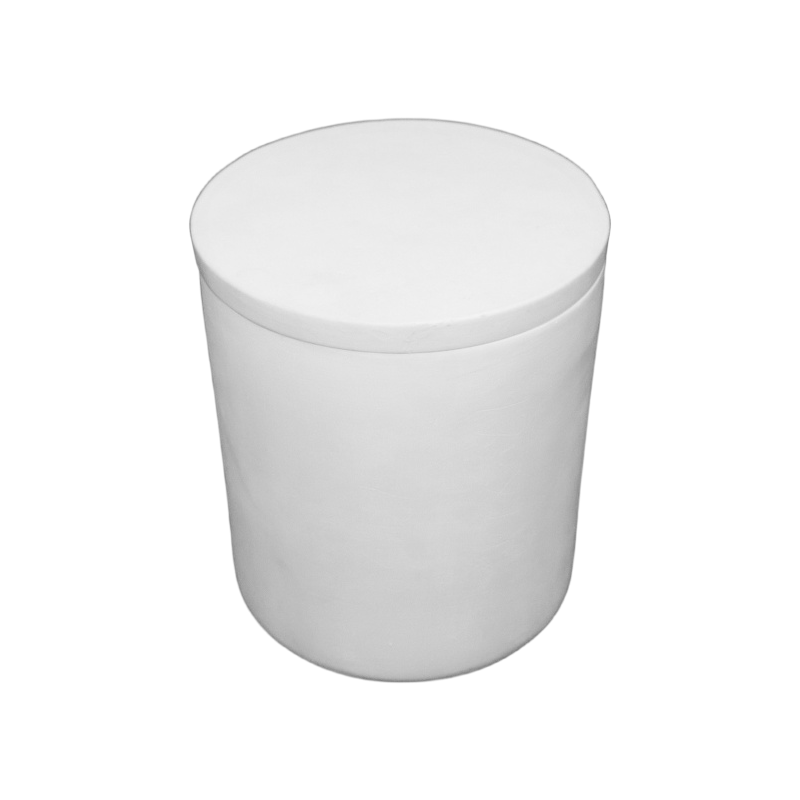
Confirm jar dimensions, lid sealing, and available options with the supplier before ordering.
Validate the Jar in Your Own Process
A supplier's material description cannot predict every laboratory result. A short validation run is the best way to connect the jar to the actual sample. Begin with a blank run using the selected media, liquid, and cleaning procedure but no sample. Analyze the blank for the elements that matter to the method, including aluminum if relevant. This establishes whether the jar and media contribute a signal under the intended milling conditions.
Then run a representative sample and record the variables that affect wear and grinding: sample mass, media mass and size, jar volume, liquid volume, mill speed, run time, and starting temperature. Check particle size and distribution, not only the median. Inspect the jar wall and lid seat after cleaning. Repeat the run to see whether the result is stable. A single successful batch is useful, but reproducibility is what makes the jar suitable for routine work.
If the first trial shows excessive aluminum, unexpected wear, or a sealing problem, change one variable at a time. A different media material, a lower jar load, a shorter run, or a different gasket may solve the issue. If the ceramic itself is chipping, stop and review the impact load and handling procedure. Do not assume that a stronger mill setting will fix a jar that is already outside its operating envelope. The correct jar is the one that survives the duty cycle and keeps contamination within the analytical limit.
Questions Buyers Ask About Corundum Jars
Is a corundum jar suitable for alumina samples?
It can be mechanically suitable, but the analytical question is different. If the sample is alumina and the method measures aluminum, wear from an alumina jar is difficult to distinguish from the sample. A corundum jar may still be used when aluminum is part of the matrix and the method accounts for it, but a blank run and a contamination check are essential.
Can zirconia balls be used in a corundum jar?
This combination may be technically possible, but it should be confirmed with the jar supplier. Zirconia is dense and tough, and it can increase jar wear or add zirconium to the sample. The decision depends on the target contamination limit, the sample hardness, and the energy of the mill. Test the combination before adopting it for routine work.
Why did the jar chip at the rim?
The rim is a highly stressed area. A chip can come from dropping the jar, striking it during cleaning, over-tightening the lid, or using a charge that is too heavy for the jar. Thermal shock can also initiate cracks. Remove a chipped jar from service and review handling, torque, and load before replacing it.
Does a corundum jar work for wet milling?
It can, provided the liquid is compatible with the ceramic and the gasket and the jar is not overfilled. Confirm solvent compatibility, allow adequate headspace, and check for pressure buildup. A wet process may require a different sealing component than a dry process, so the complete jar assembly should be reviewed rather than the ceramic body alone.
For laboratories comparing jar materials, the most useful next step is to define the contamination limit and the mechanical duty first, then request current product information for the A grade corundum planetary mill jar and validate it with a representative sample. That approach keeps the selection grounded in the actual process rather than in a single material property.