
Horno dental T-Crystal: Sinterización de precisión para aplicaciones de laboratorio y circonio dental
Por qué es importante un horno de sinterización fiable en los laboratorios dentales
En los laboratorios dentales, la calidad de las restauraciones de circonio (coronas, puentes y estructuras) depende en gran medida del proceso de sinterización. Incluso el bloque de circonio mejor fresado puede no lograr su resistencia, translucidez y ajuste finales si el horno de sinterización no proporciona un calentamiento uniforme y un control preciso de la temperatura. Los desafíos comunes incluyen inconsistencia del color, distorsión dimensional, densidad insuficiente y baja productividad.
Necesita un horno que ofrezca resultados repetibles, maneje múltiples lotes y se integre fácilmente en su flujo de trabajo. El Horno dental de cristal T está diseñado para satisfacer estas demandas, ofreciendo un diseño compacto tipo caja adecuado tanto para laboratorios dentales como para experimentos de sinterización en laboratorios a pequeña escala.
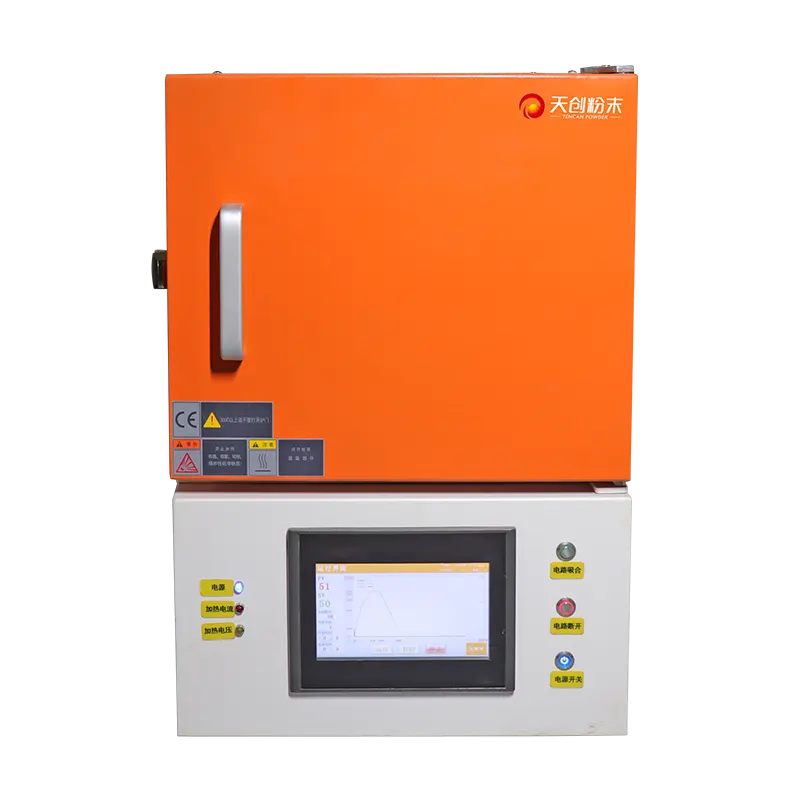
¿Qué es el horno dental T-Crystal?
El horno dental T-Crystal es un horno de sinterización de cámara diseñado principalmente para circonio dental y otros materiales cerámicos. Ha ganado popularidad entre los técnicos e investigadores dentales por su rendimiento estable, operación fácil de usar y resultados de sinterización consistentes. El horno es lo suficientemente versátil como para manejar varias marcas y formulaciones de circonio, lo que lo convierte en una opción práctica para laboratorios que trabajan con diferentes materiales.
Características clave de un vistazo
- Capacidad de alta temperatura: Alcanza una temperatura de funcionamiento de hasta 1600 °C, suficiente para la sinterización completa de circonio de alta densidad.
- Control de temperatura avanzado: Equipado con un controlador PID programable y curvas de calentamiento multisegmentos, lo que le permite personalizar los ciclos de sinterización para diferentes materiales.
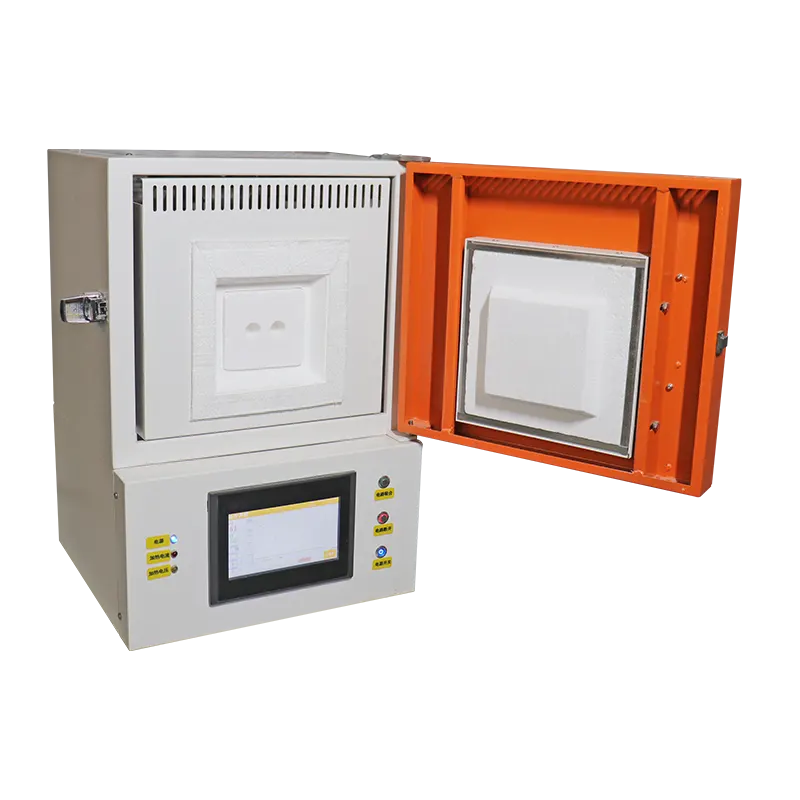
- Calefacción uniforme: La cámara del horno utiliza elementos calefactores y aislamiento de alta calidad para minimizar los gradientes de temperatura, lo que reduce el riesgo de deformación o variación de color.
- Gran capacidad: El tamaño de la cámara admite múltiples bloques de circonio o restauraciones de arcada completa por lote, y normalmente sinteriza de 90 a 120 dientes por ciclo, según el modelo específico.
- Interfaz de pantalla táctil intuitiva: Una pantalla táctil de 7 pulgadas simplifica la programación, el monitoreo en tiempo real y el registro de datos. Puede configurar fácilmente hasta 16 programas de sinterización, cada uno de ellos editable para velocidades de rampa, mantenimiento y enfriamiento.
- Seguridad y confiabilidad: Incluye protección contra sobrecalentamiento, detección de rotura de termopar y un gabinete de doble carcasa para operación fría al tacto.
Comprensión del proceso de sinterización del circonio dental
Los bloques de circonio dental suelen consistir en circonio estabilizado con itrio (Y-TZP) con una composición de aproximadamente 91 a 94 % de ZrO₂, 4 a 6 % de Y₂O₃ y pequeñas cantidades de HfO₂, Al₂O₃ y SiO₂. El bloque en bruto se encuentra en un estado blando y poroso (presinterizado) con una densidad de alrededor de 3,0 g/cm³. Durante la sinterización a unos 1500°C, el material se densifica a >6,0 g/cm³, logrando resistencia final y translucidez.
El Horno dental de cristal T está diseñado para ofrecer el perfil térmico preciso necesario para esta transformación. Con un ciclo de sinterización típico que dura de 2 a 4 horas (dependiendo del tamaño y la cantidad del bloque), el horno garantiza que el material alcance la densidad objetivo mientras mantiene el tamaño del grano por debajo de 0,5 μm, algo fundamental tanto para la resistencia como para la estética.
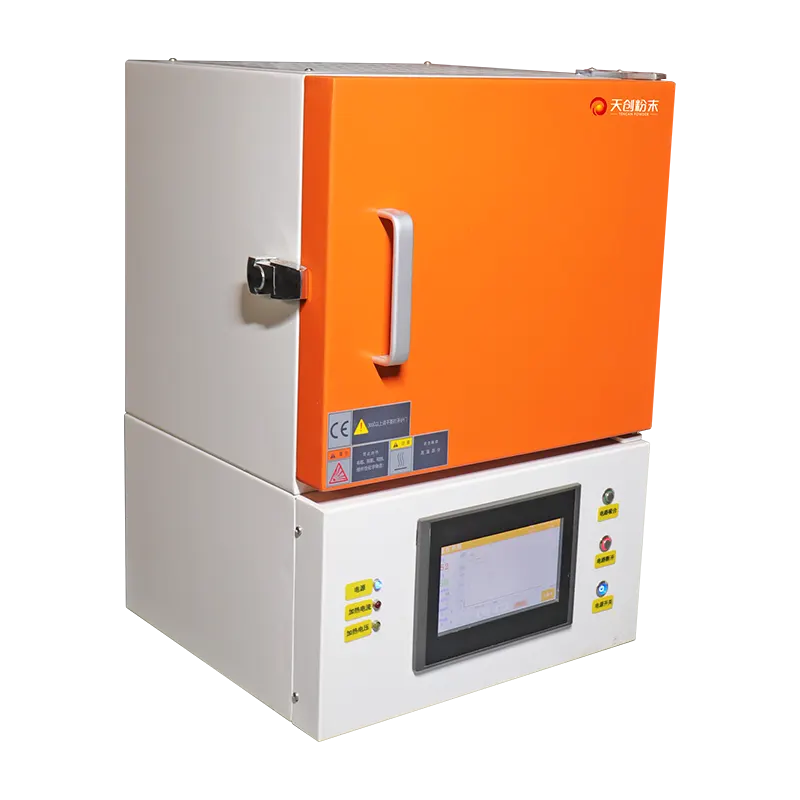
Parámetros técnicos y su significado práctico.
A la hora de evaluar un horno de sinterización hay que mirar más allá de la temperatura máxima. Estos son los parámetros técnicos clave del horno dental T-Crystal y lo que significan para su trabajo diario.:
Tamaño de la cámara y volumen utilizable
La cámara del horno normalmente mide φ110 mm × 110 mm (diámetro × altura), que es un tamaño común para los laboratorios dentales. Este volumen le permite sinterizar varias coronas individuales o algunos puentes por ciclo. Para laboratorios con mayor rendimiento, los modelos T-Bright o T-Bright Plus ofrecen mayores capacidades (hasta 150 dientes por lote).
Control de temperatura y uniformidad
El horno utiliza un termopar tipo B (platino-rodio) para mediciones precisas hasta 1800°C. El controlador PID mantiene la temperatura establecida dentro de ±1°C y la uniformidad en toda la cámara suele estar dentro de ±5°C. Este nivel de precisión es esencial para lograr propiedades mecánicas y de color consistentes en todas las restauraciones del mismo lote.
Elementos calefactores
Se utilizan elementos calefactores de silicio molibdeno (MoSi₂) de alta calidad, conocidos por su longevidad y funcionamiento limpio. Generan una contaminación mínima, lo cual es crucial para aplicaciones dentales donde incluso trazas de impurezas pueden afectar el color de la restauración final.
Flexibilidad de programación
Puede almacenar hasta 16 curvas de sinterización, cada una con 30 segmentos. Esto le permite ajustar la velocidad de rampa (0–20 °C/min), el tiempo de retención y la velocidad de enfriamiento para diferentes materiales. Por ejemplo, algunas circonias de alta translucidez pueden requerir una rampa de calentamiento final más lenta para maximizar la transmisión de luz, mientras que las circonias de alta resistencia pueden beneficiarse de un perfil ligeramente diferente.
Cómo elegir el programa de sinterización adecuado para su circonio
La mayoría de los fabricantes de circonio ofrecen programas de sinterización recomendados. Como pauta general:
- Tasa de calentamiento: 5–10°C/min desde temperatura ambiente hasta 800°C, luego 3–5°C/min hasta 1450–1500°C.
- tiempo de espera: 120–180 minutos a la temperatura final.
- Tasa de enfriamiento: Enfriamiento natural dentro del horno (o controlado a 5–10°C/min hasta 800°C, luego más rápido).
Los resultados finales (densidad, translucidez y ajuste) dependerán de la composición real del bloque, el tamaño de las partículas y la condición previa a la sinterización. El horno dental T-Crystal le brinda la flexibilidad de ajustar estos parámetros y guardar programas exitosos para uso futuro.
Aplicaciones más allá de las restauraciones dentales
Si bien el horno dental T-Crystal se comercializa principalmente para laboratorios dentales, su precisión y confiabilidad lo hacen adecuado para otras necesidades de sinterización de lotes pequeños.:
- Investigación y desarrollo de materiales cerámicos (p. ej., alúmina, circonio, vitrocerámica).
- Producción a pequeña escala de componentes cerámicos para electrónica, implantes biomédicos o piezas industriales.
- Instituciones educativas donde los estudiantes necesitan aprender procesos de sinterización con un horno fácil de usar.
Si necesita una mayor capacidad o un control de atmósfera más especializado, también puede considerar el Horno dental T-Bright (tipo de elevación) o el Horno de sinterización T-Bright Plus para un mayor rendimiento. Para secado general de laboratorio o tratamiento térmico, el Horno de mufla o Horno de tubo de vacío puede ser más apropiado.
¿Qué información debe preparar antes de realizar una consulta?
Para ayudarle a seleccionar la configuración más adecuada y recibir una cotización precisa, es útil tener lista la siguiente información:
- Tipo de bloques de circonio que utiliza (p. ej., alta translucidez, alta resistencia, multicapa).
- Tamaño de lote típico (número de dientes o bloques por ciclo).
- Tiempo del ciclo de sinterización deseado (estándar o rápido).
- Su voltaje y frecuencia locales (por ejemplo, 110 V/60 Hz, 220 V/50 Hz).
- Cualquier requisito especial (p. ej., atmósfera de vacío o gas inerte, monitorización remota).
Con esta información, el equipo técnico podrá recomendar el modelo de horno adecuado y los accesorios opcionales. El horno dental T-Crystal es un caballo de batalla probado para muchos laboratorios y su diseño sencillo facilita su mantenimiento y funcionamiento durante años.
Reflexiones finales sobre el horno dental T-Crystal
Elegir un horno de sinterización es una inversión a largo plazo en la productividad y la calidad de su laboratorio. El horno dental T-Crystal ofrece un equilibrio entre asequibilidad, confiabilidad y precisión que se adapta a las necesidades de la mayoría de los laboratorios dentales. Su rendimiento de calentamiento constante, su programación fácil de usar y su construcción robusta lo ayudan a lograr resultados predecibles lote tras lote.
Si está buscando un horno de sinterización compacto de tipo caja que pueda manejar circonio dental y otros materiales cerámicos con confianza, el horno dental T-Crystal merece su consideración. Para más detalles, visite el Página de producto del horno dental T-Crystal o explorar otras soluciones de sinterización en el serie de sinterización .