
Small Grinder for Laboratory Use: Compact Design for Efficient Powder Grinding
When you need to grind small batches of dry samples quickly, a small grinder can be a practical addition to your laboratory. Unlike large ball mills or planetary systems, a small grinder is designed for rapid processing of limited quantities, making it popular in food testing, pharmaceutical research, chemical analysis, and material preparation. But how do you know if a small grinder fits your workflow? Let’s look at what it actually does, where it works best, and what to consider before choosing one.
What Is a Small Grinder and How Does It Work?
A small grinder is a bench‑top milling device that uses a high‑speed rotating blade or set of blades to cut and pulverize dry, brittle, or friable materials into fine particles. The sample is placed in a grinding chamber, and the motor drives the blades at speeds typically ranging from 10,000 to 30,000 rpm, depending on the model. The size reduction occurs mainly through impact and shearing, producing a relatively uniform product within seconds.
Because of its simple mechanism, a small grinder is easy to operate: load the sample, close the lid securely, press the start button, and stop after a few seconds to check the result. Many laboratory units also feature pulse or intermittent operation to avoid overheating heat‑sensitive materials.
Key Features to Look for in a Laboratory Small Grinder
1. Chamber Material and Blade Composition
Most small grinders for lab use come with a stainless steel grinding chamber and blades. Stainless steel offers corrosion resistance, easy cleaning, and good durability. If you are working with highly abrasive samples (e.g., minerals, hard ceramics), consider models with harder blade coatings or replaceable blades. Some grinders also offer optional titanium‑coated blades for reduced metal contamination.
2. Capacity and Sample Size
Laboratory small grinders typically handle batch sizes from 50 g to 500 g, though smaller units with 30 g capacity are also common for precious or limited samples. Before selecting a grinder, check the maximum working capacity of the chamber and note that packing too much material can reduce grinding efficiency and cause overheating.
3. Grinding Speed and Control
Variable speed control is a valuable feature because different materials require different impact energies. For example, grinding coffee beans may need a different speed than grinding dried herbs or chemical pellets. If your lab handles diverse samples, a small grinder with adjustable speed (e.g., from 5,000 to 20,000 rpm) gives you more flexibility.
4. Safety Interlocks
Look for a lid interlock that shuts off the motor when the lid is opened. This prevents accidental exposure to moving blades. Some advanced models also include an overload protection feature that stops the motor if the load is too high.
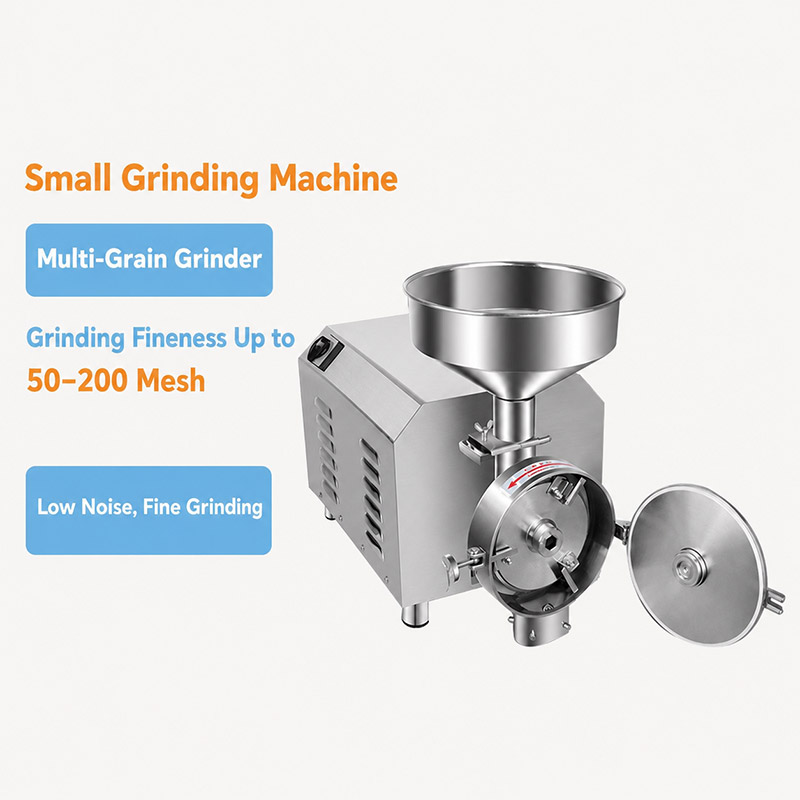
Typical Applications of a Small Grinder in the Lab
A small grinder is not a replacement for a planetary ball mill when you need sub‑micron particle sizes, but it covers a wide range of everyday grinding tasks:
- Food and spice grinding – prepare samples for moisture, fat, or fiber analysis.
- Pharmaceutical sample preparation – grind tablets, granules, or medicinal herbs before dissolution or extraction.
- Chemical and agricultural materials – reduce seeds, grains, leaves, or synthetic granules to a fine powder for spectroscopy or chromatography.
- Mineral and ore pre‑crushing – pre‑grind small rock chips before further milling in a planetary or vibratory mill.
Because the operation is fast, you can process multiple samples in a short time, making a small grinder useful for routine quality‑control labs where throughput matters.
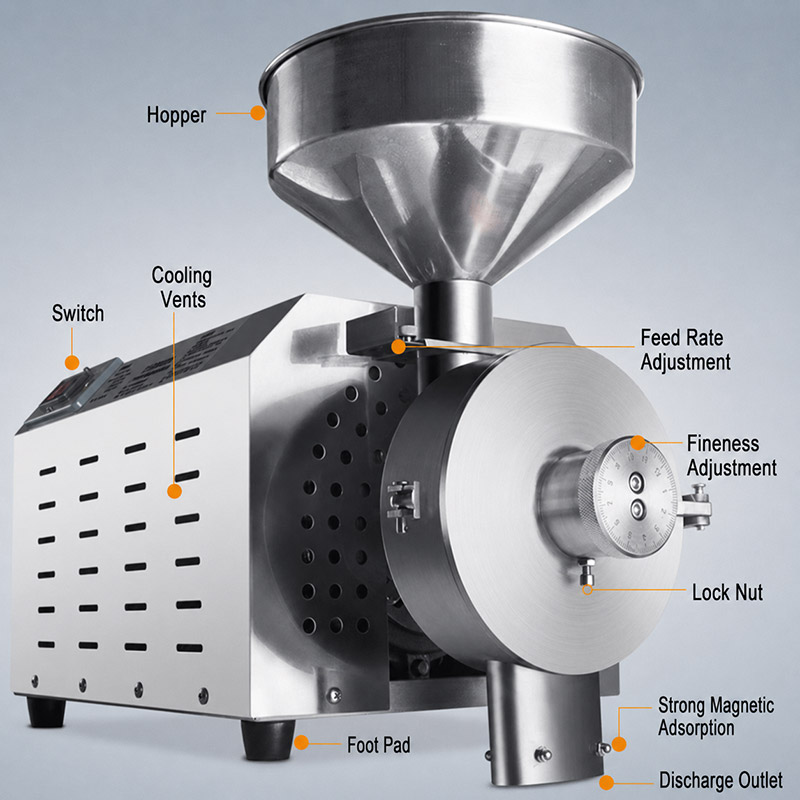
How to Choose the Right Small Grinder for Your Lab
Here are the main factors you should evaluate before making a purchase:
| Factor | Why It Matters |
|---|---|
| Maximum feed size | Most small grinders accept pieces up to 5–10 mm. Larger pieces may need pre‑breaking. |
| Final particle size | Typically 50–300 mesh (approx. 300–50 microns) depending on material and run time. Finer sizes require longer grinding or multiple passes. |
| Motor power | 150–300 W is typical for lab units. Higher power allows faster grinding of harder materials. |
| Noise level | Lab environments often prefer models under 80 dB. Check the product specifications. |
| Cleaning ease | Removable chamber or detachable blade assembly makes cleaning between samples faster and reduces cross‑contamination. |
It is also wise to consider local voltage and frequency. Most small grinders are available in 110 V or 220 V configurations. At TENCAN, we offer a small grinder designed specifically for laboratory use, with a stainless steel chamber, safety interlock, and optional speed control. The unit is compact enough to fit on any bench and easy to disassemble for cleaning.
Practical Tips for Better Grinding Results
Even a good small grinder can give inconsistent results if used incorrectly. Here are a few suggestions from daily lab practice:
- Do not exceed the recommended maximum batch size. Overloading reduces efficiency and increases motor stress.
- For sticky or oily samples (e.g., nuts, seeds with high oil content), add a small amount of dry ice or grind intermittently to prevent paste formation.
- When changing materials, clean the chamber and blades thoroughly to avoid cross‑contamination. Some labs use a quick pulse with a small amount of rice or coarse salt as a cleaning abrasive.
- If you need very fine powder, consider grinding for 10–15 seconds, sifting, and then re‑grinding the oversize fraction.
Conclusion: A Versatile Tool for Your Lab Bench
A small grinder fills an important niche in many laboratories: fast, simple, and reliable grinding of small samples. It will not replace high‑energy ball mills when nanoscale particles are required, but for routine sample preparation, it saves time and effort. Whether you are analyzing food, grinding herbs, or preparing chemical samples, choosing a well‑built unit with the right chamber material and safety features ensures consistent results and a long service life.
If you would like to discuss which small grinder configuration matches your typical materials and batch sizes, our team at TENCAN can help you make an informed decision. Click the link above to explore the product details.