Laboratory Sand Grinder: A Comprehensive Guide for Wet Grinding and Dispersion
When you need to grind solid particles down to the submicron or nanometer range in a liquid medium, traditional dry grinding methods often fall short. You might have tried a planetary ball mill and found it time-consuming, or you may be struggling with agglomeration when handling wet slurries. This is where the laboratory sand grinder (also known as a lab bead mill or wet grinding mill) becomes an essential tool in research and development.
Unlike a typical ball mill that relies on tumbling action, a sand grinder uses high-speed agitation to drive small grinding media against the material, achieving much finer and more uniform particle sizes in a shorter time. In this guide, we will walk through how a laboratory sand grinder works, what materials it can process, how to choose the right model, and key differences from other grinding equipment.
How Does a Laboratory Sand Grinder Work?
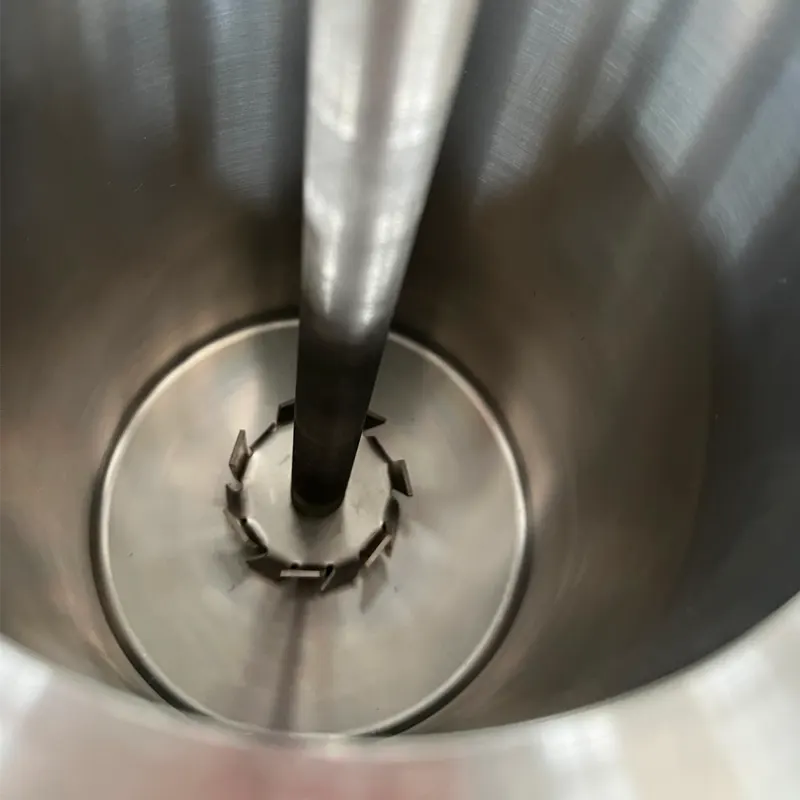
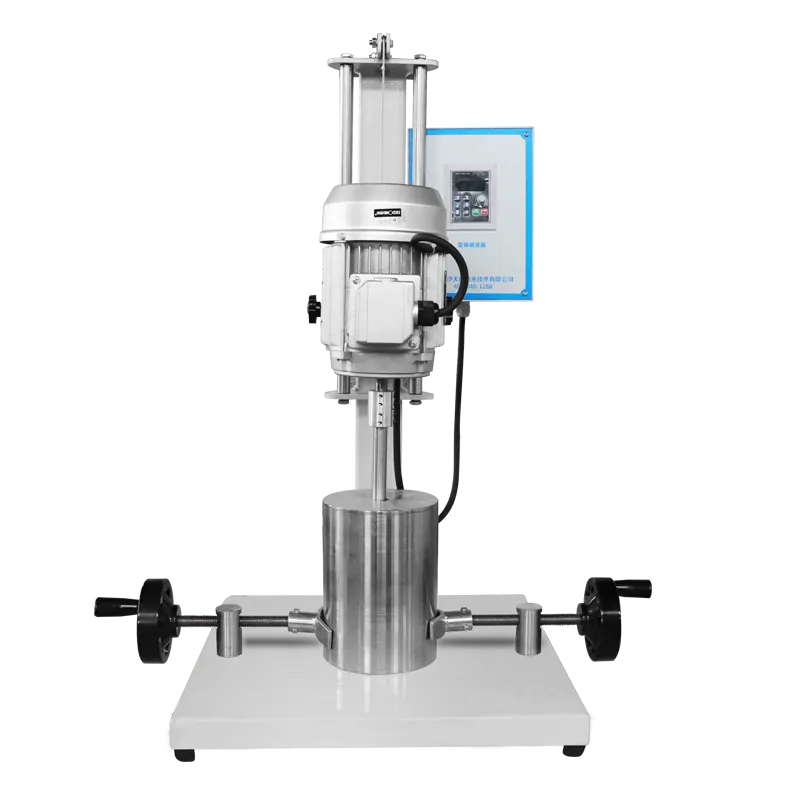
At its core, a laboratory sand grinder consists of a stationary grinding chamber, a rotating shaft with agitator discs or pins, and a pump to circulate the slurry. The chamber is partially filled with very small grinding beads – typically 0.1 to 3 mm in diameter – made of materials like yttria-stabilized zirconia (YSZ), glass, or steel.
When the machine runs, the rotor rotates at a high speed (often 1000–3000 rpm depending on model and chamber size), imparting kinetic energy to the beads. The beads collide with each other and with the slurry, creating intense shear and impact forces. This action breaks down the suspended solid particles, while the continuous flow ensures uniform treatment.
Most laboratory sand grinders operate in a recirculation mode: the slurry is pumped from a feed tank into the bottom of the chamber, passes through the agitated bead bed, and exits at the top through a gap or screen that retains the beads. The process repeats until the desired particle size is achieved. Some models also support a pass-through mode for single-pass, high-throughput applications.
Key Applications of Laboratory Sand Grinders
Laboratory sand grinders are widely used in industries where wet dispersion and nanomilling are critical. Typical materials include:
- Coatings and paints – pigments, fillers, and additives require fine dispersion to enhance color strength and stability.
- Inks and toners – grinding carbon black or organic pigments to submicron sizes improves print quality.
- Battery materials – cathode and anode active materials, conductive additives, and binders need deagglomeration for better electrode performance.
- Ceramics – advanced ceramics like alumina, zirconia, and silicon nitride are often wet-milled to narrow particle size distributions.
- Pharmaceuticals and cosmetics – active ingredients and excipients are finely dispersed for bioavailability and product consistency.
In each case, the goal is to produce a stable, homogeneous suspension with a narrow particle size range, often below 200 nm. The laboratory sand grinder is the preferred tool because it provides the energy density required for breaking down hard agglomerates without contaminating the product, especially when ceramic grinding chambers and beads are used.
Selection Factors for a Laboratory Sand Grinder
Choosing the right laboratory sand grinder depends on several technical parameters. Let's examine the most important ones.
Grinding Chamber Volume and Material
Laboratory sand grinders typically have chamber volumes from 50 mL to 5 liters. A smaller volume (e.g., 100–500 mL) is suitable for R&D with limited sample quantities, while a larger chamber (1–5 L) can be used for pilot-scale trials. The chamber material should be chemically compatible and abrasion-resistant. Common options include stainless steel, wear-resistant alloy, ceramic (zirconia or silicon carbide), or polyurethane-lined steel. For metal-sensitive materials, a fully ceramic chamber is recommended.
Grinding Bead Size and Material
The bead diameter directly influences the final particle size. As a practical reference:
- 0.3–0.5 mm beads are commonly used for grinding to the nanometer range (below 100 nm).
- 0.6–1.0 mm beads are suitable for reaching submicron sizes (200–800 nm).
- 1.0–2.0 mm beads are often used for initial deagglomeration or larger feed particles.
Zirconia beads (YSZ) are the most popular choice due to their high density, hardness, and low wear rate. Glass beads are cheaper but wear faster and may contaminate the product. Steel beads should only be used when iron contamination is acceptable.
Rotor Design and Speed
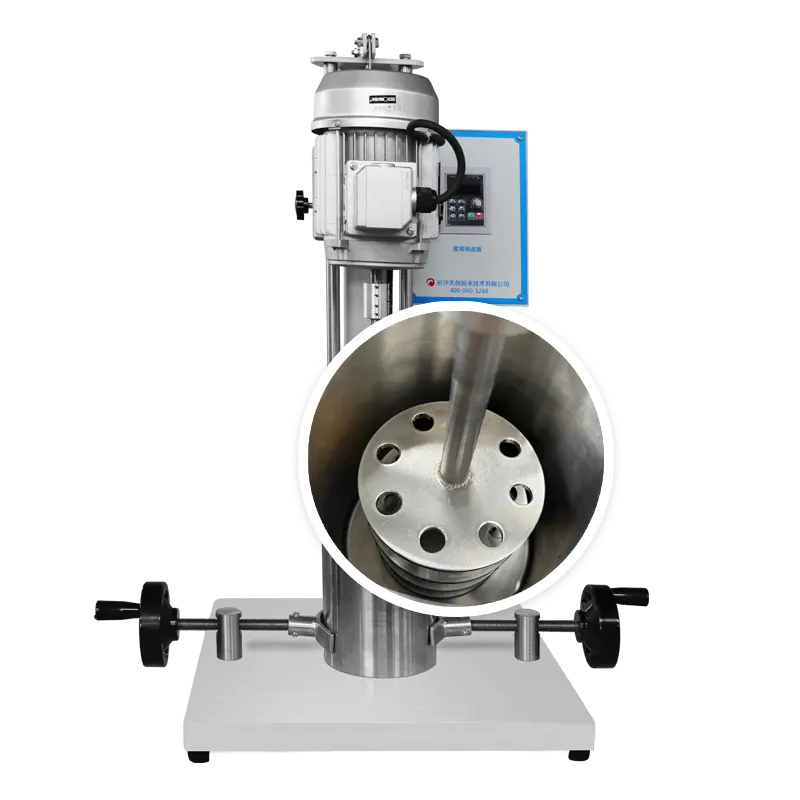
Rotor configurations include disc-type, pin-type, and turbo-type. Disc-type rotors are common for general-purpose grinding, while pin-type (or peg-type) rotors provide higher energy density and are often used for hard-to-grind materials. The rotational speed range typically falls between 1000 and 3000 rpm for laboratory models. Higher speed increases energy input and can reduce grinding time, but may also raise the temperature. Some machines have a variable frequency drive to optimize speed for different materials.
Cooling and Temperature Control
Wet grinding generates heat due to friction. Most laboratory sand grinders are equipped with a water-cooling jacket around the chamber to maintain a stable temperature. For heat-sensitive materials, a cooling system is essential to prevent degradation or gelling. Some advanced models also offer temperature monitoring with automatic shut-off.
Feeding and Circulation
The slurry is typically fed by a peristaltic pump or diaphragm pump. For highly viscous or pasty materials, a piston pump or a separate pre-dispersion step may be required. A well-designed circulation system ensures that all particles are exposed to the grinding zone multiple times, improving uniformity.
Laboratory Sand Grinder vs. Planetary Ball Mill
Researchers often ask whether to use a planetary ball mill or a laboratory sand grinder for wet milling. The answer depends on your target particle size and throughput.
Planetary ball mills are excellent for dry grinding and mechanical alloying, and they can handle limited wet grinding if the jars are sealed. However, they rely on tumbling motion and typically achieve particle sizes down to around 1–10 microns in reasonable times. Going below 1 micron requires very long runs and may still leave a broad distribution.
Laboratory sand grinders, on the other hand, are designed specifically for wet media milling. They can consistently deliver particles down to 100 nm or even tens of nanometers in minutes to hours, depending on the material. The circulation mode also ensures more uniform energy input, resulting in narrower particle size distributions. For applications like nano-inks, battery slurries, or advanced ceramics, the sand grinder is the more efficient choice.
That said, if your sample quantity is very small (e.g., 10–50 g) and you only need moderate fineness, a planetary ball mill might be more convenient. For larger volumes and finer targets, a sand grinder is almost always preferable.
How to Optimize Your Grinding Process
Getting the best results from a laboratory sand grinder involves careful parameter optimization. Here are some guidelines:
- Bead fill ratio: Typically, the beads should occupy 70–85% of the chamber volume. Too few beads reduce grinding intensity; too many can cause overheating and excessive wear.
- Slurry concentration: For most materials, a solids content of 20–50% by weight works well. Too thick a slurry will slow circulation and reduce efficiency; too thin a slurry wastes energy.
- Residence time: In recirculation mode, you can monitor particle size over time. Typical runs range from 30 minutes to several hours, depending on hardness and target.
- Bead size selection: Start with a bead size about 20–30 times the feed particle size. For example, if your feed is 50 µm, try 1.0–1.5 mm beads; for submicron feed, use 0.3–0.5 mm beads.
- Cooling: Keep the coolant flowing and monitor outlet temperature. If the temperature rises above 40–50°C, consider intermittent operation or reducing speed.
Always perform a small-scale trial with your specific material to find the optimal conditions. Most manufacturers, including TENCAN, can provide technical guidance based on your sample characteristics.
Maintenance and Cleaning
Routine maintenance is straightforward. After each run, flush the chamber and pump with a compatible solvent or water to remove residual slurry. Disassemble the rotor and check for wear on the discs or pins every 50–100 hours of operation. Replace the mechanical seal if leakage occurs. Beads should be replaced when they become chipped or worn, as this can lead to contamination and reduced efficiency.
Conclusion
The laboratory sand grinder is a powerful and efficient tool for wet grinding and dispersion at the lab scale. Whether you are developing a new nano-coating, optimizing a battery slurry, or preparing ceramic ink, understanding its working principle and selection criteria will help you achieve reproducible, high-quality results. For more detailed specifications and model options, you can explore the Laboratory Sand Grinder product page. If you have a specific material or throughput requirement, do not hesitate to contact TENCAN’s technical team for a tailored recommendation.