
High Speed Dispersing Homogenizer: Working Principle, Applications, and Selection Guide
What Is a High Speed Dispersing Homogenizer?
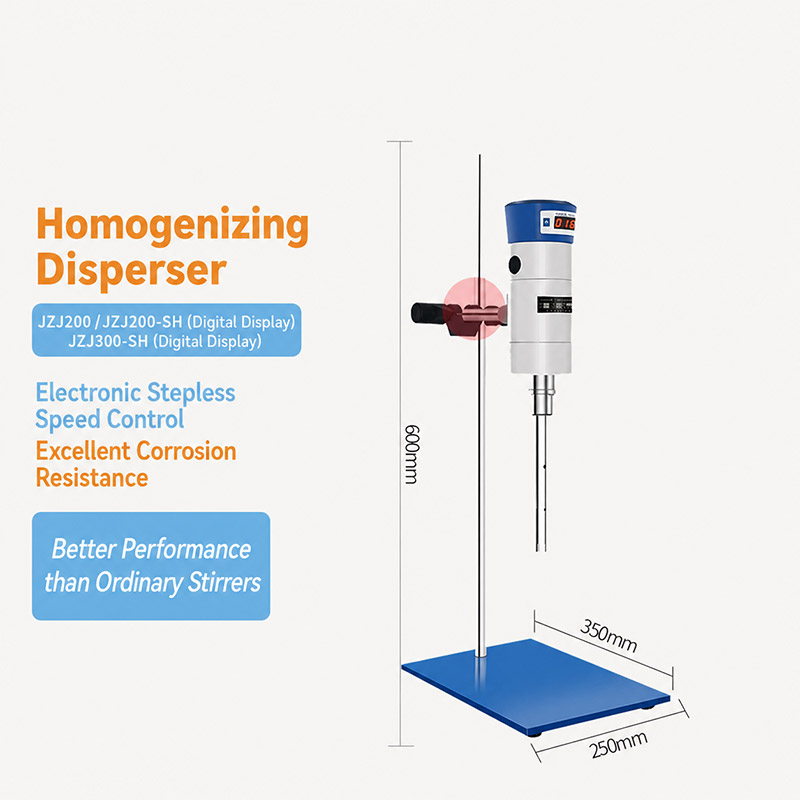
A high speed dispersing homogenizer is a piece of laboratory and industrial equipment designed to quickly and uniformly disperse, emulsify, homogenize, or dissolve solid particles into a liquid phase. It combines the functions of a high-speed disperser and a homogenizer in one unit, using a rotor-stator system to generate intense mechanical and hydraulic shear forces.
In powder processing, this equipment is essential for breaking down agglomerates, reducing particle size, and achieving stable suspensions or emulsions. Unlike traditional mixers or stirrers, a high speed dispersing homogenizer can achieve submicron or even nanometer-scale dispersion in a short time, making it a valuable tool for R&D labs and small-scale production.
At TENCAN, we offer a range of high speed dispersing homogenizers designed for various applications, from laboratory sample preparation to pilot-scale processing.
How Does It Work?
The core of a high speed dispersing homogenizer is its rotor-stator assembly. The rotor rotates at high speed (typically several thousand to over 20,000 rpm in lab models), creating a powerful suction that draws the liquid and solid material into the working head. The material is then forced through a narrow gap between the rotor and stator, where it experiences intense shear, turbulence, and impact forces.
This process breaks down solid agglomerates, reduces droplet size in emulsions, and ensures uniform dispersion throughout the liquid. The high-speed rotation also generates a strong pumping effect, circulating the material through the head multiple times for consistent results.
Key parameters affecting performance include:
- Rotational speed: Higher speed generates greater shear force, leading to finer dispersion.
- Rotor-stator gap: A smaller gap produces higher shear rates, suitable for fine particles.
- Rotor and stator design: Different tooth geometries and slot patterns influence the flow pattern and shear intensity.
- Processing time: Longer time typically improves dispersion but may increase temperature.
For many laboratory applications, a speed range of 5,000 to 20,000 rpm is common, and the actual effect depends on the material's hardness, viscosity, and initial particle size.
Key Applications in Powder and Material Processing
High speed dispersing homogenizers are widely used in industries where fine dispersion of powders in liquids is critical. Here are some typical scenarios:
1. Nanoparticle Dispersion
When working with nanoparticles, van der Waals forces cause agglomeration. A high speed dispersing homogenizer can de-agglomerate these clusters, achieving a stable suspension. This is common in the preparation of nanofluids, catalyst inks, and conductive coatings.
2. Emulsion and Suspension Preparation
In cosmetics, pharmaceuticals, and food, the homogenizer creates fine emulsions (oil-in-water or water-in-oil) and suspensions. Examples include creams, lotions, syrups, and pigment dispersions.
3. Battery Slurry Mixing
For lithium-ion battery electrodes, the active material, conductive carbon, and binder must be uniformly dispersed in a solvent. The homogenizer ensures consistent slurry quality, directly impacting battery performance.
4. Ink and Paint Production
Pigment agglomerates must be broken down to achieve the desired color strength and gloss. The homogenizer provides high shear to disperse pigments effectively.
5. Chemical and Pharmaceutical Intermediates
Many chemical reactions require fine dispersion of solid catalysts or reactants. The homogenizer can accelerate mass transfer and improve reaction rate.
How to Select a High Speed Dispersing Homogenizer
Choosing the right equipment depends on several factors. Below are the most important considerations for both laboratory and production applications.
1. Sample Volume and Vessel Type
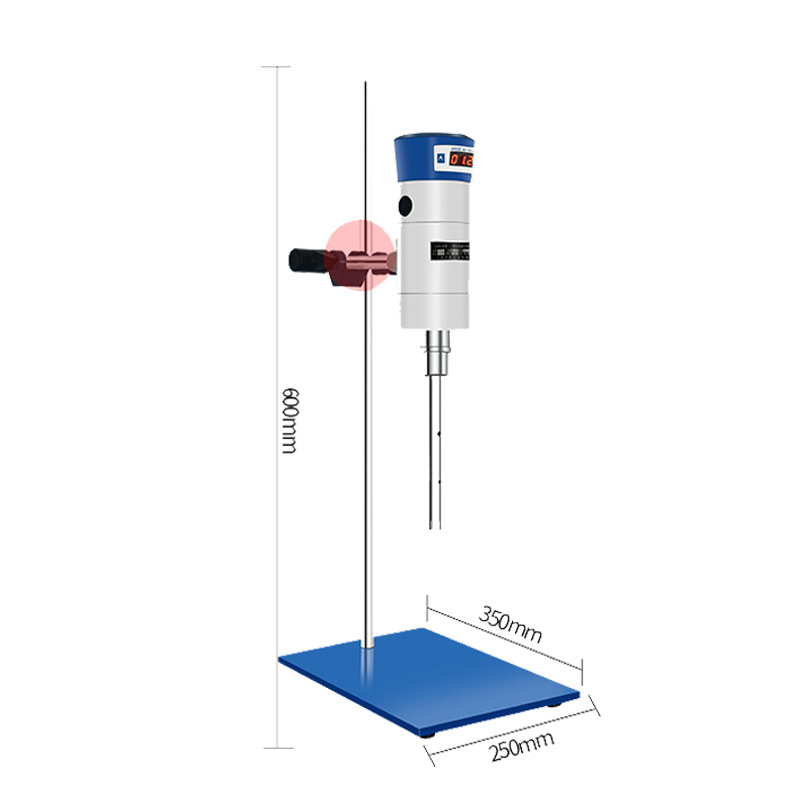
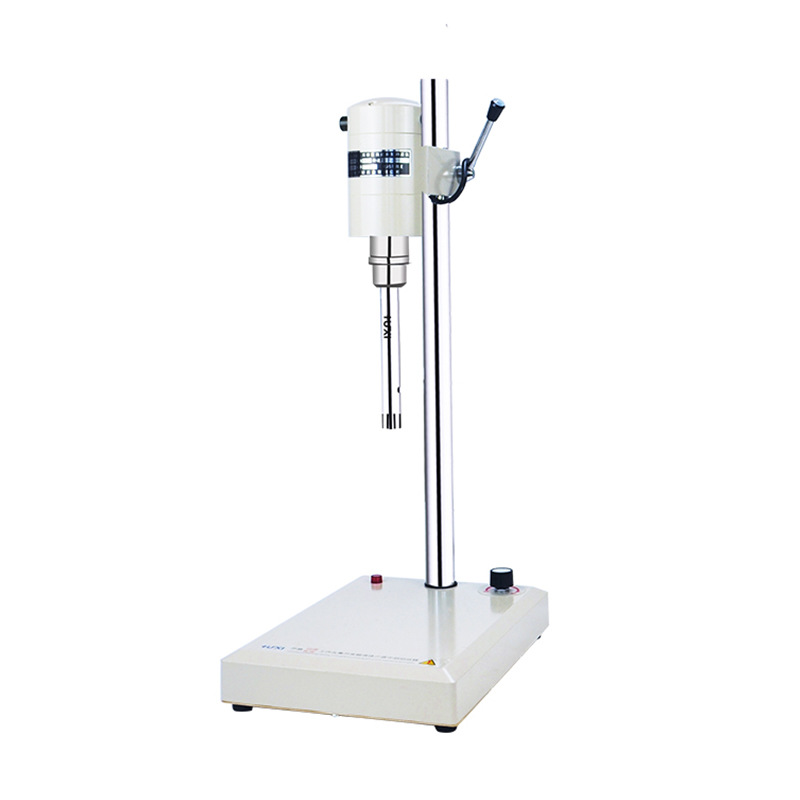
For lab use, models are available for volumes from 10 mL to several liters. Handheld or stand-mounted units offer flexibility for different container sizes. For larger batches, you may need a floor-standing model with a hydraulic lift for easy adjustment.
2. Material Properties
- Viscosity: High-viscosity materials require more torque and possibly a different rotor-stator design.
- Hardness/abrasiveness: Hard particles can wear the rotor and stator; stainless steel (316L) or ceramic-coated components are recommended.
- Temperature sensitivity: If the material degrades under heat, choose a model with a cooling jacket or operate with intermittent cycles.
3. Speed Control and Programmability
Variable speed control is essential for optimizing the process. Digital displays and programmable timers help maintain reproducibility, which is critical for R&D and quality control.
4. Safety Features
Look for overload protection, emergency stop, and a lockable safety switch. For flammable solvents, explosion-proof motors and enclosures may be required.
5. Ease of Cleaning
Disassembling the rotor-stator for cleaning should be quick. Some models offer quick-release mechanisms or are designed for CIP (clean-in-place).
Practical Tips for Effective Operation
Based on years of field experience, here are some recommendations to get the best results from your high speed dispersing homogenizer:
- Pre-mix dry powders with a small amount of liquid before adding the remaining solvent to reduce dust and improve initial wetting.
- Start at a low speed to wet the powder, then gradually increase to the target speed to avoid splashing.
- Use a baffle or off-center positioning to improve mixing and prevent vortex formation.
- Monitor temperature during operation. If the process generates significant heat, use a water bath or ice bath, especially for heat-sensitive materials.
- Scale-up considerations: If you are developing a formulation, ensure the lab model's rotor-stator geometry and tip speed are similar to the production-scale unit to maintain process transferability.
Common Questions About High Speed Dispersing Homogenizers
Can it be used for dry powder mixing?
No, this equipment is designed for liquid-phase processing. For dry powder blending, consider a V-type mixer or a double cone mixer.
What is the difference between a disperser and a homogenizer?
Traditionally, a disperser uses a saw-tooth blade for dispersion, while a homogenizer uses a rotor-stator for finer emulsification. A high speed dispersing homogenizer combines both functions, offering high shear and high flow.
How long does it take to achieve a stable dispersion?
It depends on the material and target particle size. Typically, 1 to 10 minutes is sufficient for most laboratory samples. For difficult materials, longer times or multiple passes may be needed.
What information do I need to provide for a quotation?
To recommend the most suitable model, we typically need: material type and composition, initial particle size, target particle size, sample volume per batch, viscosity, any temperature or pressure requirements, and local voltage/frequency.
Final Thoughts
A high speed dispersing homogenizer is a versatile and powerful tool for any laboratory or small-scale production line dealing with powder dispersion, emulsification, and homogenization. Understanding its working principle, selection criteria, and operational best practices will help you achieve consistent, high-quality results.
If you are evaluating equipment for your specific application, we encourage you to review our high speed dispersing homogenizer product page for detailed specifications. Our technical team can also assist with configuration and parameter recommendations based on your material characteristics.