
What is a Plastic Crusher? A Crushing Equipment for Recycling Plastic Waste into Reusable Granules
What is a Plastic Crusher?
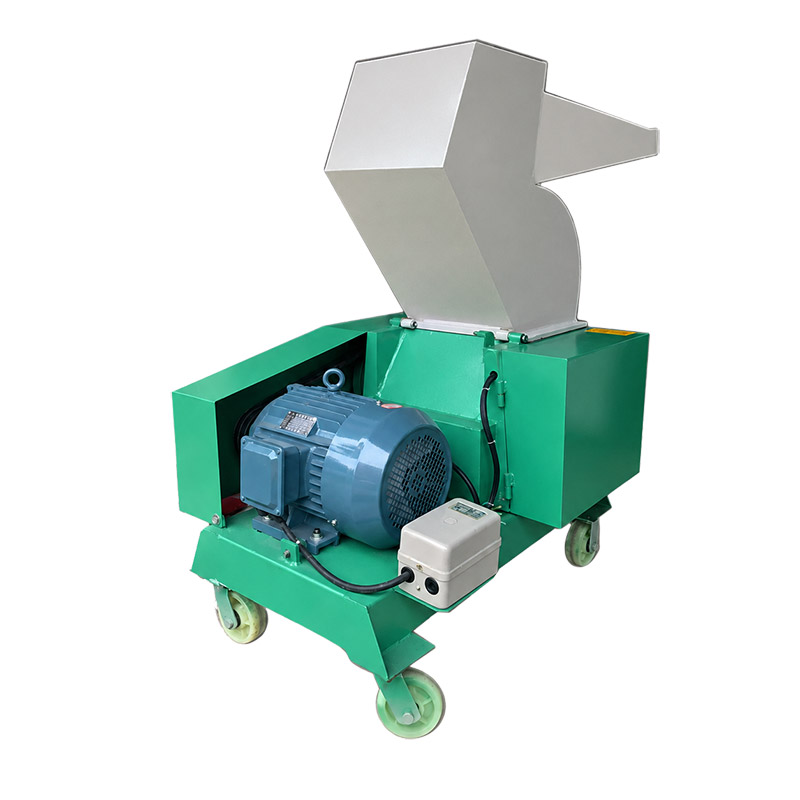
From the core, a plastic crusher is a specialized crushing equipment widely used in the plastic recycling industry. It is designed to break down various plastic materials — such as plastic bottles, containers, films, pipes, and defective injection-molded parts — into smaller granules or flakes. These processed materials can then be directly reused as raw materials for extrusion, injection molding, or further reprocessing into new plastic products. In short, a plastic crusher is the essential first step in transforming plastic waste into valuable resources.
Core Function and Working Principle
The fundamental function of a plastic crusher is to reduce large, bulky plastic items into uniform, small-sized particles. The machine achieves this through a combination of shearing, cutting, and tearing actions. At its heart, the crusher consists of a motor-driven rotating blade assembly (rotor) with multiple moving knives (blades) that interlock with stationary knives mounted on the machine frame.
When the motor rotates the rotor at high speed, the moving blades pass close to the stationary blades, creating a shearing force that cuts the plastic material fed into the hopper. The material is repeatedly cut until the particles are small enough to pass through a screen mesh located at the bottom of the crushing chamber. The screen mesh size determines the final particle size, which can be adjusted by changing the mesh to suit different downstream applications. The entire process is continuous, allowing for efficient, high-volume processing of plastic waste.
Main Types of Plastic Crushers
Plastic crushers are available in various designs to handle different feed materials and processing requirements. The main types include:
1. Hard Plastic Crusher (Strong Plastic Crusher)
This type is designed for crushing rigid and thick plastics such as ABS, PE, PP sheets, pipes, and engineering plastics. It features a rectangular feed opening to accommodate long sheets or bars, and uses heavy-duty blades with a V-shaped cutting edge to reduce impact and power fluctuation. The strong plastic crusher is ideal for recycling injection molding scrap, blow-molded parts, and thick-walled containers.
2. Soft Plastic Crusher (Film Crusher)
Soft plastic crushers are optimized for thin, flexible materials like plastic films, bags, woven bags, and agricultural mulch films. These machines often incorporate a fan-assisted air circulation system to reduce material resistance and improve output efficiency. The blade geometry is designed to prevent wrapping and ensure smooth feeding of light materials.
3. Pipe and Profile Crusher
Specialized for crushing plastic pipes, tubes, and profiles (e.g., PVC pipes, PE pipes, window profiles), this type has a circular or elongated feed opening that allows long pipes to be fed easily. The rotor and screen design are tailored to handle the continuous feeding of long, hollow sections without clogging.
4. Multi-functional Crusher
As the name suggests, multi-functional crushers can handle a wide variety of plastic materials, including both hard and soft types. They are often equipped with interchangeable blades and adjustable screen meshes, making them suitable for small to medium-sized recycling operations that process mixed plastic waste.
Key Performance Indicators and Selection Criteria
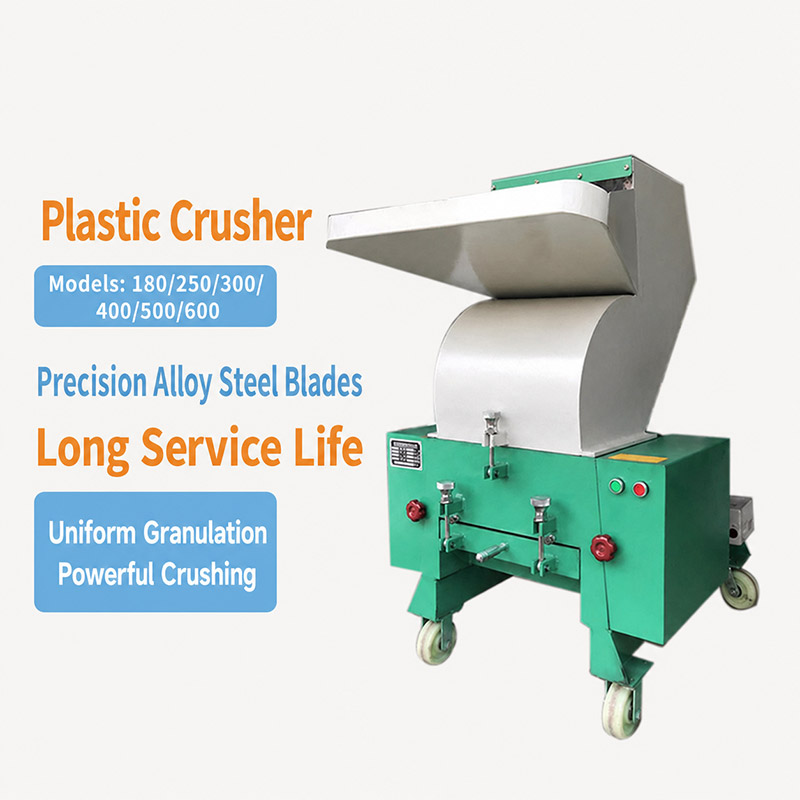
When selecting a plastic crusher, several technical parameters should be carefully evaluated to ensure the machine matches your specific application:
1. Processing Capacity (kg/h)
The hourly throughput is a primary consideration. Manufacturers typically provide a capacity range based on the material type and screen size. For example, a small laboratory crusher might process 50–100 kg/h, while industrial models can handle 500–2000 kg/h or more.
2. Rotor Diameter and Blade Configuration
Larger rotor diameters and more blades generally provide higher crushing efficiency and finer particle size. The blade material (e.g., high-speed steel, alloy steel, or tungsten carbide) affects wear resistance and service life. For abrasive materials like glass-filled plastics, harder blade materials are essential.
3. Motor Power and Torque
Power (kW) determines the machine's ability to handle tough materials. Higher power is required for thick-walled or large parts. Some machines feature a heavy-duty flywheel to maintain momentum and reduce power fluctuations.
4. Screen Mesh Size
The final particle size is controlled by the screen mesh. Typical mesh sizes range from 6 mm to 20 mm for granules, and finer meshes (2–6 mm) are used for powder-like outputs. Quick-change screen designs allow fast switching between different sizes.
5. Noise and Dust Control
For indoor or workshop use, noise levels and dust emission are important. Many modern crushers are designed with soundproof enclosures and dust collection ports to meet environmental regulations. Stainless steel construction is also available for food-grade or pharmaceutical applications.
6. Maintenance and Safety Features
Look for easy-access screen and blade replacement, overload protection, and safety interlocks. Machines with hydraulic screen tilting or external blade adjustment significantly reduce downtime.
Application Areas and Selection Advice
Plastic crushers are used across a wide range of industries, including:
- Plastic recycling plants: processing post-consumer and post-industrial plastic waste
- Injection molding and extrusion facilities: reclaiming sprues, runners, and defective parts
- Waste management centers: reducing volume of plastic waste for transport and landfill
- Agriculture: recycling used plastic films, irrigation pipes, and containers
- Research laboratories: small-scale testing and material preparation
For small-scale operations or laboratories, a compact multi-functional crusher with lower power (1.5–5 kW) is often sufficient. For medium to large recycling lines, a dedicated hard plastic crusher or film crusher with higher capacity (10–50 kW) is recommended. Always consider the material's hardness, shape, and contamination level when choosing the blade type and screen mesh. Consulting with experienced manufacturers like TENCAN can help tailor the solution to your specific needs.