
What is a Soil Grinder and Sieve Machine? A Laboratory Device for Efficient Soil Sample Preparation
Introduction
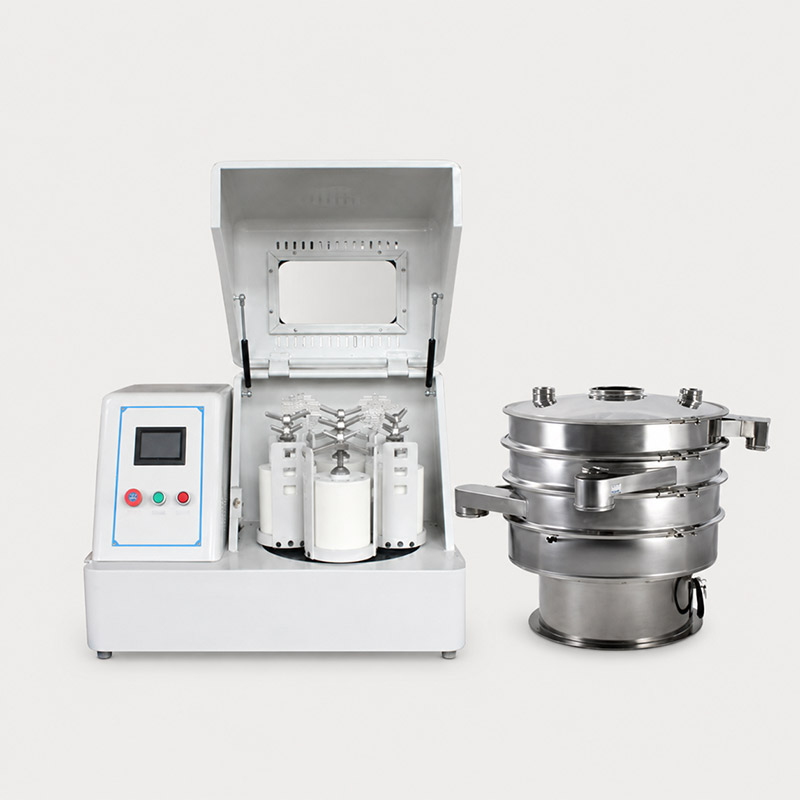
From the core, a soil grinder and sieve machine is a specialized laboratory instrument that agricultural research, soil science, environmental monitoring, and geological laboratories use to crush and classify soil samples into uniform particle sizes for subsequent analysis. Unlike traditional separate grinding and sieving processes, this device combines both operations in a single sealed system, dramatically improving throughput and sample consistency while eliminating dust emissions and cross-contamination.
Core Function and Working Principle
The primary function of a soil grinder and sieve machine is to transform bulk soil samples, typically containing aggregates and clods up to 2 mm in diameter, into a fine, homogeneous powder with controlled particle size distribution. The device achieves this through a dual-action mechanism: mechanical grinding using rotating grinding rods or balls inside sealed containers, followed by simultaneous sieving through integrated screens that separate particles by size.
In a typical cycle, the operator loads soil samples into four polypropylene containers (each holding 100–200 g of soil) along with the supplied grinding rods. The containers are then sealed and placed on the machine's rotating platform. As the platform rotates at speeds adjustable from 100 to 800 rpm (with a main drive speed adjustable from 10 to 80 rpm), the grinding rods inside the containers impact and shear the soil particles, breaking down aggregates. Simultaneously, the bottom of each container is fitted with a sieve that allows particles below the target size (e.g., 2 mm) to pass into a collection chamber below, while oversized particles remain in the grinding chamber for further reduction. The entire process typically completes in 30 to 120 seconds, depending on soil type and desired fineness.
Key Components and Technologies
Although the soil grinder and sieve machine is a single integrated unit, it consists of several critical subsystems that work together to ensure high performance and reliability:
- Grinding Chamber and Containers: Made of high-quality polypropylene (PP), the sample containers are durable, easy to clean, and resistant to chemical attack. Each set includes four grinding chambers (850 mL each) and four collection chambers (570 mL each), plus eight grinding rods. The transparent material allows visual inspection of the grinding process.
- Drive and Speed Control System: A powerful motor drives the rotating platform at a variable speed (10–80 rpm for the main shaft), while the grinding rods inside the containers achieve much higher relative speeds (100–800 rpm) to effectively pulverize soil. The adjustable speed allows optimization for different soil types and desired particle sizes.
- Sealing and Dust Containment: All grinding and sieving operations occur within sealed containers, ensuring no dust escapes into the laboratory environment. This not only protects operators from inhaling fine soil particles but also eliminates the need for additional dust collection systems, saving valuable bench space and cleaning time.
- Compact and Ergonomic Design: With external dimensions of 750×670×700 mm and a weight of approximately 160 kg, the machine is designed to fit on standard laboratory benches. The compact footprint, combined with the enclosed operation, reduces the laboratory space required for soil preparation.
Key Performance Indicators and Selection Criteria
When selecting a soil grinder and sieve machine for your laboratory, consider the following crucial parameters:
- Processing Capacity: The machine can process up to four samples simultaneously, each containing 100–200 g of soil. The total batch capacity ranges from 400 to 800 g per cycle. With a typical cycle time of 30–120 seconds, the device can prepare dozens of samples per hour, significantly boosting laboratory throughput.
- Particle Size Control: The integrated sieve mesh determines the final particle size. Standard machines typically come with a 2 mm sieve, but optional meshes can be installed for tighter size fractions (e.g., 1 mm, 0.5 mm). The consistent grinding action ensures that nearly all particles pass through the sieve, providing uniform samples for subsequent analysis (e.g., pH measurement, nutrient extraction, particle size analysis).
- Energy Efficiency and Noise: The machine operates on a standard AC 100 V power supply with a maximum current of 2.5 A, making it energy-efficient. Noise levels are moderate due to the enclosed design, but users should verify that the unit meets local laboratory noise regulations.
- Automation and Programmability: The machine features adjustable grinding time (30–120 seconds), allowing the operator to set the duration precisely for different soil types. Some models may include digital timers or touch-screen interfaces for easier operation. Pre-programmed cycles for common soil types can reduce operator variability.
- Maintenance and Cleanability: The polypropylene containers and rods can be easily disassembled and cleaned with water or mild detergent after each use. The smooth surfaces and lack of crevices minimize sample carryover. Periodic inspection of the drive belt and motor is recommended but no special tools are required.
Application Areas and Selection Recommendations
The soil grinder and sieve machine is primarily used in:
- Agricultural Research and Soil Testing: Preparing soil samples for nutrient analysis, pH measurement, organic matter determination, and texture classification. Uniform particle size ensures reproducible results in routine soil tests. The high throughput makes it ideal for laboratories processing hundreds of samples per week.
- Environmental Monitoring: Analyzing contaminated soil for heavy metals, organic pollutants, or microplastics. The sealed design prevents cross-contamination between samples and protects operators from hazardous dust.
- Geological and Geotechnical Engineering: Preparing soil and sediment samples for grain size analysis, mineralogical analysis, or compaction testing. The ability to process multiple samples simultaneously is valuable in stratigraphic studies and site investigations.
For laboratories focused on high-throughput soil testing (e.g., agricultural extension services, environmental contract labs), the soil grinder and sieve machine offers an ideal balance of speed, capacity, and dust control. For institutions that primarily work with very small sample sizes (e.g., 10–50 g), a soil grinder and sieve machine with smaller container options may be more appropriate. Laboratories needing finer particle sizes (e.g., <100 μm) may consider combining this device with a planetary ball mill for secondary grinding.