
What is a Small Ball Mill with a Ceramic Jar? A Compact Laboratory Grinding Equipment for Fine Powder Preparation
What is a Small Ball Mill with a Ceramic Jar?
At its core, a small ball mill with a ceramic jar is a compact laboratory grinding device designed for fine grinding, mixing, and homogenizing small quantities of materials. It uses a rotating ceramic jar as the grinding container, inside which grinding balls (usually made of ceramic or other materials) impact and shear the sample to reduce particle size down to micron or even submicron levels. This equipment is widely employed in research institutions, universities, and quality control labs for sample preparation before analysis or small-scale material synthesis.
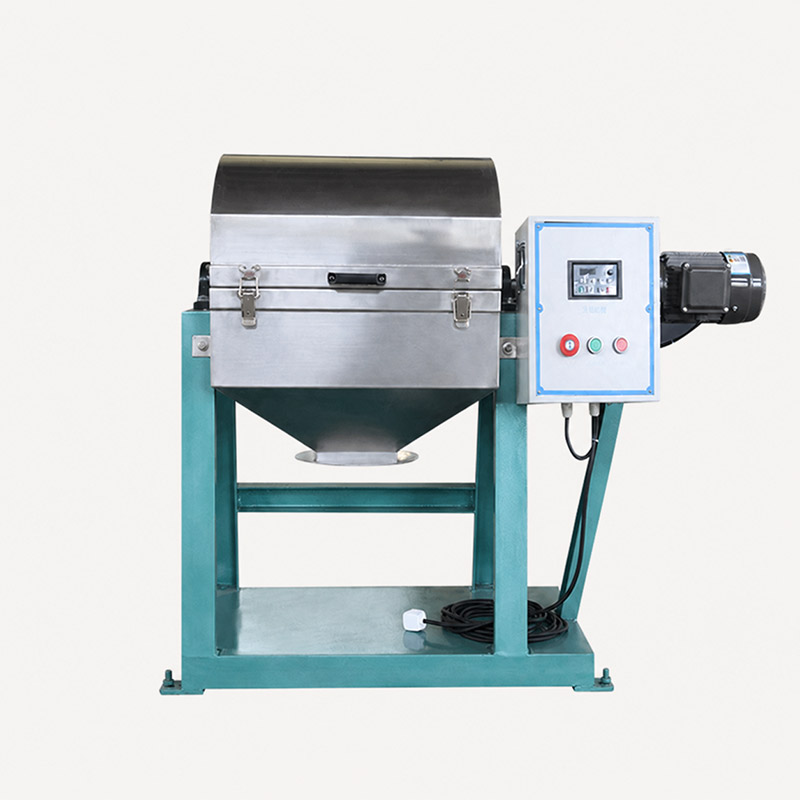
Core Function and Working Principle
The small ball mill with a ceramic jar operates on a simple but effective principle: the jar is placed on a rotating roller or driven by a motor to rotate around its own axis. As the jar rotates, the grinding balls inside are lifted by the centrifugal force and then fall back, creating strong impact and friction forces that crush and grind the material. The process can be divided into several stages:
- Loading: The ceramic jar is filled with a certain number of grinding balls (typically 1/3 to 1/2 of the jar volume) and the material to be ground (up to 1/3 of the jar volume).
- Rotation: The jar rotates at a controlled speed, typically between 50 and 300 rpm depending on the model and jar size.
- Grinding Action: The balls cascade and tumble inside the jar, generating impact, attrition, and shear forces that reduce the particle size. The ceramic jar itself provides a smooth, non-reactive surface that minimizes contamination.
- Discharge: After the preset grinding time, the jar is removed and the ground powder is collected.
The key parameters affecting grinding efficiency include rotation speed, ball-to-material ratio, grinding time, and ball size. For example, higher speeds increase impact energy but may cause excessive heating or wear. The ceramic jar's material (e.g., alumina, zirconia, or porcelain) is chosen to match the sample's chemical compatibility and hardness requirements.
Key Components and Materials
While the small ball mill with a ceramic jar is a relatively simple device, its performance depends on several critical components:
- Ceramic Jar: The jar is the heart of the mill. Common ceramic materials include alumina (Al₂O₃), zirconia (ZrO₂), agate, and porcelain. Each material has different hardness, wear resistance, and chemical inertness. For example, zirconia jars offer excellent wear resistance and are suitable for grinding hard materials, while agate jars are ideal for trace analysis due to their high purity.
- Grinding Balls: The balls are usually made of the same or compatible ceramic material as the jar to avoid cross-contamination. Sizes range from 1 mm to 20 mm. The optimal ball size depends on the initial particle size and desired final fineness.
- Drive System: Most laboratory models use a variable-speed motor with a belt or gear drive to control jar rotation. Some models offer digital speed and timer controls for precise process management.
- Roller or Bearing Support: Small ball mills often have a pair of rollers that support and rotate the jar. The roller material (e.g., rubber or polyurethane) affects friction and noise.
Key Performance Indicators and Selection Criteria
When choosing a small ball mill with a ceramic jar for your laboratory, consider the following factors:
- Processing Capacity: Typically from 100 ml to 5 liters per jar. Choose a jar size that matches your sample volume (usually 1/3 of jar capacity for material).
- Fineness Capability: Most models can achieve particle sizes down to 1–10 microns, and with extended grinding, submicron (<1 µm) can be reached. Check the manufacturer's specifications for the target material.
- Speed Range: A wider speed range (e.g., 50–300 rpm) allows optimization for different materials and grinding modes (e.g., gentle mixing vs. high-energy grinding).
- Material Compatibility: Ensure the ceramic jar and balls are chemically inert to your samples. For example, use alumina for general-purpose grinding, zirconia for high-hardness materials, and agate for trace element analysis.
- Ease of Use and Maintenance: Look for models with quick-release clamps, easy-to-clean jars, and accessible drive components. Some models offer programmable timers and automatic shut-off.
- Noise and Safety: Laboratory ball mills should operate quietly (<70 dB) and have safety features like lid locks or emergency stop buttons.
Application Fields and Selection Advice
The small ball mill with a ceramic jar is a versatile tool used in many fields:
- Geology and Mining: Grinding rocks, minerals, and ores for XRF, XRD, or chemical analysis.
- Materials Science: Preparing ceramic powders, metal powders, alloys, or composite materials for research.
- Chemistry and Pharmacy: Mixing and grinding catalysts, pigments, pharmaceuticals, and herbal materials.
- Environmental and Agriculture: Grinding soil, plant tissues, and waste samples for analysis.
- Food and Cosmetics: Fine grinding of spices, tea, and cosmetic ingredients.
For beginners or occasional users, a basic model with a fixed speed and a single alumina jar is sufficient. For advanced research requiring high purity and reproducibility, consider a model with zirconia or agate jars and digital speed control. If you need to process multiple samples simultaneously, look for a multi-station jar mill that can hold several jars at once.