
What is a Low Temperature Planetary Grinding Machine? A Specialized Grinding Equipment for Temperature-Sensitive Materials
Introduction
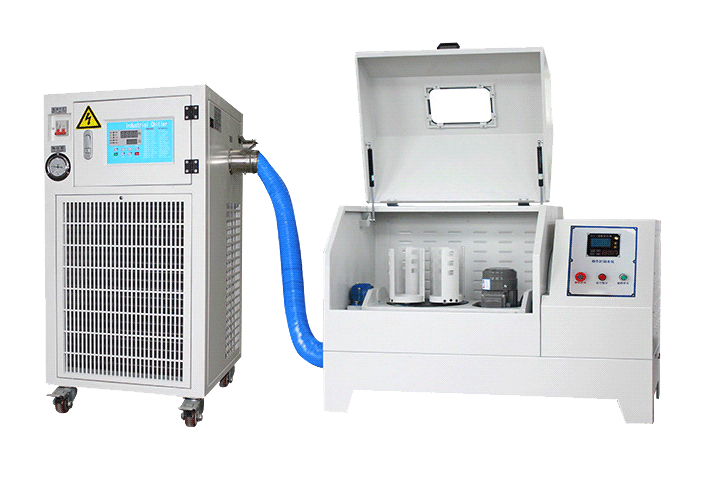
At its core, a low temperature planetary grinding machine is a specialized high-performance grinding equipment that integrates a planetary ball mill with a cooling system, designed for the fine grinding, mixing, and homogenization of materials that are sensitive to heat, volatile, or prone to oxidation. It is widely used in fields such as materials science, geology, pharmaceuticals, and electronics for preparing sub-micron and nano-sized powders without compromising the physical or chemical properties of the sample.
Core Function & Working Principle
The primary function of a low temperature planetary grinding machine is to convert coarse particles into fine powders (down to 0.1 micron or even nanometer scale) while maintaining a controlled low-temperature environment. The machine operates on the planetary motion principle: the grinding jar rotates around its own axis while simultaneously revolving around the central axis of the main disk. This combined motion generates powerful impact and frictional forces between the grinding media (e.g., zirconia or agate balls) and the material, achieving efficient comminution.
What sets it apart is the integrated cooling system. During high-speed grinding, heat is inevitably generated due to friction and impact. In a conventional planetary ball mill, this heat can raise the temperature inside the jar significantly, which may alter the crystal structure, induce chemical reactions, or cause melting in heat-sensitive materials. The low temperature planetary grinding machine uses either a refrigeration system (compressor-based) or liquid nitrogen circulation to maintain the grinding chamber at a preset low temperature, typically ranging from 5°C to -196°C. This allows the material to remain brittle and stable, enabling effective grinding of polymers, biological samples, and volatile compounds.
Main Types
Based on the cooling method, low temperature planetary grinding machines can be classified into two main types:
1. Compressor-Cooled Low Temperature Planetary Ball Mill
This type uses an air-conditioning compressor to cool the grinding chamber. The cold air circulates inside the chamber, rapidly removing the heat generated during grinding. The temperature can be controlled between 5°C and 15°C, depending on ambient conditions. It is suitable for materials that require moderate cooling, such as certain pharmaceuticals, electronic ceramics, and battery materials like LiCoO₂ and LiMn₂O₄.
2. Liquid Nitrogen Cryogenic Planetary Ball Mill
This type employs liquid nitrogen as the cooling medium, capable of reaching temperatures as low as -196°C. The material is embrittled at such low temperatures, making it easier to grind tough or elastic substances. It is ideal for grinding polymers, rubber, spices, and biological tissues, as well as for preventing oxidation of reactive metals. The liquid nitrogen may be continuously injected into the grinding chamber or used to pre-cool the material before grinding.
Some models also offer a combination of both cooling methods or a 360° fully-directional rotation feature to eliminate dead zones and improve grinding uniformity.
Key Performance Indicators & Selection Guide
When selecting a low temperature planetary grinding machine, consider the following critical parameters:
- Processing Capacity: Typically ranging from 0.2L to 20L per batch. For laboratory use, small-capacity models (0.2L–2L) are common; for small-scale production, larger capacities are available.
- Grinding Fineness: Down to 0.1µm or even nanometer level. The final particle size depends on grinding time, speed, media size, and material properties.
- Temperature Range: Verify the minimum achievable temperature and the accuracy of temperature control. Compressor models usually offer 5–15°C, while liquid nitrogen models can reach -196°C with adjustable control.
- Automation & Programmability: Modern machines feature touch-screen control, programmable speed, grinding cycles (forward/reverse/pause), and data logging. This improves reproducibility and ease of use.
- Energy Efficiency & Maintenance: Liquid nitrogen consumption is a major cost factor for cryogenic models. Compressor-based systems are more energy-efficient for moderate cooling. Also check the ease of cleaning the grinding jars and replacing the cooling components.
Application Fields & Selection Suggestions
Low temperature planetary grinding machines are indispensable in industries where heat generation during milling can degrade product quality. Typical applications include:
- Geology & Mining: Grinding of soil, ore, and minerals for heavy metal analysis without losing volatile components.
- Pharmaceuticals & Biomedicine: Preparation of drugs, plant extracts, and biological tissues that are heat-sensitive.
- Electronics & Ceramics: Fine grinding of electronic ceramics, MLCCs, thermistors, and piezoelectric materials.
- Energy Materials: Battery electrode materials like lithium cobalt oxide, lithium iron phosphate, and solid electrolytes.
- Polymers & Rubber: Cryogenic grinding of plastics, rubber, and spices to achieve fine powders.
For laboratories focusing on R&D, a compact compressor-cooled model (e.g., TENCAN Low Temperature Planetary Grinding Machine) is often sufficient. For processing tough or ultra-low-temperature materials, a liquid nitrogen version is recommended. Always consult with the manufacturer to match the machine to your specific material and throughput requirements.