
What is a Lab Stirred Ball Mill? A High-Efficiency Ultra-Fine Grinding Equipment for Laboratory and Pilot-Scale Applications
What is a Lab Stirred Ball Mill? A High-Efficiency Ultra-Fine Grinding Equipment for Laboratory and Pilot-Scale Applications
At its core, a lab stirred ball mill is a professional grinding device used in laboratories and small-scale production to efficiently reduce materials to fine or ultra-fine powders. Unlike traditional ball mills that rely on tumbling motion, the stirred ball mill uses a stationary grinding chamber and a rotating agitator to drive grinding media, producing intense shear, impact, and friction forces. This design delivers superior energy efficiency and finer particle sizes, making it indispensable for research in materials science, mining, ceramics, chemicals, and pharmaceuticals.
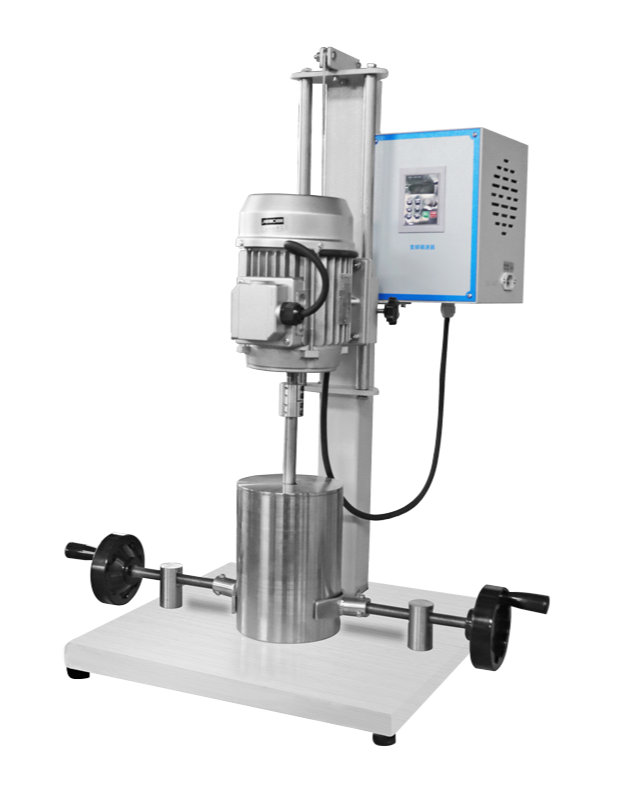
Core Function and Working Principle
The lab stirred ball mill transforms coarse feed materials into fine powders through a unique mechanism. The grinding chamber remains stationary while a central agitator (often a spiral or disc impeller) rotates at high speed. This agitator agitates the grinding media—such as zirconia, agate, or steel balls—creating a turbulent flow. The media collide with each other and with the material particles, generating strong compressive and shear forces that break down particles to submicron or even nanometer levels.
Key process parameters include agitator speed, grinding time, media size and density, and the ball-to-material ratio. For instance, higher speeds increase impact energy, while smaller media sizes are better for achieving ultra-fine grinding. The mill can operate in both wet and dry modes, with wet grinding often preferred for sticky or heat-sensitive materials. An integrated cooling system (optional) helps control temperature during prolonged runs.
Main Types of Lab Stirred Ball Mills
Lab stirred ball mills come in several configurations to suit different needs:
Lightweight Stirred Ball Mill
Compact and portable, designed for small batch samples (e.g., 50 mL to 500 mL). Ideal for quick feasibility tests and academic research. Low noise and easy to clean.
Electric Lifting Stirred Ball Mill
Features an electric lifting mechanism for easy jar removal and cleaning. Suitable for medium batches (up to 5 L) and repetitive use in busy labs. Often used in quality control and process development.
Production Type Stirred Ball Mill
Scaled up for pilot-scale and small production (e.g., 10 L to 100 L). Maintains the same grinding efficiency but with higher throughput. Equipped with advanced control systems for continuous operation.
Each type shares the same fundamental principle but differs in capacity, automation level, and footprint. The choice depends on sample volume, required throughput, and budget.
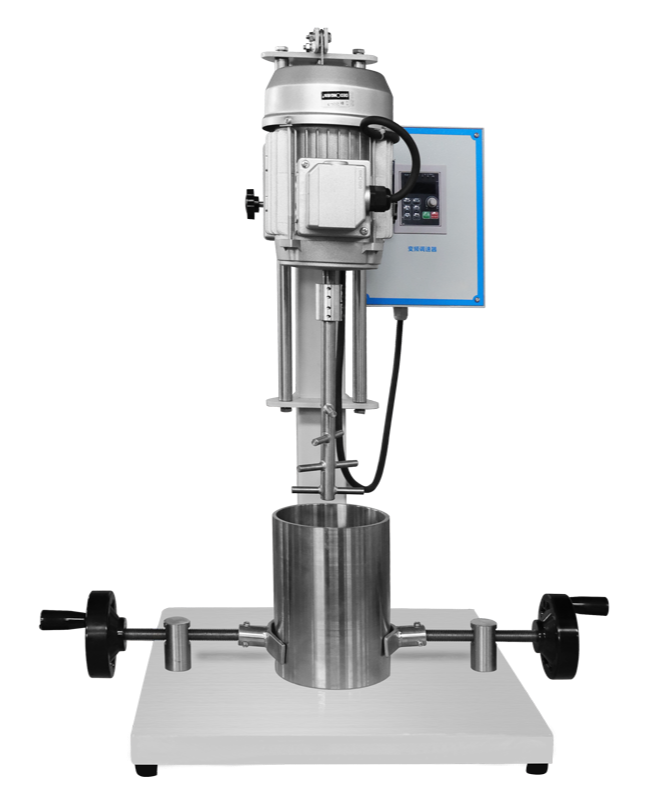
Key Performance Metrics and Selection Guide
When selecting a lab stirred ball mill, focus on these critical parameters:
Throughput and Capacity: Determine the required batch size. Lightweight mills handle 0.1–1 L, while production types can process up to 100 L. Choose based on your daily workload.
Grinding Fineness: The mill can achieve D50 below 1 micron. Check the manufacturer's specifications for your target material. Media type and size greatly influence the final particle size.
Energy Efficiency: Stirred ball mills are 40–50% more energy-efficient than traditional ball mills for ultra-fine grinding. Lower power consumption reduces operating costs.
Automation and Control: Look for digital speed control, programmable timers, and safety interlocks. Electric lifting models simplify jar handling.
Material Compatibility: The grinding chamber and agitator should be available in wear-resistant materials like stainless steel, zirconia, or polyurethane to avoid contamination. For high-purity samples, use agate or PTFE linings.
Maintenance: Choose models with easy-to-replace seals and accessible agitators. Some mills have a quick-release clamp for rapid jar changes.
Applications and Recommendations
Lab stirred ball mills are widely used in:
- Mining and Mineral Processing: Ultra-fine grinding of ores for flotation or leaching studies.
- Ceramics and Glass: Preparation of fine ceramic powders, glazes, and pigments.
- Chemicals and Pharmaceuticals: Dispersion of active ingredients, nano-coatings, and catalyst development.
- Materials Science: Synthesis of nanomaterials, battery materials, and advanced composites.
- Electronics: Polishing slurries and magnetic material processing.
For academic labs with occasional use, a lightweight or electric lifting model is cost-effective. For R&D centers requiring high throughput, a production type stirred ball mill offers better scalability. Always consult the official product page for detailed specifications. For related equipment, explore the electric lifting stirred ball mill or lightweight stirred ball mill.
References
Product page: Lab Stirred Ball Mill