
What is a Basket Mill? A High-Efficiency Grinding and Dispersing Machine for Paints and Chemical Materials
What is a Basket Mill?
At its core, a basket mill is a specialized grinding and dispersing machine used in the paint, ink, coatings, and chemical industries to achieve fine particle size reduction and homogeneous mixing. Unlike traditional mills that require separate pumps and pipes for material circulation, the basket mill integrates a grinding basket directly into the processing vessel, allowing it to perform both grinding and dispersion in a single unit. This design makes it particularly suitable for small-batch, multi-variety production where flexibility and quick changeovers are essential.
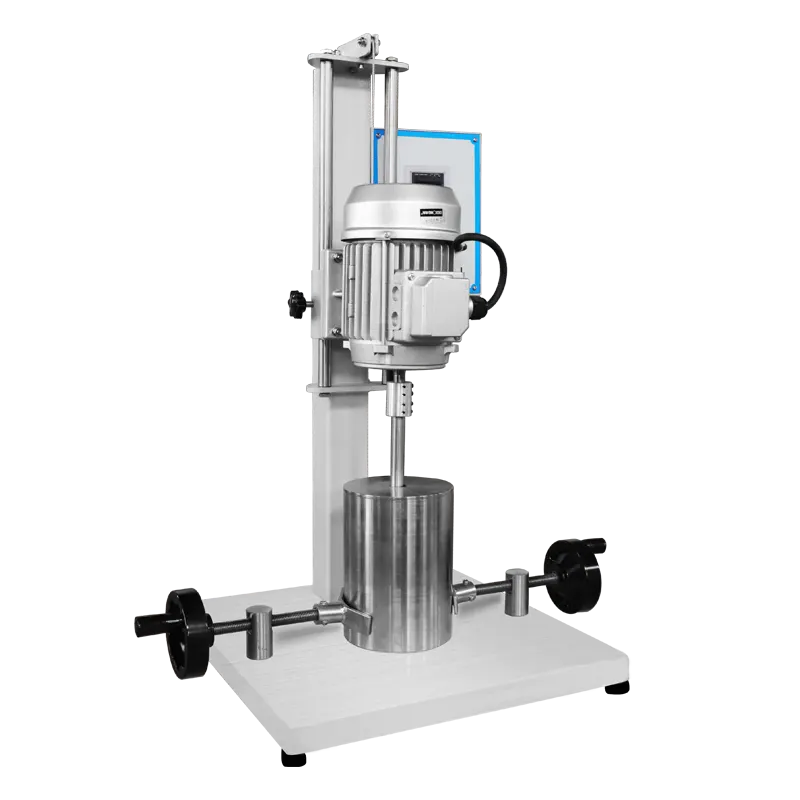
Core Function and Working Principle
The basket mill's primary function is to transform raw materials from a coarse, lumpy, or aggregated state into a finely dispersed, homogeneous slurry or paste. The heart of the machine is a rotating basket filled with grinding media (typically zirconia or ceramic beads) that is immersed directly into the product container. An independent dispersing shaft located inside the basket provides the driving force for material circulation, eliminating the need for external pumps.
During operation, the high-speed rotation of the disperser creates strong suction, drawing the material upward through the basket. Inside the basket, the grinding media are agitated and collide with the particles, breaking them down through impact and shear forces. The milled material is then expelled outward through the basket's screen, while the grinding media are retained. This continuous recirculation ensures a very narrow particle size distribution and efficient dispersion. Key process parameters include the speed of the disperser, the size and type of grinding media, and the residence time, all of which can be precisely controlled to achieve the desired fineness and viscosity.
Core Components and Key Technology
The basket mill's performance depends on several critical components:
- Grinding Basket: Made of corrosion-resistant stainless steel (304/316 grade) and equipped with a fine screen to retain the grinding media while allowing the milled product to pass through.
- Independent Disperser Shaft: Provides powerful agitation and material circulation, and its speed can be independently adjusted, offering higher operational flexibility.
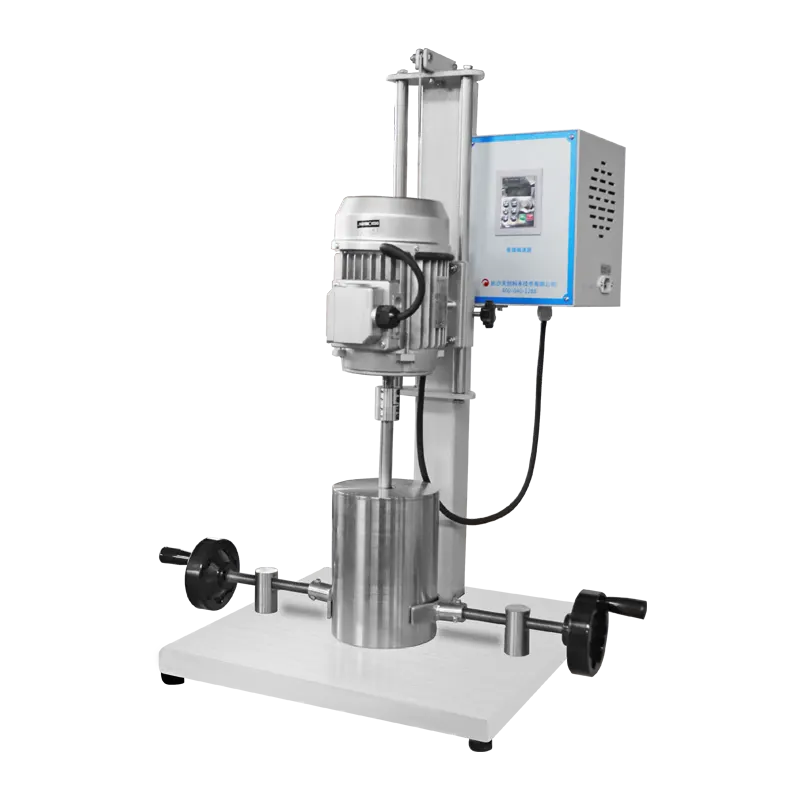
- Programmable Touchscreen Interface: Allows operators to set and store mixing parameters, reducing setup time and ensuring consistent batch quality.
- Modular Frame and Safety Features: Designed for easy integration into existing production lines, with CE-certified safety protections.
Compared to conventional basket mills, modern high-performance models feature a unique internal structure that maximizes power utilization and allows the use of grinding media as small as 0.03 mm, enabling ultra-fine grinding down to the nanometer range.
Key Performance Indicators and Selection Criteria
When selecting a basket mill, consider the following critical metrics:
- Processing Capacity: Models are available for laboratory (e.g., 0.5–2 liters) to industrial production (hundreds of liters). Choose according to your batch size.
- Power and Efficiency: Motor power typically ranges from 1.5 kW to 15 kW. Higher power reduces grinding time. For example, a 7.5 kW motor can achieve dispersion 30% faster than standard grinders.
- Fineness Control: The ability to reach particle sizes below 1 micron is essential for high-quality paints and inks. Look for models that support small media (0.03 mm) and offer adjustable speed.
- Material of Construction: Stainless steel (304/316) is standard for corrosion resistance and easy cleaning. Some models offer optional PU or PTFE wetted parts for sensitive materials.
- Automation and Programmability: Digital touchscreen control allows recipe storage and repeatable results, reducing human error.
- Maintenance: Ease of cleaning and media replacement is crucial for multi-product facilities. Modular designs with no pumps or mechanical seals simplify maintenance.
Application Fields and Selection Suggestions
Basket mills are widely used in the production of paints, industrial coatings, printing inks, pigments, adhesives, and chemical intermediates. They excel in applications requiring frequent color changes or small batches of high-quality products. For R&D laboratories, a compact basket mill with a programmable interface is ideal for formulation development. For production environments, a high-power, modular basket mill with a large basket capacity and explosion-proof options is recommended. Before purchasing, always test the equipment with your actual materials to verify dispersion quality and throughput.
For more detailed specifications and related products, visit the Basket Mill product page, or explore other grinding solutions such as the Three Roll Mill and Colloid Mill.