
What is an Automatic Electric Tablet Press? A High-Efficiency Forming Machine for Powder and Granule Compression
What is an Automatic Electric Tablet Press?
An automatic electric tablet press is a professional fully-automated tablet forming machine that the pharmaceutical, food, chemical, and electronics industries use to compress granular or powdered materials into consistent, high-quality tablets. Unlike manual or semi-automatic presses, this equipment integrates an electric motor, a rotary turret, and a control system to achieve continuous, high-speed tablet production with minimal operator intervention.
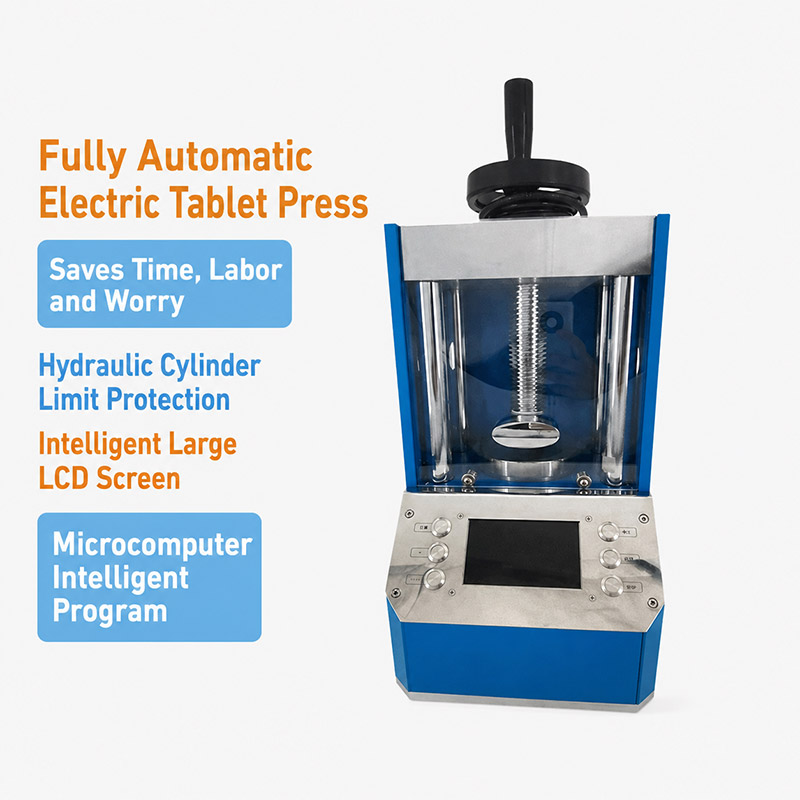
Core Function and Working Principle
The fundamental function of an automatic electric tablet press is to transform loose powder or granulated raw material into solid tablets of specific shape, weight, and hardness. The core working principle is based on a rotary turret that carries multiple punch-and-die stations. As the turret rotates, the following sequence occurs continuously:
- Filling: The die cavity is filled with a precise volume of material by a gravity-fed or forced-feed mechanism.
- Compression: Upper and lower punches move toward each other inside the die, applying high pressure (typically up to 80 kN) to compact the powder into a tablet.
- Ejection: The lower punch rises to push the finished tablet out of the die, and a scraper or take-off plate guides it into a collection chute.
Key process parameters—such as turret speed (14–34 rpm), filling depth (up to 17 mm), and pressure (60–80 kN)—directly influence tablet weight, hardness, and disintegration time. The automatic control system ensures these parameters remain stable throughout production.
Core Components and Key Technologies
An automatic electric tablet press consists of several critical subsystems:
- Turret and Dies: The rotary turret holds multiple die cavities (e.g., 17 stations on some models). Interchangeable punches and dies allow forming round, oval, rectangular, or custom-shaped tablets.
- Pre-fill and Force-feed System: Ensures consistent die filling even with poorly flowing powders, reducing weight variation.
- Pressure Control System: Adjustable hydraulic or mechanical pressure system provides precise compression force, essential for tablet hardness uniformity.
- GMP-Compliant Enclosure: Stainless steel construction with sealed safety doors and dust-proof design prevents cross-contamination and meets pharmaceutical hygiene standards.
- Automation Interface: Touchscreen or PLC-based controls allow operators to set speed, pressure, and dwell time, and to monitor production data in real time.
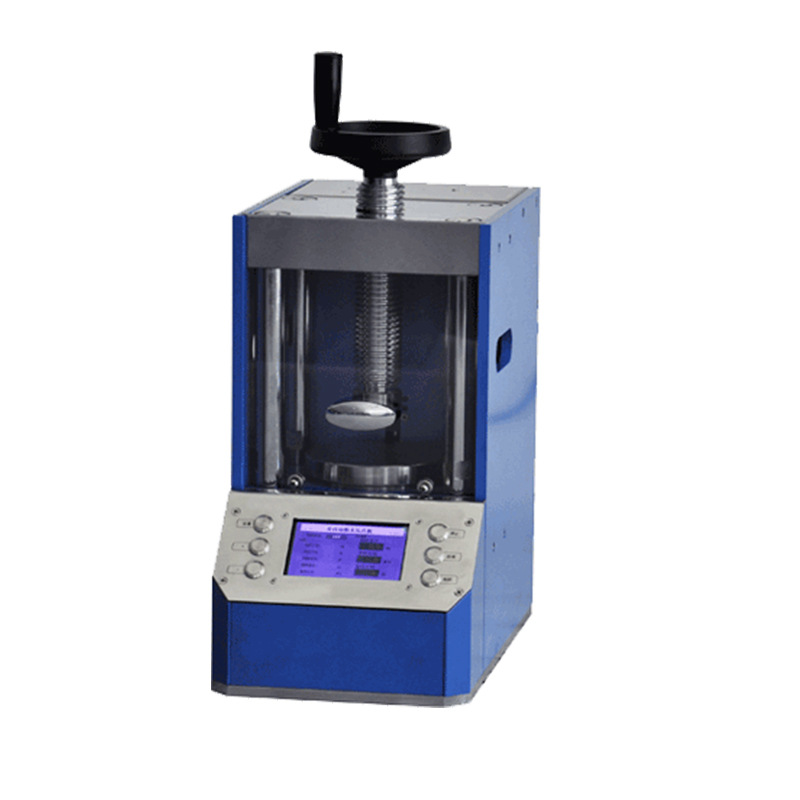
Key Performance Indicators and Selection Guide
When selecting an automatic electric tablet press, consider the following critical metrics:
- Production Capacity: Typically measured in tablets per hour. For example, some models achieve up to 34,680 tablets/hour (for 17 stations at 34 rpm).
- Maximum Tablet Diameter and Fill Depth: Most automatic presses handle diameters up to 20–25 mm and fill depths up to 17 mm. Ensure these match your target tablet dimensions.
- Compression Force: Ranges from 50 kN to 120 kN. Higher pressure is needed for dense materials or large tablets.
- Automation Level: Fully automatic models include automatic weight control, rejection of defective tablets, and data logging, which reduce operator dependency and improve quality consistency.
- Material of Construction: Pharmaceutical applications require 316L stainless steel contact parts with a smooth finish for easy cleaning and corrosion resistance.
- Ease of Maintenance: Quick-release dies and accessible cleaning areas minimize downtime. Look for models with tool-less disassembly features.
For laboratory or small-batch production, a manual tablet press may be more suitable, while an automatic electric tablet press is ideal for medium-to-high volume manufacturing.
Application Fields and Selection Suggestions
Pharmaceutical Industry
Used for producing oral solid dosage forms—vitamin tablets, pain relievers, and herbal supplements. GMP-compliant automatic presses are mandatory for regulated environments.
Food and Confectionery
Tablets for candy, compressed sweets, or salt tablets for water softeners. The machine can handle sugar-based granules without sticking, thanks to specialized punch coatings.
Chemical and Electronics
Forming ceramic substrates, catalyst pellets, or battery electrode compacts. The press can be adapted for abrasive or corrosive powders with hardened tool steel or ceramic dies.
Selection Advice
If your production volume exceeds 10,000 tablets per shift and you require consistent tablet weight within ±3%, choose a fully automatic electric tablet press with servo-driven filling and pressure feedback. For R&D or small batches, a manual single-punch press offers lower cost and quick changeover.