
What is a Desktop Air Blower Dryer? A Compact Forced Convection Drying Device for Laboratory and Small-Scale Applications
What is a Desktop Air Blower Dryer? A Compact Forced Convection Drying Device for Laboratory and Small-Scale Applications
At its core, a desktop air blower dryer is a compact, bench-top drying device that uses forced hot air circulation to rapidly and uniformly remove moisture from samples, components, or materials. Laboratories, research centers, and small-scale production workshops use it to dry glassware, powders, electronic components, and other heat-sensitive items where controlled, gentle drying is required. Unlike natural convection ovens, this equipment employs a built-in blower to actively circulate heated air, ensuring faster and more even drying results.
Core Function and Working Principle
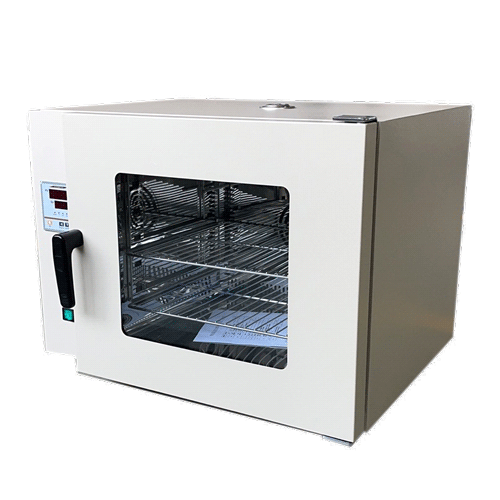
The primary function of a desktop air blower dryer is to transform a wet or moist object into a dry state by accelerating evaporation. The device consists of a well-insulated chamber, a heating element, a blower fan, and a temperature control system. The working principle is straightforward: the heating element raises the air temperature inside the chamber, and the blower fan continuously forces the hot air across the samples. This forced convection significantly increases the heat transfer rate and moisture removal efficiency compared to still-air ovens.
Key process parameters include temperature (typically ambient +10°C to 300°C), airflow rate, and drying time. The temperature control system maintains a stable setpoint, often with an accuracy of ±1°C, while the blower speed can be adjusted to balance drying speed and sample integrity. For delicate materials, lower temperatures and moderate airflow are used to avoid thermal shock or particle entrainment.
Key Components and Technology
Although the product is relatively simple, several components are critical to its performance:
- Heating System: Usually electric resistance heaters (e.g., stainless steel sheathed elements) that provide uniform heat. The power rating determines the maximum temperature and heating rate.
- Blower Fan: A centrifugal or axial fan that generates forced air circulation. The fan's airflow rate (CFM) directly affects drying uniformity and speed.
- Temperature Controller: Modern units use a PID (proportional-integral-derivative) controller with a digital display, allowing precise setting and real-time monitoring of chamber temperature.
- Air Intake and Exhaust: Adjustable vents allow fresh air intake and moisture-laden air exhaust, preventing condensation and maintaining drying efficiency.
- Chamber Material: Typically stainless steel for corrosion resistance and easy cleaning, with insulation to minimize heat loss and ensure operator safety.
Key Performance Indicators and Selection Guide
When selecting a desktop air blower dryer, consider the following metrics:
- Temperature Range and Accuracy: Most applications require a range up to 200-300°C. Accuracy of ±1°C is standard for laboratory use. Higher precision (±0.5°C) is needed for critical drying processes.
- Chamber Volume: Desktop models typically offer volumes from 20 to 100 liters. Choose based on the size and quantity of items to be dried at once.
- Airflow Rate and Uniformity: Good airflow distribution (e.g., horizontal or vertical forced convection) ensures all samples dry evenly. Check the manufacturer's specifications for airflow pattern.
- Heating Speed and Recovery Time: Faster heating and recovery after opening the door reduce cycle time and improve productivity.
- Safety Features: Over-temperature protection, door interlock, and alarm systems are essential for unattended operation.
- Ease of Maintenance: Removable shelves, easy-to-clean interior, and accessible fan/heater components simplify regular upkeep.
Applications and Selection Advice
Desktop air blower dryers are widely used in:
- Chemical and Pharmaceutical Labs: Drying glassware, reagents, and synthesized compounds.
- Electronics Manufacturing: Drying PCBs, connectors, and moisture-sensitive components.
- Material Science: Drying powders, ceramics, and composite samples before testing or processing.
- Food and Agriculture: Drying seeds, grains, or food samples for moisture content analysis.
- Forensic and Environmental Labs: Drying soil, sediment, or evidence items.
For users who need high precision and uniform drying, choose a model with PID control and forced convection. If the samples are volatile or heat-sensitive, look for a dryer with adjustable temperature and airflow, and consider a vacuum drying oven for very low-temperature drying. For routine drying of glassware and non-critical items, a basic model with a simple thermostat is sufficient.
References
Desktop air blower dryer product page: https://www.labballmill.com/fr/products/sintering-series/desktop-air-blower-dryer.html