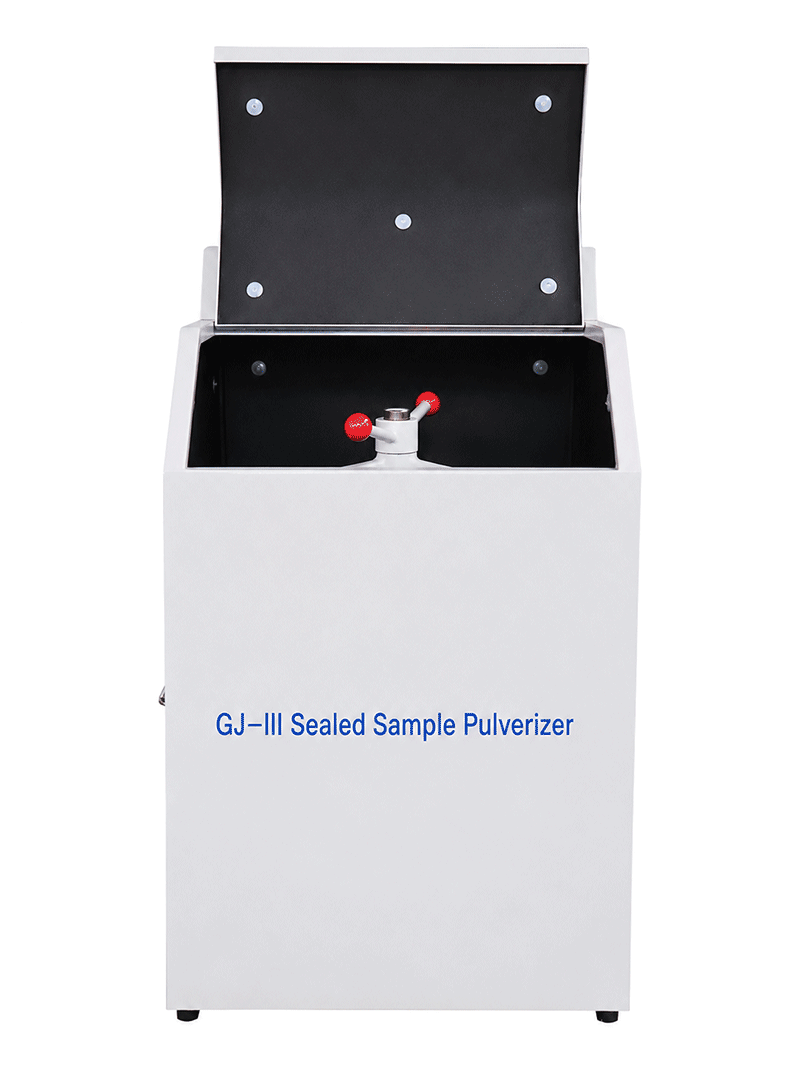
What is a Lab Sample Grinder Machine? A Versatile Grinding Device for Efficient Laboratory Sample Preparation
At its core, a lab sample grinder machine is a specialized vibration ball mill designed for rapid, efficient, and uniform grinding of small-volume samples in research and analytical laboratories. It is widely used in fields such as materials science, biology, pharmaceuticals, geology, and food testing to convert coarse materials into fine powders with particle sizes down to the micron or even submicron level. Unlike traditional manual grinding or large-scale industrial mills, this compact device offers programmable control, high throughput, and minimal sample loss, making it an indispensable tool for sample preparation prior to analysis.
Core Function and Working Principle
The fundamental function of a lab sample grinder machine is to transform bulk or granular materials into a homogeneous fine powder through high-frequency mechanical impact and friction. The core working principle involves a grinding vessel (usually a jar or vial) containing the sample and one or more grinding balls (made of materials like stainless steel, zirconia, agate, or tungsten carbide). The vessel is subjected to rapid oscillations—typically in a three-dimensional or linear reciprocating motion—driven by an electric motor and an eccentric mechanism.
During oscillation, the grinding balls collide repeatedly with the sample, generating intense impact and shear forces that fracture and abrade the material. The frequency and amplitude of vibration, along with the size and number of grinding balls, determine the grinding intensity and final particle size. Most modern lab sample grinders feature programmable microcomputer control, allowing users to set parameters such as grinding time, pause intervals, and motion direction (forward/reverse) to optimize results for different sample types. Typical processing time ranges from 30 seconds to a few minutes, significantly faster than traditional ball mills.
Key parameters affecting grinding performance include oscillation frequency (typically 600–4200 oscillations per minute), grinding media size (0.1–20 mm diameter), and sample-to-media ratio. Proper selection of these parameters ensures efficient size reduction while minimizing contamination and thermal degradation, which is critical for heat-sensitive biological or chemical samples.
Key Components and Technical Features
The lab sample grinder machine integrates several advanced components to deliver reliable and reproducible grinding:
- High-Power Motor and Drive System: A brushless or servo motor drives the oscillation mechanism directly or via a belt, providing stable torque and low maintenance. Power typically ranges from 200W to 1.5kW depending on model.
- Grinding Vessel and Media: Vessels are available in various materials (stainless steel, PTFE, nylon, agate, zirconia) to adapt to different sample hardness and avoid cross-contamination. Grinding media can be customized in material, size, and quantity.
- Programmable Control Panel: A touchscreen or keypad interface allows setting up to 10+ program presets for routine tasks, including forward/reverse cycles, pause durations, and total run time. Many models store parameters for quick recall.
- Safety and Noise Reduction: Features such as overload protection, lid lock sensors, and soundproof enclosures ensure safe operation and reduced noise levels (typically below 70 dB).
- Optional Cooling Accessories: For temperature-sensitive samples, a cooling module (e.g., Cryolys or liquid nitrogen system) can be integrated to maintain sub-ambient temperatures during grinding.
Unlike lab vibration ball mills that often require balancing, modern sample grinders utilize a patented clamping mechanism that eliminates the need for counterweights, allowing instant loading and unloading. This design also reduces vibration transfer to the bench, enabling stable operation on standard lab tables.
Key Performance Indicators and Selection Tips
When choosing a lab sample grinder machine, consider the following critical specifications:
| Parameter | Typical Range | Impact on Performance |
| Oscillation Frequency | 600–4200 rpm (or Hz equivalent) | Higher frequency yields faster grinding but may increase heat generation |
| Maximum Sample Volume | 2 mL to 50 mL per tube, up to 96 tubes (high-throughput models) | Defines batch capacity; choose based on daily sample load |
| Final Particle Size | 0.1 μm – 5 μm (typical) | Depends on material; finer size requires longer time or smaller media |
| Programmability | Touchscreen, 10–20 programs | Eases method development and ensures repeatability |
| Motor Power | 0.2–1.5 kW | Higher power handles harder materials and larger batches |
For most routine laboratories, a mid-range model with 1–2 kW motor, frequency up to 3000 rpm, and 4–24 sample capacity offers a good balance between cost and versatility. If your work involves tough materials like bones, seeds, or ceramics, consider a heavy-duty model with higher power and robust construction. For high-throughput applications (e.g., genomic extraction from 96-well plates), select a unit with dedicated adapters and fast-cycle options.
Also evaluate the ease of cleaning and maintenance. Models with removable grinding vessels and autoclavable components simplify cross-contamination prevention. Check for warranty and local service support, especially for motors and electronic boards.
Application Fields and Selection Advice
The lab sample grinder machine finds extensive use across diverse industries:
- Pharmaceutical and Biotechnology: Grinding tablets, plant tissues, animal organs, and bacterial cells for drug extraction, DNA/RNA isolation, and protein analysis.
- Materials Science: Preparing ceramics, alloys, polymers, and composites for powder X-ray diffraction (XRD), particle size analysis, and sintering experiments.
- Geology and Mining: Pulverizing rocks, minerals, and soils for elemental analysis and mineralogical studies.
- Food and Agriculture: Grinding grains, seeds, spices, and feed for contamination testing and nutrient analysis.
- Environmental Monitoring: Homogenizing soil, sludge, and waste samples for heavy metal or organic pollutant analysis.
For first-time buyers, we recommend starting with a basic model capable of handling 4–8 samples (e.g., 2 mL tubes) with a frequency range of 1500–3000 rpm. If your lab frequently processes fibrous plant materials or tough seeds, invest in a model with a higher oscillation amplitude and optional stainless steel grinding jars. For temperature-sensitive assays (e.g., RNA extraction), a model with a cooling adapter is essential. Always request a demo with your actual sample to verify performance before purchase.
References
Product page: Lab Sample Grinder Machine
Related equipment: Lab Vibration Ball Mill, Lightweight Vibrating Ball Mill, Heavy Duty Vibrating Ball Mill