
Achat-Planetenmühlenglas: Hochreines Mahlen für kontaminationsempfindliche Proben
Warum sollten Sie einen Achat-Mahlbehälter für Ihre Planeten-Kugelmühle wählen?
Wenn Sie eine Probe zu einem feinen Pulver mahlen müssen, ohne dass unerwünschte Verunreinigungen entstehen, ist das Material Ihres Mahlbechers eine der wichtigsten Entscheidungen. Viele Laborpulver – wie keramische Rohstoffe, geologische Proben und pharmazeutische Inhaltsstoffe – können leicht durch Metallionen oder abrasiven Abrieb von Stahlgefäßen verunreinigt werden. Hier ist ein Achat-Planetenmühlenglas bietet eine praktische Lösung. Achat (eine natürliche Form von mikrokristallinem Quarz) bietet eine harte, chemisch inerte Schleifoberfläche, die Verunreinigungen minimiert und konsistente Ergebnisse liefert.
In diesem Artikel gehen wir auf die Eigenschaften von Achat ein, wie er sich in einer Planetenkugelmühle verhält, welche Materialien er am besten eignet und wie Sie die richtige Gefäßgröße und -konfiguration für Ihr Labor auswählen.
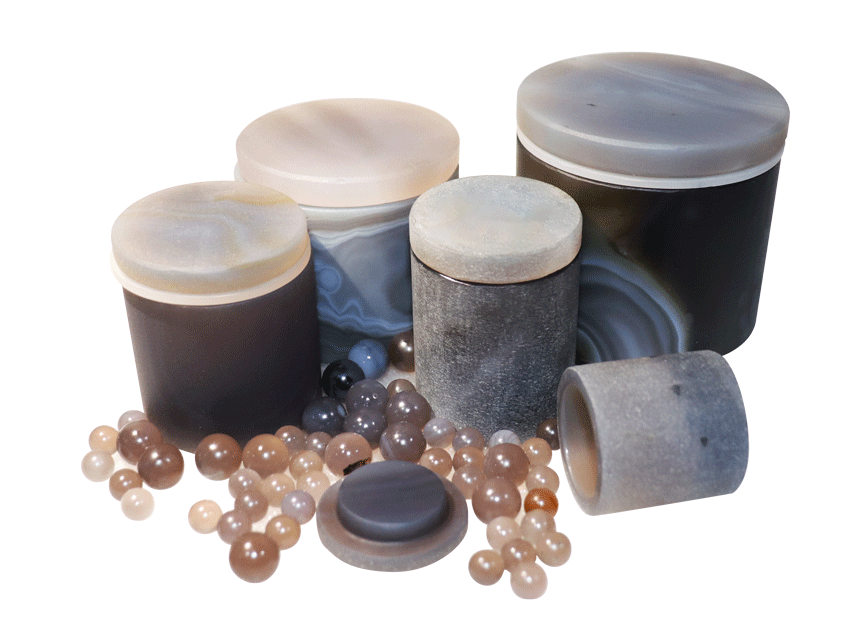
Was macht Achat zu einem besonderen Material zum Mahlen von Gläsern?
Achat ist ein Silikatmineral mit einer Härte von etwa 6,5–7 auf der Mohs-Skala. Es ist dicht (ca. 2,6–2,7 g/cm³) und hat eine glatte, nicht poröse Oberfläche. Im Gegensatz zu vielen keramischen Materialien ist Achat von Natur aus rein und enthält keine Bindemittel oder Zusatzstoffe. Dies bedeutet, dass beim Mahlen einer Probe die einzige potenzielle Kontamination vom Achat selbst ausgeht. Da Achat gegenüber den meisten Säuren und Laugen chemisch beständig ist, gilt er als eines der saubersten Gefäßmaterialien für das routinemäßige Mahlen im Labor.
Haupteigenschaften von Achat-Mahlgefäßen
- Hohe Härte: Beständig gegen Kratzer und Abrieb durch die meisten geologischen und keramischen Materialien.
- Geringe Verschleißrate: Im typischen Laborbetrieb ist der Verschleiß von Achatgefäßen sehr gering, insbesondere beim Mahlen von Materialien, die weicher sind als das Gefäß selbst.
- Chemisch inert: Reagiert nicht mit den meisten Probenmaterialien und ist daher für eine Vielzahl von Pulvern geeignet.
- Nichtmetallisch: Ideal für Proben, die nicht Eisen, Chrom, Nickel oder anderen Metallverunreinigungen ausgesetzt werden dürfen.
- Durchscheinendes Aussehen: Ermöglicht in einigen Konfigurationen eine visuelle Inspektion des Schleifvorgangs.
Diese Eigenschaften machen Achatgefäße zu einer beliebten Wahl in der Geologie, Mineralverarbeitung, Keramik und pharmazeutischen Forschung, wo die Reinheit der Proben oberste Priorität hat.
Wie funktioniert ein Achat-Planetenmühlenglas in der Praxis?
Bei einer typischen Planetenkugelmühle dreht sich der Mahlbecher um seine eigene Achse, während sich die Mühlenplattform in die entgegengesetzte Richtung dreht. Diese Planetenbewegung erzeugt starke Zentrifugalkräfte, die dazu führen, dass die Mahlkugeln im Gefäß auf die Probe aufprallen und diese zerschneiden. Bei einem Achatgefäß bestehen die Mahlkörper in der Regel ebenfalls aus Achat, um den gleichen Reinheitsgrad zu gewährleisten. Die Kombination aus Achatgefäß und Achatkugeln stellt sicher, dass das einzige Verschleißprodukt Achat ist, der chemisch vielen Proben auf Kieselsäurebasis ähnelt und oft tolerierbar ist.
Da Achat nicht so hart ist wie Wolframkarbid oder Zirkonoxid, eignet er sich am besten für Materialien, die gleich oder weicher als Achat sind. Beispiele hierfür sind:
- Mineralien und Erze (Quarz, Feldspat, Calcit, Talk)
- Keramikpulver (Ton, Kaolin, Feldspat, Kieselsäure)
- Geologische Proben (Boden, Sediment, Gestein)
- Arzneimittel und Kräuterpulver
- Glas- und Emaillefritten
Bei Materialien, die härter als Achat sind (z. B. Korund, Siliziumkarbid oder Wolframkarbid), kann es bei Achatgläsern zu spürbarem Verschleiß kommen und sie werden nicht empfohlen. In solchen Fällen könnten Sie Folgendes in Betracht ziehen: Planetenmühlenglas aus Zirkonoxid oder ein Wolframkarbidgefäß für eine bessere Haltbarkeit.
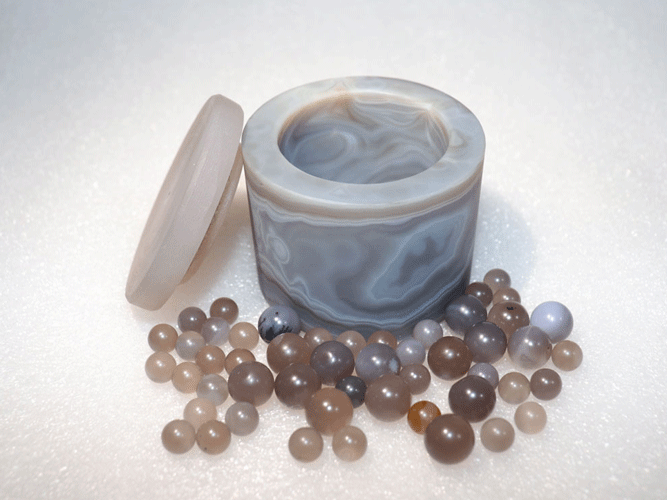
Auswahl der richtigen Größe und Konfiguration des Achatglases
Achat-Planetenmühlengläser sind in verschiedenen Volumina erhältlich, typischerweise von 50 ml bis 500 ml oder sogar noch größer. Die Auswahl hängt von der Probenmenge ab, die Sie pro Charge verarbeiten müssen. Als allgemeine Regel gilt, dass das effektive Arbeitsvolumen eines Glases etwa ein Drittel bis die Hälfte seines Gesamtvolumens beträgt. Beispielsweise können in einem 250-ml-Gefäß problemlos 50–80 ml Pulver verarbeitet werden (abhängig von der Schüttdichte).
Bei der Auswahl eines Glases sollten Sie auch die Art der Versiegelung berücksichtigen. Die meisten Achatgläser werden mit einer Dichtung aus Kunststoff oder Gummi geliefert, um ein Auslaufen beim Nassmahlen oder bei Verwendung einer Vakuumkonfiguration zu verhindern. Wenn Sie unter Schutzgas oder Vakuum mahlen möchten, stellen Sie sicher, dass das Gefäß mit einem Vakuumadapter kompatibel ist. Sie können dediziert finden Vakuum-Planetenmühlengläser wenn Ihre Anwendung eine luftempfindliche Handhabung erfordert.
Faktoren, die bei der Auswahl eines Achatglases zu berücksichtigen sind
- Probenhärte: Stellen Sie sicher, dass das Material nicht härter als Achat ist (Mohs 7).
- Probenmenge: Wählen Sie ein Gefäßvolumen, das ausreichend Platz für Mahlkugeln und Probenbewegung bietet.
- Schleifmittel: Verwenden Sie Achatkugeln mit geeignetem Durchmesser (normalerweise 5–20 mm), um der Zielpartikelgröße zu entsprechen.
- Kugel-zu-Pulver-Verhältnis: Ein üblicher Ausgangspunkt ist 5:1 bis 10:1 nach Gewicht, dies hängt jedoch vom Material und der gewünschten Feinheit ab.
- Nass- vs. Trockenmahlen: Achatgläser sind für beides geeignet, aber das Nassmahlen reduziert die Hitze und kann dabei helfen, feinere Partikel zu erhalten.
Wenn Sie Materialien verarbeiten, die leicht abrasiv sind, aber dennoch im Achat-Bereich liegen, können Sie auch über a nachdenken Planetenmühlengefäß aus Edelstahl 304 Für eine höhere mechanische Festigkeit müssen Sie jedoch eine mögliche Metallverunreinigung in Kauf nehmen. Für maximale Reinheit bleibt Achat die bevorzugte Wahl.
Allgemeine Anwendungen und Best Practices
Geologische und mineralische Probenvorbereitung
Achatgefäße werden häufig bei der Probenvorbereitung für Röntgenfluoreszenz (RFA) und Röntgenbeugung (XRD) verwendet. Das gemahlene Pulver muss repräsentativ für das ursprüngliche Gestein sein und darf keine Eisenverunreinigungen aufweisen, die die Analyse beeinträchtigen könnten. Achat sorgt für eine saubere Mahlumgebung und das resultierende Pulver eignet sich oft zum Pressen zu Pellets oder zur Herstellung von geschmolzenen Perlen.
Keramik- und Glasherstellung
In der Keramikforschung werden Rohstoffe wie Feldspat, Quarz und Kaolin auf eine bestimmte Partikelgrößenverteilung gemahlen. Achatgläser tragen dazu bei, die natürliche Farbe und chemische Zusammensetzung des Pulvers zu erhalten, was für die Glasurformulierung und Farbabstimmung von entscheidender Bedeutung ist.
Mahlen von Pharmazeutika und Kräutern
Für die traditionelle chinesische Medizin, Kräuterextrakte oder pharmazeutische Hilfsstoffe bieten Achatgläser eine nicht reaktive Oberfläche, die keinen metallischen Geschmack oder toxische Elemente mit sich bringt. Die glatte Innenseite erleichtert zudem die Reinigung zwischen den Chargen.
Wartung und Pflege von Achatgläsern
Achat ist langlebig, aber spröde. Befolgen Sie diese Richtlinien, um Absplitterungen oder Risse zu vermeiden:
- Überfüllen Sie das Glas nicht; Lassen Sie Raum für die Bewegung des Balls.
- Verwenden Sie das empfohlene Kugel-zu-Pulver-Verhältnis, um übermäßige Stöße auf die Gefäßwände zu vermeiden.
- Vermeiden Sie Thermoschocks: Erhitzen Sie ein Achatglas nicht plötzlich und kühlen Sie es nach dem Heißmahlen nicht mit Wasser ab.
- Reinigen Sie das Glas mit einer weichen Bürste und einem milden Reinigungsmittel. Verwenden Sie keine Scheuerschwämme, die die Oberfläche zerkratzen könnten.
- Überprüfen Sie die Dichtung regelmäßig und ersetzen Sie sie bei Verschleiß, um die Luftdichtheit aufrechtzuerhalten.
Bei richtiger Pflege kann ein Achat-Mahlgefäß viele Jahre lang regelmäßig im Labor verwendet werden. Die natürliche Schönheit des Materials macht auch die Arbeit im Labor zum Vergnügen.
Abschließende Gedanken zu Achat-Planetenmühlengläsern
Die Wahl des richtigen Mahlbechers ist ein grundlegender Schritt, um beim Planetenkugelmahlen zuverlässige und reproduzierbare Ergebnisse zu erzielen. Achat-Planetenmühlengläser eignen sich hervorragend für Anwendungen, bei denen die Reinheit im Vordergrund steht und die Probe nicht übermäßig hart ist. Sie bieten ein ausgewogenes Verhältnis von Leistung, Kosten und Sauberkeit, das sie zu einem festen Bestandteil in geologischen, keramischen und pharmazeutischen Labors weltweit macht.
Wenn Sie sich nicht sicher sind, ob ein Achatglas für Ihr spezielles Material geeignet ist, empfiehlt es sich immer, zunächst eine kleine Probe zu testen. Erfahrene technische Supportteams können Ihnen bei der Bewertung der Kompatibilität basierend auf der Materialzusammensetzung, der angestrebten Partikelgröße und dem akzeptablen Verschmutzungsgrad helfen. Weitere Informationen zu Achatgläsern und anderen Optionen für Mahlgläser finden Sie unter Produktseite für Achat-Planetenmühlengläser .