
Lab Horizontal Bar-Pin Bead Mill: Working Principle, Media Selection and Applications
Lab Horizontal Bar-Pin Bead Mill: Working Principle, Media Selection and Applications
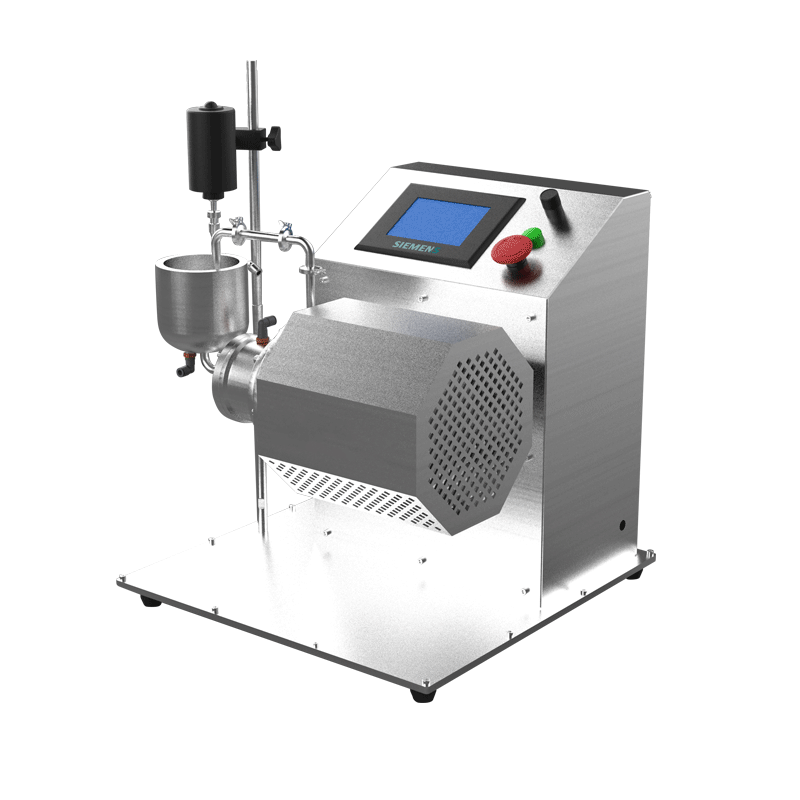
A lab horizontal bar-pin bead mill, also known as a laboratory nano sand mill or horizontal wet grinding mill, is designed for fine grinding, deagglomeration, dispersion, and particle-size reduction in a liquid medium.
It is commonly used when conventional mixing equipment cannot provide sufficient shear energy or when a rotating ball mill requires too much time to reach the desired fineness. By combining a horizontal grinding chamber, a high-speed bar-pin rotor, and small grinding beads, the machine can process many slurries into fine, uniform, and stable dispersions.
However, the final particle size does not depend on the machine alone. Grinding media diameter, bead material, rotor speed, slurry concentration, viscosity, circulation time, cooling efficiency, and material compatibility all influence the result.
This guide explains how a laboratory horizontal bar-pin bead mill works, how to select grinding media, how to optimize the wet milling process, and what buyers should confirm before choosing a machine.
What Is a Lab Horizontal Bar-Pin Bead Mill?
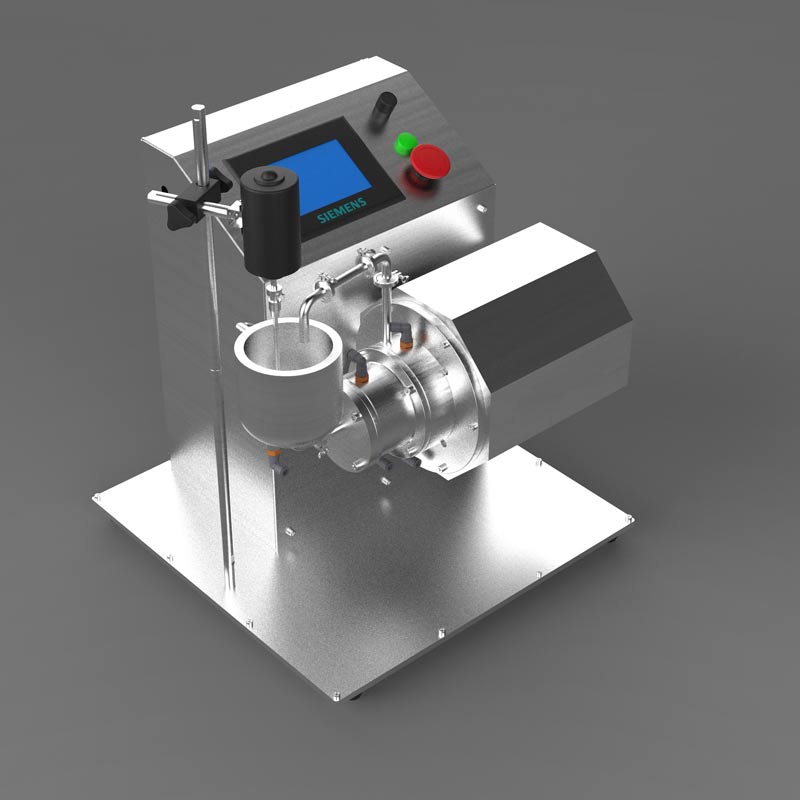
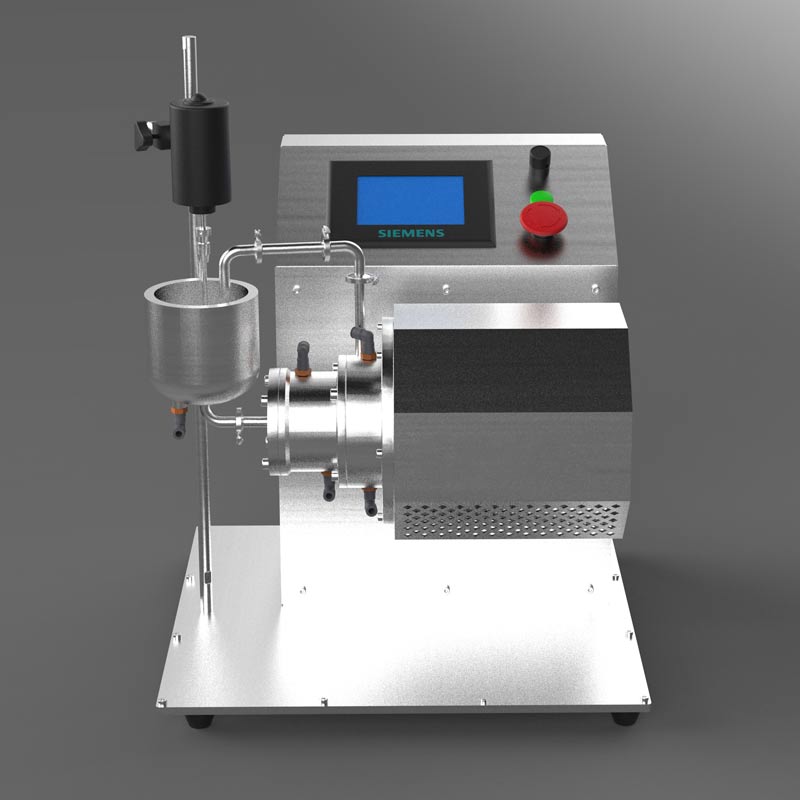
A lab horizontal bar-pin bead mill is a wet grinding machine with a cylindrical grinding chamber installed in a horizontal position. The chamber is partially filled with small grinding beads, while a rotor equipped with bars and pins rotates inside the chamber.
During operation, a pump transfers the prepared slurry into the grinding chamber. The rotor accelerates the grinding beads, causing them to collide with one another and interact repeatedly with suspended particles.
Particle-size reduction occurs through several actions:
- Impact: Beads collide with particles and break brittle agglomerates.
- Attrition: Sliding contact between beads wears down particle surfaces.
- Shear: High velocity gradients separate agglomerated or layered particles.
- Compression: Particles trapped between moving beads experience repeated pressure.
Unlike a traditional drum ball mill, the grinding chamber itself remains stationary. Energy is introduced through the high-speed rotor, allowing the operator to adjust grinding intensity without changing the chamber rotation.
Why Use a Horizontal Chamber?
The horizontal layout helps distribute grinding beads throughout the chamber and supports continuous slurry flow from the inlet to the outlet. It is particularly useful for processing high-density powders that may settle quickly in a liquid.
A properly designed horizontal system can provide:
- Stable circulation of grinding media
- Continuous or recirculating operation
- Adjustable energy input
- Controlled residence time
- Efficient chamber cooling
- Convenient laboratory process development
- A practical path from laboratory testing to larger production equipment
How Does a Horizontal Bar-Pin Bead Mill Work?
Stage 1: Slurry Preparation
The raw powder must first be dispersed in a suitable liquid carrier. Depending on the material, the liquid may be water, ethanol, another compatible solvent, oil, resin, or a specially formulated process medium.
Dispersants, wetting agents, stabilizers, or other additives may be introduced to improve powder wetting and prevent particles from re-agglomerating after grinding.
Before the slurry enters the bead mill, operators should evaluate:
- Initial feed particle size
- Solid concentration
- Slurry viscosity
- Chemical compatibility
- Temperature sensitivity
- Required final particle size
- Acceptable contamination level
Very large feed particles should normally be pre-crushed or pre-dispersed. Oversized particles may block the pump, damage the separation screen, or reduce grinding efficiency.
Stage 2: Feeding and Bead Agitation
The feed pump transfers the slurry into the horizontal chamber at a controlled flow rate. As the rotor turns, the bar-pin structure accelerates the grinding beads and produces intensive bead movement.
Rotor speed influences the energy of each collision. Increasing the speed may improve grinding intensity, but it can also increase slurry temperature, bead wear, chamber wear, and power consumption.
The best operating speed is therefore not always the maximum available speed. It should be selected according to material hardness, bead diameter, slurry viscosity, target fineness, and cooling capacity.
Stage 3: Particle Reduction and Dispersion
As the slurry passes through the active grinding zone, particles are repeatedly exposed to impact, compression, friction, and shear.
Large agglomerates are first broken into smaller clusters. Continued grinding may then reduce individual particles or separate tightly bonded structures, depending on the material.
Brittle inorganic materials are often reduced mainly through impact and compression. Pigments, carbon materials, and layered particles may require more shear and attrition. Soft or temperature-sensitive materials require gentler energy input and more effective cooling.
Stage 4: Bead Separation and Product Discharge
At the discharge end, a precision separator keeps the grinding beads inside the chamber while allowing the processed slurry to leave the mill.
The separator opening must be smaller than the grinding beads but large enough to maintain a stable product flow. An unsuitable or blocked separator can cause excessive chamber pressure, reduced flow, temperature increase, or grinding media leakage.
The finished slurry can be collected directly after one pass or returned to a circulation tank for additional grinding.
Typical Technical Parameters of a Laboratory Bead Mill
Laboratory bead mills are available in different chamber volumes, motor powers, rotor structures, and material configurations. The following figures are general reference ranges rather than specifications for every model.
| Parameter | Typical Laboratory Reference | Selection Consideration |
|---|---|---|
| Grinding Chamber Volume | Approximately 0.3–3 L | Select according to sample quantity, circulation volume, and scale-up objective |
| Rotor Peripheral Speed | Approximately 8–15 m/s | Higher speed increases energy but also heat and wear |
| Grinding Bead Diameter | Approximately 0.1–2.0 mm | Smaller beads are generally used for finer particle-size targets |
| Bead Filling Ratio | Approximately 75%–85% of chamber volume | Follow the machine manufacturer’s loading instructions |
| Recommended Feed Size | Commonly below 100 µm | Finer and better-dispersed feeds usually improve milling stability |
| Possible Product Range | Micron to submicron or nanometer range | Actual fineness depends on material and process parameters |
| Flow Rate | Approximately 2–50 L/h | Depends on chamber size, viscosity, pump, and operating mode |
| Contact-Part Materials | Stainless steel, ceramic, zirconia, or polymer-lined options | Match hardness, corrosion resistance, and contamination requirements |
The final machine configuration should be confirmed according to the actual powder, liquid medium, viscosity, temperature, batch quantity, and target particle-size distribution.
Applications of a Lab Horizontal Bar-Pin Bead Mill
Battery and Energy-Storage Materials
Wet grinding and dispersion are widely used in the development of lithium-ion battery materials, solid electrolytes, conductive additives, and electrode slurries.
Typical materials include:
- Lithium iron phosphate
- Nickel-manganese-cobalt materials
- Lithium cobalt oxide
- Silicon-based anode materials
- Graphite and graphene
- Carbon black and carbon nanotubes
- Ceramic solid-electrolyte powders
The purpose may be particle-size reduction, deagglomeration, conductive additive dispersion, or preparation of a more uniform slurry. Contamination from beads and chamber materials must be considered carefully because trace impurities may affect electrochemical performance.
Pigments, Coatings and Printing Inks
Pigments often form agglomerates that reduce color strength, gloss, transparency, and storage stability. A bead mill can break these agglomerates and distribute the pigment more uniformly throughout the liquid phase.
Common examples include:
- Titanium dioxide dispersions
- Iron oxide pigments
- Organic color pigments
- Ceramic inks
- Inkjet formulations
- Automotive and industrial coatings
- Protective and functional coatings
The process should be optimized according to pigment hardness, resin system, solvent, viscosity, required fineness, and final application.
Ceramic and Electronic Materials
Fine and uniformly dispersed ceramic particles are important for sintering performance, slurry stability, coating quality, and electrical properties.
Laboratory bead mills may be used for:
- Alumina and zirconia slurries
- Dielectric ceramic powders
- Electronic pastes
- Conductive silver or copper pastes
- Polishing slurries
- Magnetic materials
- Piezoelectric materials
- Thermal-management materials
Ceramic-lined or zirconia contact parts may be selected when metallic contamination must be minimized.
Pharmaceutical and Cosmetic Formulations
Wet media milling can be used during research on poorly soluble active ingredients, suspensions, creams, and other formulations that require controlled particle size.
For these applications, equipment material, cleaning procedures, temperature control, bead wear, cross-contamination, and process documentation must be evaluated according to the user’s own regulatory and quality requirements.
Carbon Materials and Nanomaterial Dispersions
Carbon nanotubes, graphene, carbon black, and other carbon-based materials can form strong agglomerates because of their high surface area.
A controlled bead-milling process can help distribute these materials throughout water, solvent, resin, or another carrier. Excessive milling should be avoided because it may damage the shape or aspect ratio of sensitive carbon structures.
Additional Research Applications
- Catalysts and catalyst supports
- Agrochemical suspensions
- Mineral and ceramic dispersions
- Functional nanoparticles
- Polishing compounds
- Flame-retardant additives
- Adhesive and sealant formulations
- Specialty chemical products
How to Select Grinding Media for a Bead Mill
Grinding media selection directly affects milling efficiency, contamination, wear rate, temperature, and operating cost.
Yttria-Stabilized Zirconia Beads
Yttria-stabilized zirconia beads are widely used for fine wet grinding because they combine high density, high hardness, and good wear resistance.
They are commonly considered for:
- Battery materials
- Electronic ceramics
- High-performance pigments
- Pharmaceutical research
- High-purity functional materials
- Submicron and nanometer grinding
Their high density provides stronger collision energy than lower-density glass or alumina beads of the same size. However, the cost is higher, and zirconium contamination must still be evaluated for extremely sensitive materials.
High-Alumina Ceramic Beads
Alumina beads provide a more economical option for ceramic, mineral, pigment, and general industrial grinding.
They may be suitable when:
- Minor aluminum contamination is acceptable
- The target particle size is in the micron or submicron range
- Operating cost is an important consideration
- The product itself already contains alumina
Alumina beads are generally not preferred for products that require extremely low contamination from aluminum-containing materials.
Glass Beads
Glass beads are economical and may be used for preliminary dispersion, softer materials, biological sample processing, and applications that do not require extremely high impact energy.
Because glass has a lower density and lower wear resistance than zirconia, it is normally more suitable for moderate fineness targets and less abrasive materials.
Stainless Steel Beads
Stainless steel beads provide high density and strong impact energy. They may be useful for certain metal powders, pigments, and industrial materials where iron, chromium, or nickel contamination is acceptable.
They should generally be avoided when metallic contamination would affect product performance, chemical analysis, electrical properties, color, or purity.
Bead Diameter and Target Particle Size
Smaller beads provide more contact points within the same chamber volume and are generally more effective for fine particles. Larger beads provide stronger individual impacts and are more suitable for coarse feed particles.
| General Particle-Size Objective | Common Bead-Diameter Reference | Important Note |
|---|---|---|
| Approximately 1–5 µm | 1.0–2.0 mm | Suitable for relatively coarse feed and preliminary grinding |
| Approximately 300 nm–1 µm | 0.5–1.0 mm | Common for submicron dispersion and fine grinding |
| Approximately 100–300 nm | 0.2–0.5 mm | Requires suitable separator clearance and sufficient rotor speed |
| Below approximately 100 nm | 0.1–0.2 mm | Results depend strongly on material, stabilization, energy input, and testing |
These ranges are only starting references. The final choice should be confirmed through material testing because feed size, hardness, viscosity, rotor structure, and dispersant system may change the appropriate bead diameter.
Key Process Parameters for Wet Bead Milling
1. Feed Particle Size
Feed particles must be sufficiently small to enter the chamber and move through the bead bed. Large particles can block the separator or create unstable pressure.
Pre-dispersion, pre-crushing, or coarse grinding may be required before fine bead milling.
2. Slurry Concentration
Increasing the solid concentration can improve output per batch, but it also increases viscosity, temperature, pump load, and flow resistance.
An excessively dilute slurry may process smoothly but provide low production efficiency. An excessively concentrated slurry may not circulate properly through the chamber.
The correct concentration should balance:
- Particle contact frequency
- Pumpability
- Heat generation
- Dispersion stability
- Required throughput
- Final product formulation
3. Slurry Viscosity
Viscosity influences bead movement, pump flow, chamber pressure, and cooling efficiency. A slurry that is too viscous can restrict bead motion and create excessive mechanical load.
Viscosity should be measured under relevant temperature and shear conditions because some formulations change significantly during processing.
4. Bead Filling Ratio
The chamber must contain enough beads to create frequent particle-media interactions. However, excessive bead loading can increase pressure, motor current, heat, and separator load.
Many laboratory bead mills operate with a high bead filling ratio, but the exact loading method should follow the instructions for the selected machine, chamber, rotor, and bead material.
5. Rotor Speed
Rotor speed controls bead acceleration and energy input. A higher speed may reduce grinding time, but it can also cause:
- Faster temperature increase
- Greater bead and chamber wear
- Higher contamination
- Excessive foam generation
- Changes in sensitive materials
- Unnecessary power consumption
Process development should normally begin at a moderate speed. The speed can then be increased gradually while monitoring particle size, temperature, pressure, and motor load.
6. Flow Rate and Residence Time
A high flow rate shortens the time that the slurry remains in the chamber. This may increase throughput but reduce the amount of grinding completed during each pass.
A lower flow rate increases residence time but may also increase temperature and reduce productivity.
Flow rate should therefore be optimized together with rotor speed and the number of circulation passes.
7. Single-Pass and Recirculation Modes
A horizontal bead mill may be operated in two common ways.
| Operating Mode | Process Description | Typical Use |
|---|---|---|
| Single-Pass Operation | Slurry passes through the chamber once and is collected | Higher throughput, preliminary grinding, or moderate fineness |
| Recirculation Operation | Product returns to a tank and repeatedly passes through the chamber | Finer particles, narrower distribution, and process monitoring over time |
Recirculation is often useful during laboratory development because samples can be taken at different times to determine how particle size changes with accumulated energy input.
8. Temperature Control
Wet grinding converts much of the motor energy into heat. Without sufficient cooling, the slurry temperature may rise rapidly.
Excessive temperature can cause:
- Solvent evaporation
- Polymer or resin degradation
- Changes in viscosity
- Loss of dispersant performance
- Powder oxidation
- Particle re-agglomeration
- Decomposition of sensitive ingredients
A cooling jacket around the grinding chamber is therefore an important component. Operators should monitor both inlet and outlet temperatures and adjust cooling water, flow rate, rotor speed, and solids loading when necessary.
Bar-Pin Bead Mill Compared with Other Wet Processing Equipment
| Feature | Horizontal Bar-Pin Bead Mill | Vertical Disc Mill | Rotor-Stator Homogenizer | Ultrasonic Processor |
|---|---|---|---|---|
| Main Action | Bead impact, shear, and attrition | Bead impact and disc agitation | High fluid shear | Cavitation |
| Fine-Grinding Capability | High | Medium to high | Mainly dispersion and homogenization | Suitable for selected small-volume applications |
| Continuous Operation | Available | Available | Available on suitable systems | Commonly batch-based |
| Grinding Media Required | Yes | Yes | No | No |
| Contamination Consideration | Bead and chamber wear | Bead and chamber wear | Rotor-stator wear | Probe erosion may occur |
| Scale-Up Potential | Good when process parameters are recorded | Good | Requires process re-evaluation | More difficult for large continuous production |
No single technology is best for every material. The correct choice depends on whether the objective is coarse dispersion, deagglomeration, fine grinding, cell disruption, emulsification, or production-scale continuous processing.
Scaling Up from Laboratory Testing to Production
One advantage of laboratory bead milling is that the process can generate useful data for selecting larger pilot or production equipment.
However, scale-up should not be based only on chamber volume. A larger chamber changes flow behavior, cooling area, residence time, power demand, and material circulation.
Important parameters to record during laboratory testing include:
- Chamber volume
- Rotor peripheral speed
- Actual motor load
- Grinding bead material and diameter
- Bead filling ratio
- Feed particle-size distribution
- Slurry concentration and viscosity
- Flow rate
- Number of circulation passes
- Inlet and outlet temperatures
- Grinding time
- Final D10, D50, and D90 values
When moving to a larger machine, manufacturers commonly compare rotor peripheral speed, bead loading, media size, specific energy input, residence time, cooling capacity, and throughput.
Laboratory results can provide an important starting point, but pilot testing may still be necessary for high-value materials, complex formulations, high-viscosity products, or strict particle-size requirements.
Maintenance and Operational Best Practices
Before Starting the Machine
- Confirm that the chamber and separator are clean.
- Check that the selected beads are compatible with the separator.
- Verify that the bead loading is within the recommended range.
- Make sure cooling water is connected and flowing.
- Confirm that the pump direction and flow setting are correct.
- Check all hoses, seals, valves, and connections for leakage.
- Ensure that the slurry has been pre-dispersed properly.
- Confirm that oversized particles have been removed.
During Operation
- Monitor motor current and chamber pressure.
- Record inlet and outlet temperatures.
- Observe changes in flow rate and slurry viscosity.
- Take samples at planned time intervals.
- Stop the machine if abnormal noise, vibration, pressure, or temperature occurs.
- Do not allow the grinding chamber to run without sufficient liquid.
Cleaning Between Materials
Cleaning requirements depend on the product and acceptable cross-contamination level. A basic cleaning process may involve draining the chamber, circulating a compatible cleaning liquid, removing the beads, and cleaning the separator and internal contact parts.
High-purity, pharmaceutical, food, electronic, or multi-product applications may require dedicated beads, dedicated contact parts, or a validated cleaning procedure.
Grinding Bead Inspection
Grinding beads gradually wear during operation. Worn beads may become smaller, irregular, or broken, reducing milling efficiency and increasing the risk of separator blockage.
Inspect beads regularly and replace them when:
- The average diameter has decreased significantly
- A large quantity of broken beads is observed
- Product contamination increases
- Grinding time becomes noticeably longer
- Chamber pressure rises under unchanged conditions
Common Bead Mill Problems and Solutions
| Problem | Possible Cause | Suggested Check |
|---|---|---|
| Particle size does not decrease | Beads too large, insufficient energy, poor dispersant, or short residence time | Review bead size, speed, circulation time, and formulation stability |
| Slurry temperature rises rapidly | Insufficient cooling, excessive speed, or high viscosity | Check cooling flow, reduce speed, or adjust solid concentration |
| Chamber pressure increases | Separator blockage, oversized feed, or excessive viscosity | Stop and inspect the screen, feed condition, and pump setting |
| Product contains grinding beads | Damaged separator or unsuitable bead diameter | Stop operation and inspect the separator immediately |
| Excessive contamination | Incorrect media or contact-part material, or excessive wear | Change bead and lining material or reduce grinding intensity |
| Unstable flow rate | Pump cavitation, foam, sedimentation, or viscosity change | Check feed tank agitation, pump inlet, formulation, and temperature |
How to Select the Right Laboratory Bar-Pin Bead Mill
A reliable selection process should begin with the material and process requirements rather than the maximum motor power or rotor speed.
Define the Grinding Objective
Confirm whether the main purpose is:
- Deagglomeration
- Micron grinding
- Submicron grinding
- Nanomaterial preparation
- Pigment dispersion
- Slurry homogenization
- Small-batch formulation development
- Process scale-up
Evaluate the Material
- What is the material name and composition?
- Is it hard, brittle, soft, fibrous, sticky, or abrasive?
- What is the initial feed size?
- What is the required final particle size?
- Is the material sensitive to heat or oxidation?
- Can it react with the selected liquid?
- What contaminants are unacceptable?
Confirm the Process Conditions
- Required sample quantity per batch
- Solid concentration
- Slurry viscosity
- Liquid carrier or solvent
- Single-pass or recirculation operation
- Required daily throughput
- Cooling-water conditions
- Available electrical supply
- Installation space
Confirm the Machine Configuration
- Grinding chamber volume
- Motor power and speed-control range
- Rotor geometry
- Chamber and rotor material
- Separator type and minimum bead size
- Pump type and flow-control range
- Cooling-jacket structure
- Temperature and pressure monitoring
- Cleaning and disassembly method
- Solvent-compatible or explosion-resistant options when required
Frequently Asked Questions
Can a laboratory bead mill produce nanoparticles?
It can help some materials reach the nanometer range, but the result depends on material properties, feed size, bead diameter, bead density, rotor speed, grinding time, dispersant system, temperature, and measurement method. Nanometer results should not be guaranteed without material testing.
Is a smaller grinding bead always better?
No. Smaller beads provide more contact points but less energy per individual collision. If the feed particles are too large or the material is extremely hard, very small beads may not provide sufficient impact energy.
What is the difference between a bead mill and a sand mill?
The terms are often used for similar wet grinding equipment. Modern precision systems commonly use ceramic, zirconia, glass, or steel beads instead of natural sand, but “sand mill” remains a widely used industry name.
Can organic solvents be used?
Some machines can process compatible organic solvents, but the seals, hoses, pump, chamber, cooling system, electrical components, ventilation, grounding, and explosion-protection requirements must be evaluated before operation.
How much grinding media should be added?
Many horizontal bead mills use a relatively high chamber filling ratio, but the exact amount depends on the chamber design, rotor, bead density, bead diameter, and material. Always follow the loading instructions for the selected model.
Should I use single-pass or recirculation grinding?
Single-pass operation is suitable for higher throughput or moderate fineness. Recirculation is more suitable for process development, finer particles, and applications requiring repeated sampling and a narrower particle-size distribution.
Why does the product temperature rise during grinding?
Impact, shear, friction, and fluid movement convert mechanical energy into heat. Temperature can be controlled through the cooling jacket, reduced rotor speed, lower viscosity, adjusted flow rate, or staged processing.
How can contamination be reduced?
Select compatible beads, rotor materials, chamber linings, seals, and pumps. Use dedicated contact parts when necessary, monitor bead wear, and avoid operating conditions that create excessive mechanical wear.
Conclusion
A lab horizontal bar-pin bead mill is a flexible wet grinding and dispersion system for pigments, battery materials, ceramics, electronic materials, pharmaceuticals, carbon materials, and other advanced powders.
Its performance depends on the complete process rather than one machine specification. Bead material, bead diameter, rotor speed, slurry concentration, viscosity, flow rate, circulation time, temperature control, and separator design must work together.
The best way to select and optimize a bead mill is to begin with the material characteristics and target particle size. Controlled laboratory testing can then determine the appropriate grinding media, chamber configuration, and process parameters before moving to pilot or production-scale equipment.
Find the Right Wet Grinding Solution
Explore TENCAN laboratory grinding, dispersion, and particle-preparation equipment for different materials and research requirements.