
What is a PU Planetary Mill Jar? A Polyurethane Grinding Container for Contamination-Free Fine Milling
What is a PU Planetary Mill Jar? A Polyurethane Grinding Container for Contamination-Free Fine Milling
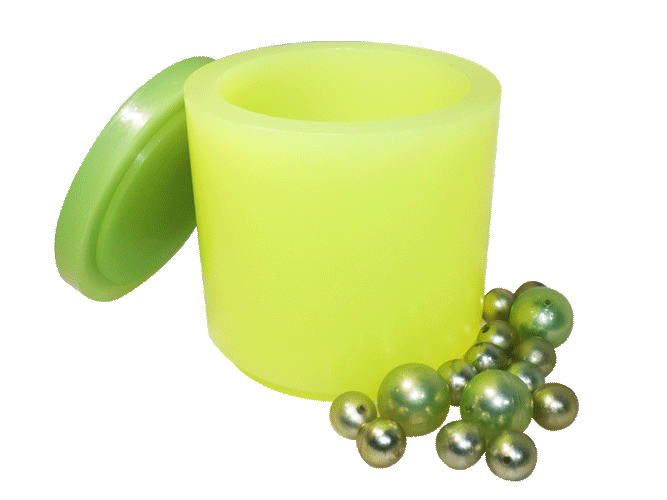
At its core, a PU planetary mill jar is a specialized grinding container made from polyurethane (PU), designed for use with planetary ball mills. Researchers and engineers in materials science, chemistry, and pharmaceuticals use it to mill, mix, and homogenize powders while avoiding metal contamination. Unlike stainless steel or other metal jars, the polyurethane lining ensures that no metallic ions leach into the sample, making it ideal for high-purity applications such as battery material preparation, advanced ceramics, and pharmaceutical formulation.
Core Function and Working Principle
The PU planetary mill jar serves as the vessel where the grinding process takes place inside a planetary ball mill. In a planetary mill, the jar is placed on a rotating sun wheel while simultaneously spinning on its own axis. This dual motion — called planetary motion — generates strong centrifugal forces that cause the grinding balls inside the jar to collide with the sample material and the jar walls, resulting in efficient size reduction.
The key advantage of a polyurethane jar is its ability to withstand repeated impacts and abrasion without contaminating the sample. Polyurethane is a tough elastomer that absorbs shock and resists wear, yet it remains chemically inert to most substances. The smooth interior surface also prevents material buildup and makes cleaning easier. Typical grinding parameters such as rotation speed (e.g., 300–600 rpm) and grinding time (minutes to hours) can be adjusted to achieve final particle sizes down to the sub-micron or even nanometer range.
Key Features and Types of PU Planetary Mill Jars
PU planetary mill jars are available in various capacities to suit different processing needs. Common sizes range from 50 mL to 500 mL, and sometimes larger custom volumes. They are typically used with matching grinding media, such as zirconia or agate balls, but polyurethane balls can also be used for full non-metallic systems.
Unlike jars made from stainless steel, agate, or ceramics, PU jars are lightweight, shatter-resistant, and produce negligible wear debris. They are especially preferred when processing soft to medium-hard materials, fibrous substances, or heat-sensitive samples that require controlled milling. The polyurethane material also provides good noise and vibration damping, making the grinding process quieter compared to metal jars.
Although the basic design of PU jars is similar across brands, quality differences exist in the polyurethane formulation, wall thickness, and lid sealing mechanism. Reputable manufacturers offer jars with airtight seals to prevent leakage of fine powders and to allow milling under protective gas or vacuum conditions when combined with special lids.
Key Performance Indicators and Selection Guide
When selecting a PU planetary mill jar, consider the following factors:
Capacity and Sample Volume: Choose a jar size that matches your batch volume. As a rule of thumb, fill the jar to about one-third of its volume with grinding balls and leave enough space for sample movement. Typical capacities are 100 mL, 250 mL, and 500 mL.
Wear Resistance and Durability: High-quality polyurethane offers excellent abrasion resistance and can withstand hundreds of milling cycles. Check the manufacturer's specifications for hardness and operating temperature range.
Sealing and Atmospheric Control: For moisture-sensitive or air-reactive materials, ensure the jar has a reliable gasket or O-ring seal. Some vacuum planetary mill jars allow processing under inert gas or vacuum.
Compatibility: Confirm that the jar fits your specific planetary ball mill model. Most standard jars have a fixed outer diameter and clamping mechanism. Always verify dimensions before purchase.
Cost vs. Performance: PU jars are generally more affordable than agate or tungsten carbide jars, yet offer excellent contamination control for many applications. They are a cost-effective choice for routine milling tasks that do not require extreme hardness.
Application Fields
PU planetary mill jars are widely used in laboratories and research institutions for:
- Battery materials: Grinding and mixing cathode/anode powders, solid electrolytes, and carbon additives without metal contamination.
- Advanced ceramics: Milling ceramic powders, oxide mixtures, and precursors for high-purity sintering.
- Pharmaceuticals: Size reduction of active pharmaceutical ingredients (APIs) and excipients under controlled conditions.
- Chemical synthesis: Mechanochemical reactions where metal-free environments are essential.
- Geology and mineral processing: Grinding rock and mineral samples for elemental analysis without introducing contaminants.
For users who need maximum hardness and minimal wear on very hard samples, alternatives like zirconia planetary mill jars or tungsten carbide jars may be considered. However, for most contamination-sensitive and moderate-hardness milling tasks, the PU planetary mill jar offers the best balance of performance, cost, and purity.