
What is a Mini Centrifuge? A Portable Desktop Device for Rapid Sample Separation in Laboratories
What is a Mini Centrifuge?
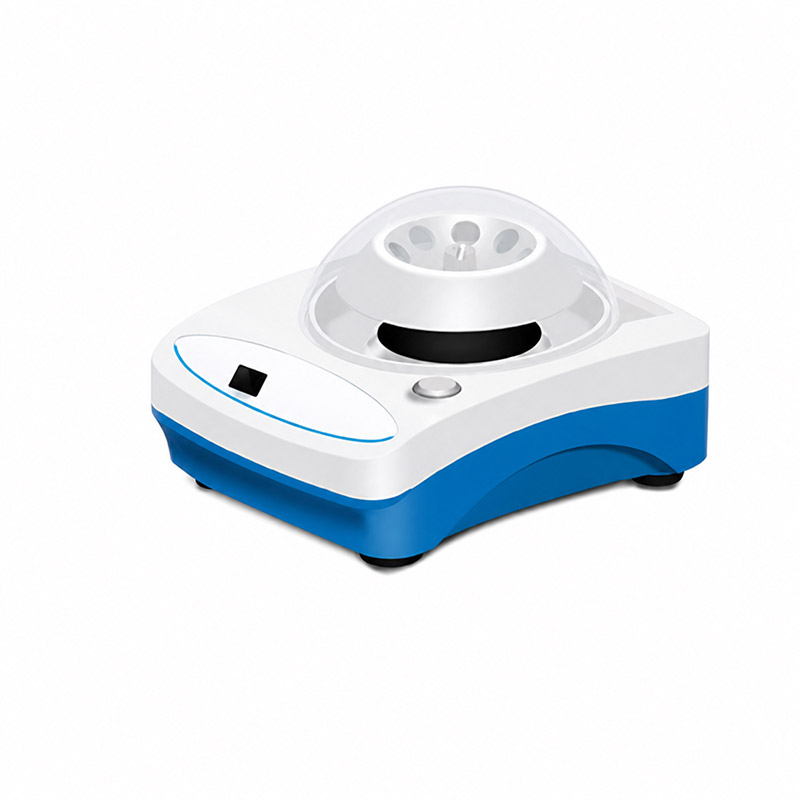
At its core, a mini centrifuge is a compact, low-speed laboratory device that uses centrifugal force to rapidly separate solid particles from liquid in microvolume samples. Laboratories in molecular biology, clinical diagnostics, biochemistry, and environmental testing use it for tasks such as pelleting cells, sedimenting nucleic acids, spinning down PCR mixtures, and clarifying blood samples. Unlike large floor-model centrifuges, a mini centrifuge is designed to fit on a benchtop, operate quietly, and handle sample tubes ranging from 0.2 mL to 2.0 mL, including PCR strips.
Core Functions and Working Principle
A mini centrifuge converts a heterogeneous mixture into a clear supernatant and a compact pellet. The device spins a rotor at speeds typically between 4,000 and 15,000 rpm, generating a relative centrifugal force (RCF) up to about 15,000 × g. As the rotor accelerates, particles denser than the liquid move radially outward and accumulate at the bottom of the tube, while the clarified liquid remains above.
The key working parts include a brushless DC motor, a rotor with tube adapters, and a lid equipped with a safety interlock. Many models feature a lid-open auto-stop function: when the lid is opened, the rotor stops immediately, enhancing user safety and preventing sample aerosolization. A simple timer or continuous-run mode allows the user to set spin durations from seconds to tens of minutes. Because the motor is maintenance‑free and the rotor is lightweight, the device runs with very low noise (typically ≤55 dB) and vibration.
Common Types and Key Specifications
Mini centrifuges are available in several speed/force classes to suit different application needs. The most common models are:
- Mini-4K (≈4,000 rpm, ≈810–900 × g): Ideal for rapid blood separation and quick pelleting of large particles. Typically used for serum/plasma separation from whole blood.
- Mini-6K (≈6,000 rpm, ≈2,000–3,286 × g): A versatile all‑rounder for routine microcentrifuge tasks, such as spinning down bacterial cultures or precipitating proteins.
- Mini-10K to Mini-15K (≈10,000–15,000 rpm, ≈5,000–15,721 × g): Higher‑speed versions suitable for pelleting yeast, cellular debris, and DNA/RNA samples requiring stronger centrifugal force.
All models typically accommodate 6 or 12 microcentrifuge tubes (1.5 mL / 2.0 mL) and often include adapters for 0.2 mL, 0.5 mL tubes and 0.2 mL 8‑strip PCR tubes. Some advanced versions offer digital display, programmable timers, and a Short Spin button for quick bursts.
Key Performance Indicators and Selection Guide
When choosing a mini centrifuge, consider the following parameters:
- Maximum speed and RCF: Higher RCF is needed for pelleting small particles (e.g., viruses, nanoparticles) but may generate more heat. For standard nucleic acid or protein work, 5,000–10,000 × g is sufficient.
- Rotor capacity and tube compatibility: Ensure the rotor can hold the number and size of tubes you use daily. Multi‑adaptor rotors increase flexibility.
- Noise level: Most mini centrifuges operate below 55 dB. Lower noise (<48 dB) benefits shared lab spaces.
- Safety features: Lid‑lock, auto‑stop on lid opening, and imbalance detection are essential for user protection and sample integrity.
- Ease of maintenance: Brushless DC motors are maintenance‑free. Rotors that can be autoclaved (121 °C, 20 min) are preferable for sterile work.
- Power supply: Wide‑input voltage (85–265 VAC) allows global use without a transformer.
Applications and Selection Advice
Mini centrifuges are indispensable in molecular biology (PCR setup, DNA/RNA precipitation), clinical labs (blood serum separation), microbiology (cell pelleting), and educational institutions. For labs processing large numbers of PCR plates, a model with a 0.2 mL strip‑tube rotor is recommended. For routine microcentrifuge work, a 6,000 rpm model with multiple adapters offers the best balance of cost and versatility. If you frequently handle heat‑sensitive samples, choose a model with good ventilation or a lower temperature rise (e.g., “cooling‑air” designs).
For advanced applications requiring higher force, consider the Mini High-Speed Centrifuge series, which can reach over 15,000 × g. Always verify that the rotor and tube adapters match your standard consumables.
References
Product page: Mini Centrifuge – TENCAN