
What is a Multi Station Magnetic Stirrer? A Versatile Laboratory Device for Simultaneous Liquid Mixing
What is a Multi Station Magnetic Stirrer?
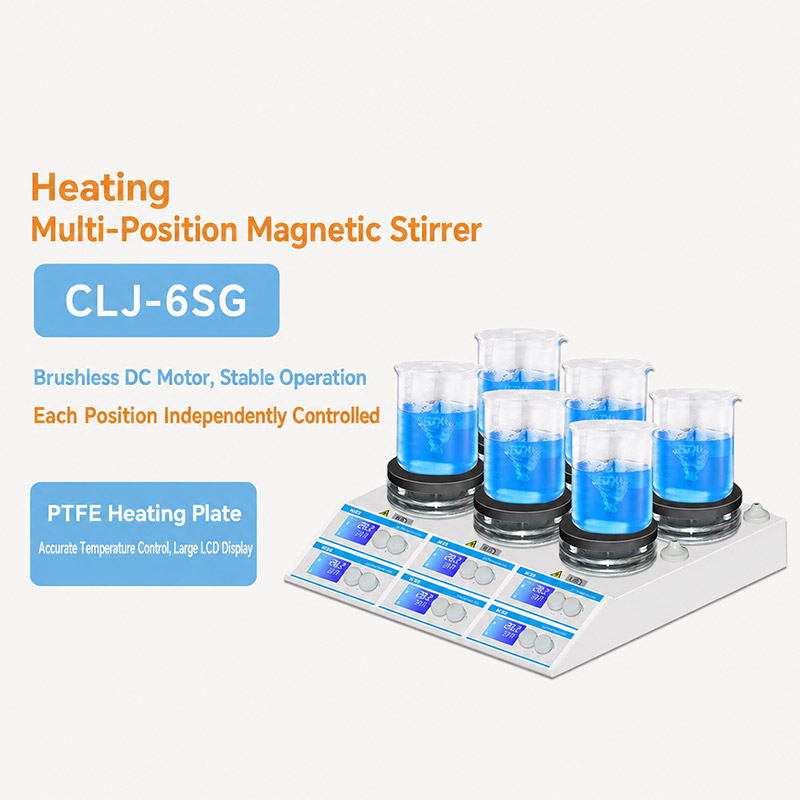
From the core, a multi station magnetic stirrer is a specialized laboratory instrument used to simultaneously mix multiple liquid samples in separate containers. It employs magnetic coupling to drive a stir bar inside each vessel, providing consistent agitation without physical contact. This device is essential for high-throughput workflows in research, quality control, and education.
Core Function and Working Principle
The fundamental principle behind a magnetic stirrer is the magnetic coupling between a rotating magnet beneath the stirring plate and a magnetic stir bar placed inside the liquid container. As the motor rotates the driving magnet, the magnetic field penetrates the non-magnetic worktop and locks with the stir bar, causing it to spin and create a vortex that mixes the liquid. In a multi station model, multiple independent magnetic drives are arranged on a single platform, allowing each position to be controlled individually or synchronously. Key parameters include speed range (e.g., 200-2200 rpm), maximum stirring volume per station, and the ability to maintain stable coupling even at low speeds for viscous fluids. Advanced models feature digital displays, programmable timers, and memory functions for reproducible results.
Main Types and Classifications
Multi station magnetic stirrers are available in various configurations to meet different laboratory needs. The most common types are defined by the number of stirring positions:
- 4-station stirrers: ideal for small-scale parallel experiments
- 6-station stirrers: a balance between throughput and bench space
- 8-station and 12-station stirrers: for higher throughput demands
- Specialized high-density models like 15 or 60 positions for large-scale screening.
Additionally, stirrers can be categorized by control mode: synchronous (all stations run at the same speed) or asynchronous (each station independently adjustable). Models may also offer heating functions for temperature-sensitive applications.
Key Performance Indicators and Selection Guide
When selecting a multi station magnetic stirrer, consider the following:
- Stirring capacity: maximum volume per station (e.g., 1000 ml)
- Speed range and accuracy: typically 200-2200 rpm with digital control
- Material of worktop: 316 stainless steel provides excellent corrosion resistance and durability
- Noise level: some models achieve as low as 27 dB for quiet operation
- Timer and programming: enables unattended runs
- Protection rating: IP64 for dust and splash resistance
- Motor type: brushless DC motors offer longer life and better torque at low speeds.
For laboratories handling viscous fluids, a stirrer with high low-speed torque is crucial to avoid "step-out" where the stir bar loses synchronization.
Application Fields and Selection Suggestions
Multi station magnetic stirrers are widely used in chemical synthesis, biochemical analysis, pharmaceutical formulation, environmental testing, and food science. For general lab work, a 4-6 station model with digital display is sufficient. High-throughput screening labs may prefer 12+ stations with independent control. If heating is required, choose a model with integrated hotplate. For culture work in CO₂ incubators, specially designed stirrers are available. Always match the stirring volume and viscosity to the equipment's specifications. For more details, visit the Multi station magnetic stirrer product page.