
What is a Lab Vibration Ball Mill? A High-Efficiency Grinding Equipment for Fine and Ultrafine Powder Preparation
Introduction
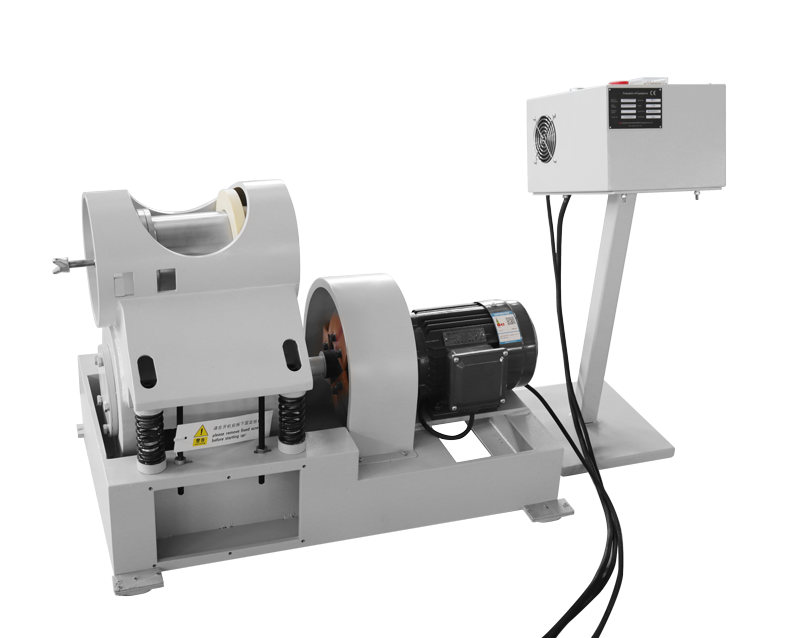
From the core, a lab vibration ball mill is a professional grinding equipment designed for laboratories to rapidly reduce materials from coarse particles or lumps to fine or ultrafine powders. It uses high-frequency vibration to impart kinetic energy to grinding balls, which then impact and shear the sample, achieving efficient comminution. Unlike traditional ball mills that rely on rotational motion, a vibration ball mill generates intense three-dimensional vibrations, making it especially suitable for small-batch, high-throughput sample preparation.
Core Function & Working Principle
The basic function of a lab vibration ball mill is to transform input material (typically <5 mm in size) into a fine powder with particle sizes down to sub-micron or even nanometer levels. The equipment consists of a motor, a vibration exciter (eccentric mass), a grinding chamber (mill jar), and a spring-support system. When the motor runs, it drives the vibrator to produce high-frequency oscillations, which are transmitted to the grinding jar. Inside the jar, grinding balls (e.g., stainless steel, zirconia, agate) are set into rapid motion, colliding with each other and the jar walls. The impact, friction, and shear forces break down the sample.
Key parameters include vibration frequency (typically 1000–3000 rpm), amplitude, grinding time, and the size and material of the grinding balls. Higher frequency leads to faster grinding, while longer duration achieves finer particles. The process can be performed dry or wet, and some models support cryogenic grinding using liquid nitrogen to embrittle heat-sensitive samples.
Main Types / Classification
Lab vibration ball mills can be categorized based on the number of vibration axes and the scale of operation:
- One-dimensional (1D) vibration ball mill: The jar oscillates linearly along one axis. Simple design but less efficient for uniform grinding.
- Three-dimensional (3D) vibration ball mill: The jar moves in a complex spatial motion combining vertical, horizontal, and rotational vibrations. This provides higher energy density and more uniform grinding, ideal for nano-powder preparation.
- Lightweight vibration ball mill: Compact desktop model, often used for small sample volumes (e.g., 2–10 mL). Suitable for occasional use or sensitive materials.
- Heavy-duty vibration ball mill: Larger capacity (up to 20 L or more), with robust construction for continuous or high-throughput grinding. Often used in pilot plants or quality control labs.
Each type has specific advantages: 1D mills are simpler and cheaper; 3D mills offer better performance; lightweight models save space; heavy-duty models support larger batches.
Key Performance Indicators & Selection Tips
When selecting a lab vibration ball mill, consider the following:
- Processing capacity & throughput: How many samples per batch? For high-throughput labs, look for models that can process multiple jars simultaneously (e.g., 2×96 well plates).
- Particle size control: The final fineness depends on vibration frequency, grinding time, and ball size. Some models can achieve <0.1 μm with proper settings.
- Energy efficiency & speed: Vibration ball mills are generally energy-efficient compared to planetary mills, but the power consumption varies with amplitude and frequency.
- Automation & programmability: Digital timers, frequency adjustment, and preset programs improve repeatability.
- Maintenance & durability: Check the material of grinding jars (stainless steel, zirconia, agate, etc.) and the ease of cleaning. Some models offer clamp systems for quick jar change.
Application Areas & Recommendations
Lab vibration ball mills are widely used in materials science, chemistry, biology, pharmaceuticals, geology, and mining. Typical applications include:
- Rapid grinding of minerals, ores, and ceramics for XRF/XRD analysis.
- Mechanical alloying of metal powders.
- Cell disruption for DNA/RNA extraction.
- Preparation of nano-materials, battery electrodes, and catalysts.
For researchers who need fast, reproducible results with small sample volumes, a 3D vibration ball mill is recommended. For labs processing larger quantities or harder materials, a heavy-duty model is more suitable.