
What is a Vertical Production Planetary Ball Mill? A High-Efficiency Grinding Equipment for Industrial Scale Powder Processing
What is a Vertical Production Planetary Ball Mill?
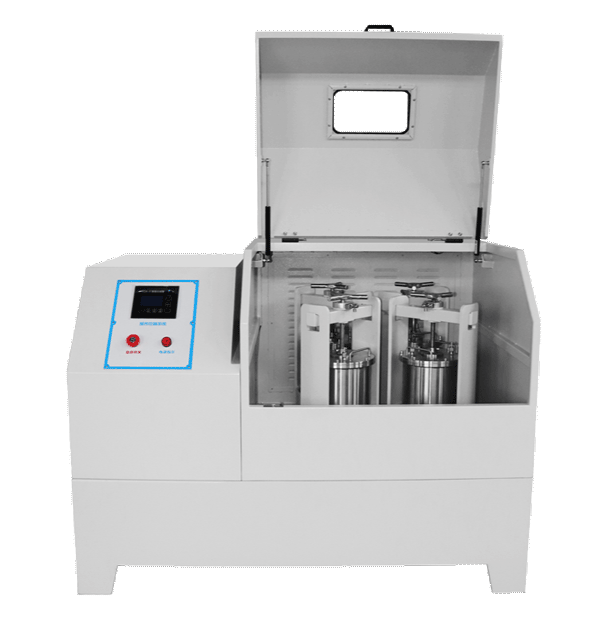
At its core, a vertical production planetary ball mill is a specialized grinding machine designed for industrial-scale powder processing. It is used by industries such as mining, metallurgy, chemicals, ceramics, and advanced materials to efficiently grind, mix, and homogenize solid materials into fine or ultra-fine powders. The unit combines the classic planetary ball mill principle with a vertical orientation and a larger processing capacity, making it an ideal bridge between laboratory research and full-scale production.
Core Function and Working Principle
The fundamental function of a vertical production planetary ball mill is to transform coarse granular materials into fine powders through mechanical impact and friction. The core mechanism is based on planetary motion: the grinding jars are mounted on a rotating sun wheel (the main disk) and simultaneously rotate around their own axes in the opposite direction. This creates a complex three-dimensional movement that subjects the grinding balls and the sample to intense centrifugal forces, estimated to be up to 20 times the force of gravity.
Inside the sealed jar, the grinding balls—typically made of stainless steel, zirconia, agate, or tungsten carbide—collide repeatedly with the material, generating both impact and shear forces. The vertical layout of the machine allows for efficient gravity-assisted material flow and easier loading/unloading compared to horizontal designs. Key process parameters such as rotation speed (typically 60–870 rpm), grinding time, ball-to-material ratio, and jar material can be precisely controlled to achieve the desired particle size distribution, from tens of microns down to sub-micron or even nanometer levels.
Key Components and Technology
Unlike smaller laboratory models, a vertical production planetary ball mill is built with industrial durability in mind. Its main components include:
- Heavy-duty drive system: A high-torque motor and gear transmission that can handle continuous operation with large loads.
- Vertical sun wheel and jar holders: Typically accommodates 4 jars or more, with capacities ranging from 0.5L to 20L per jar, enabling batch processing of several kilograms of material.
- Locking clamps and safety interlocks: Ensure secure jar fixation during high-speed rotation and automatic shutdown if the lid is opened.
- Touch screen or PLC control: Modern units feature programmable logic controllers with touch screen interfaces for setting speed, time, pause cycles, and even programmable grinding routines.
- Optional vacuum or atmosphere control: When equipped with vacuum jars, the mill can grind samples under inert gas or vacuum, preventing oxidation or contamination.
Key Performance Indicators and Selection Criteria
When selecting a vertical production planetary ball mill, users should evaluate the following critical parameters:
Processing Capacity
Production models typically offer total jar volumes from 4L to 40L or more. The actual throughput depends on the material density, target fineness, and grinding time. For example, a 4L model can process 0.5–2 kg of material per batch, while larger units can handle 10–20 kg.
Grinding Fineness
With proper jar and ball selection, most production planetary ball mills can achieve a final particle size of below 1 micron, and with optimized conditions, even down to 0.1 micron. The user should verify the machine's ability to meet the required D50 or D90 values.
Speed and Energy Efficiency
The maximum rotation speed (e.g., 600–870 rpm) influences the energy input. Higher speeds yield finer particles but may increase wear and heat generation. Energy-efficient models with variable frequency drives can optimize power consumption.
Automation and Programmability
Advanced models offer multi-stage grinding programs, automatic pause cycles, and data logging, which are essential for reproducible production processes.
Maintenance and Durability
Look for features like sealed bearings, easy-access jar clamps, and robust construction. The availability of spare parts (e.g., jars, balls, belts) is also important for long-term operation.
Application Areas and Selection Advice
Vertical production planetary ball mills are widely used in:
- Materials science: Preparation of nano-powders, battery materials, ceramics, and composites.
- Chemical industry: Fine grinding of pigments, catalysts, and pharmaceuticals.
- Mining and metallurgy: Ore sample preparation, grinding of minerals and alloys.
- Environmental testing: Soil and solid waste grinding for analysis.
For users moving from laboratory to production, a vertical production planetary ball mill offers a scalable solution with consistent performance. If your material is heat-sensitive, consider a model with a cooling jacket or cryogenic capability. If you need to avoid cross-contamination, choose jars and balls made of the same material as your product (e.g., zirconia for ceramic grinding).