
What is a Production Type Stirred Ball Mill? A High-Efficiency Ultrafine Grinding Equipment for Large-Scale Industrial Production
What is a Production Type Stirred Ball Mill?
At its core, a production type stirred ball mill is a specialized industrial grinding machine that industries use to continuously process large volumes of materials into ultrafine powders. Unlike traditional tumbling ball mills where the entire drum rotates, this mill keeps the grinding chamber stationary while an internal agitator rotates at high speed to stir the grinding media. The intense movement of the media creates powerful shear, impact, and friction forces that break down particles efficiently. This design makes it one of the most energy-efficient and compact options for achieving submicron or even nanometer particle sizes in production-scale operations.
Core Function and Working Principle
The primary function of a production stirred ball mill is to transform coarse feed materials (typically <5 mm) into fine or ultrafine powders with high uniformity. The working principle is based on a stationary grinding cylinder filled with small grinding media (e.g., steel balls, ceramic beads, or zirconia beads) and the material to be ground. A central agitator, often equipped with arms, discs, or a screw profile, rotates at a controlled speed, imparting kinetic energy to the media. The media then collide with each other and with the material, generating three dominant forces: compression, shear, and attrition.
This process is highly tunable. Key parameters include agitator speed (typically 50–1400 rpm), media size and density, media-to-material ratio, and residence time. By adjusting these variables, operators can precisely control the final particle size distribution. Many production models also feature a jacketed grinding chamber, which allows precise temperature control via a cooling or heating medium, crucial for heat-sensitive materials.
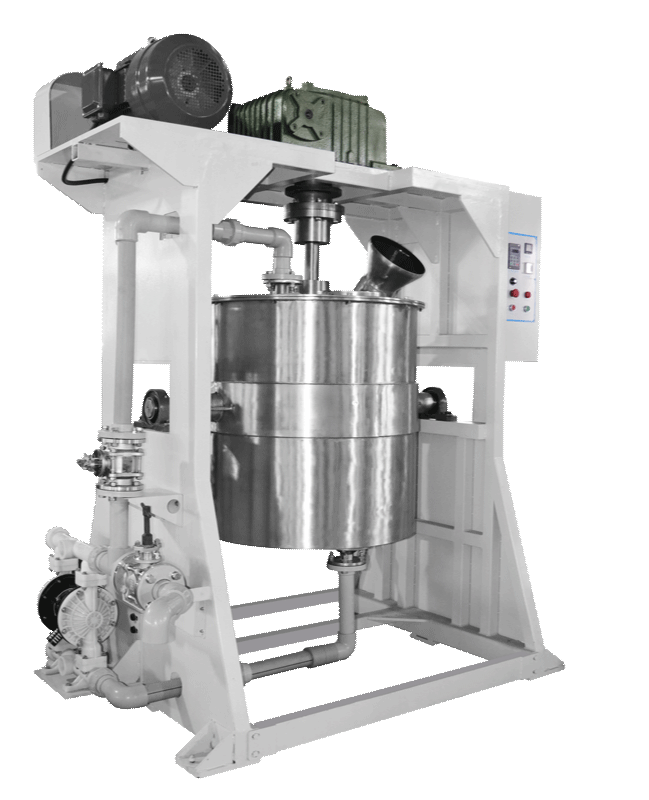
Key Components and Design Variations
Although the basic concept is consistent, production stirred ball mills come in several configurations to suit different industries and material properties.
Vertical vs. Horizontal Orientation
Vertical stirred mills (also called tower mills) have a vertical grinding chamber with a screw or spiral agitator. They are often preferred for coarse-to-medium fine grinding and are widely used in mineral processing. Horizontal stirred mills (e.g., horizontal bead mills) have a horizontal chamber with disc or pin agitators, offering higher energy density and better handling of viscous slurries, commonly used in paint, pigment, and chemical industries.
Agitator Types
Different agitator designs optimize the grinding action:
- Disc-type: Multiple perforated discs mounted on a shaft; suitable for medium to high viscosity slurries.
- Pin-type (or rod-pin): Cylindrical pins arranged radially; provides intense shear and is ideal for nano-grinding.
- Screw-type: Helical screw; used in vertical tower mills for low-speed, high-throughput grinding.
Auxiliary Systems
Production mills often include a circulation pump system to maintain continuous slurry flow, ensuring uniform grinding and efficient heat dissipation. The pump can also assist in discharging the finished product. Some units are equipped with a sealed cover for inert gas operation, allowing grinding of reactive powders.
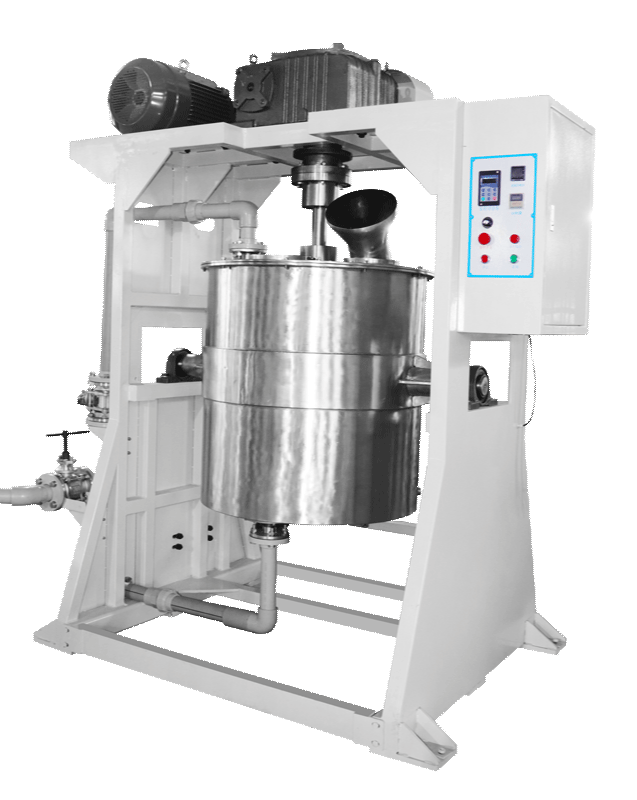
Key Performance Indicators and Selection Criteria
When selecting a production stirred ball mill, buyers should consider the following metrics:
- Throughput Capacity: From tens of kilograms per hour for small production lines to several tons per hour for large mineral processing plants. The effective volume of the grinding chamber (e.g., 50 L, 100 L, 500 L) directly determines the batch or continuous output.
- Final Particle Size: Most production stirred mills can achieve D50 < 1 µm, and some can reach < 100 nm with appropriate media and process optimization. The fineness depends on the energy input, media size, and residence time.
- Energy Efficiency: Stirred mills are known to be 30–50% more energy-efficient than conventional ball mills for fine grinding, thanks to the direct energy transfer from the agitator to the media.
- Automation and Control: Modern production mills feature touch-screen PLC controls, variable frequency drives, and real-time monitoring of temperature, power, and flow rate. This allows reproducibility and easy scale-up.
- Wear Resistance: The grinding chamber and agitator can be lined with ceramic, polyurethane, rubber, or wear-resistant steel to prevent contamination and extend service life. Media selection (e.g., zirconia, steel, ceramic) also affects product purity and wear.
Application Areas and Selection Advice
Production stirred ball mills are used across a wide range of industries:
- Minerals & Metals: Fine grinding of gold, iron, copper ores, and non-metallic minerals like kaolin, calcium carbonate, talc, and graphite.
- Ceramics & Glass: Ultrafine grinding of zirconia, alumina, silicon carbide, and frits for ceramic glazes.
- Chemicals & Pigments: Dispersion and grinding of paints, inks, dyes, magnetic materials, and battery materials (e.g., cathode powders).
- Pharmaceuticals & Food: Wet grinding of active pharmaceutical ingredients, cocoa, and food additives.
For users scaling up from laboratory research, we recommend starting with a lab stirred ball mill to determine process parameters, then moving to the production model. For applications requiring frequent changeover or cleaning, an electric lifting stirred ball mill offers easy access to the grinding chamber. If space is limited, a lightweight stirred ball mill may be an economical choice for smaller batches.