
What is a Multi Functional Crusher? A Versatile Crushing Equipment for Laboratory and Industrial Size Reduction
What is a Multi Functional Crusher? A Versatile Crushing Equipment for Laboratory and Industrial Size Reduction
At its core, a multi functional crusher is a compact and adaptable size reduction machine used in laboratories, research institutions, and small-scale production lines to process a wide variety of solid materials into smaller, uniform particles. Unlike single-purpose crushers, this equipment is designed to handle multiple crushing mechanisms—such as impact, shearing, grinding, and cutting—within a single unit, making it an ideal solution for users who need to crush different materials with varying hardness, brittleness, or toughness. Whether you are preparing samples for analysis, recycling waste materials, or producing fine powders for further processing, a multi functional crusher offers the flexibility to tackle diverse applications efficiently.
Core Functions and Working Principle
The primary function of a multi functional crusher is to convert coarse or bulky materials into smaller, more manageable particles. The working principle depends on the specific crushing mechanism selected. Typically, the machine features a rotating rotor or hammer assembly that interacts with a stationary or adjustable screen or anvil. Material is fed into the crushing chamber, where it is subjected to high-speed impacts, shear forces, or compression, breaking it down until it passes through a screen of desired mesh size. The versatility of the machine lies in its ability to quickly change the rotor configuration, screen opening, and operating speed to suit different material characteristics. For example, brittle materials like glass or ceramics are best crushed by impact, while tough or fibrous materials like rubber or wood require shearing or cutting actions. Key process parameters include rotor speed, feed rate, and screen aperture, which directly influence the final particle size distribution and throughput. The multi functional crusher thus acts as a one-stop solution for laboratories and small production units that need to switch between materials frequently without investing in multiple dedicated machines.
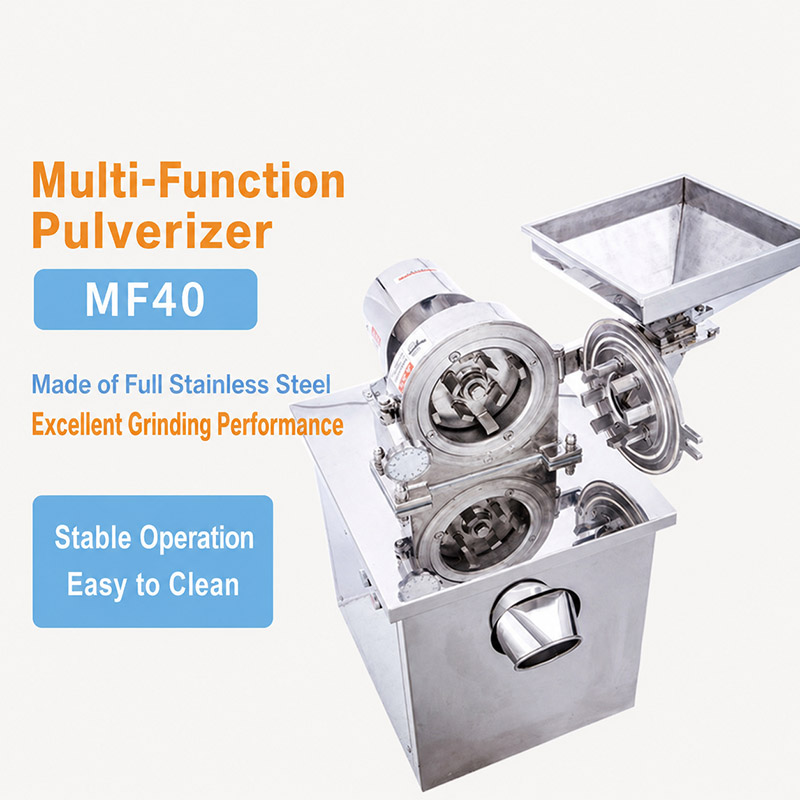
Core Components and Key Technologies
Although the multi functional crusher is a single machine, it incorporates several key components that enable its multi-functional capability. The crushing chamber is typically made of durable stainless steel to resist wear and corrosion, especially when processing abrasive or corrosive materials. The rotor assembly may include interchangeable hammers, blades, or cutting teeth that can be swapped out to alter the crushing mechanism. A variable speed drive allows the operator to adjust the rotor speed from low to high, accommodating materials that require gentle disintegration or aggressive pulverization. The screen or sieve system is another critical component; different screen sizes can be easily installed to control the maximum particle size of the output. Additionally, many models feature a dust-tight design or a dust collection port to maintain a clean working environment, which is particularly important in laboratory settings. Some advanced multi functional crushers also offer a reversible rotor direction to extend the life of the cutting edges and improve crushing uniformity. Understanding these components helps users anticipate maintenance needs and optimize the machine for specific applications.
Key Performance Indicators and Selection Criteria
When selecting a multi functional crusher, several performance indicators should be evaluated to ensure it meets your specific requirements. The first is throughput capacity, which is usually expressed in kilograms per hour (kg/h) and depends on the material type, desired particle size, and rotor speed. For laboratory use, capacities ranging from 5 to 50 kg/h are common, while small-scale production units may handle up to 200 kg/h. The second indicator is the final particle size range, which can vary from coarse chunks (several millimeters) to fine powders (down to 100 microns or less) depending on the screen selected. The third is the ability to handle different material hardness—look for models that specify the maximum Mohs hardness they can crush. Energy efficiency is also important; a multi functional crusher with a high-efficiency motor and optimized rotor design can reduce power consumption compared to using multiple single-purpose crushers. Ease of cleaning and maintenance, particularly the ability to quickly disassemble the crushing chamber and change screens without tools, is a critical factor for laboratories that process multiple materials in sequence. Automation features such as feed rate control, overload protection, and digital display of operating parameters add convenience and reproducibility. Finally, consider the noise level and dust emission, as these can affect the working environment. Many modern multi functional crushers are designed to operate quietly and incorporate dust seals or vacuum ports to meet laboratory cleanliness standards.
Applications and Selection Recommendations
Multi functional crushers are widely used in various industries and research fields. In the pharmaceutical industry, they are used to crush herbal medicines, tablets, and chemical intermediates for sample preparation or formulation development. In the food industry, they grind spices, grains, and dried fruits into powders. In materials science and mining, they break down ores, rocks, ceramics, and composites for analysis. Environmental laboratories use them to shred plastic, rubber, and electronic waste for recycling or testing. For users who primarily process hard, brittle materials (e.g., minerals, glass), a model with a heavy-duty impact rotor and high-torque motor is recommended. For those handling fibrous or rubbery materials, a crusher with sharp cutting blades and a larger screen area is more suitable. If you need to process a wide variety of materials frequently, choose a machine with quick-change rotor and screen systems and a dust-sealed chamber. For more information on related crushing equipment, please explore the Double Roll Crusher and Lab Jaw Crusher pages, which offer complementary solutions for specific crushing needs.
References
- Multi functional crusher product page: https://www.labballmill.com/products/broken-series/multi-functional-crusher.html