What is an Electric Lifting Stirred Ball Mill? An Advanced Grinding Equipment for Ultra-Fine Wet and Dry Grinding
Introduction
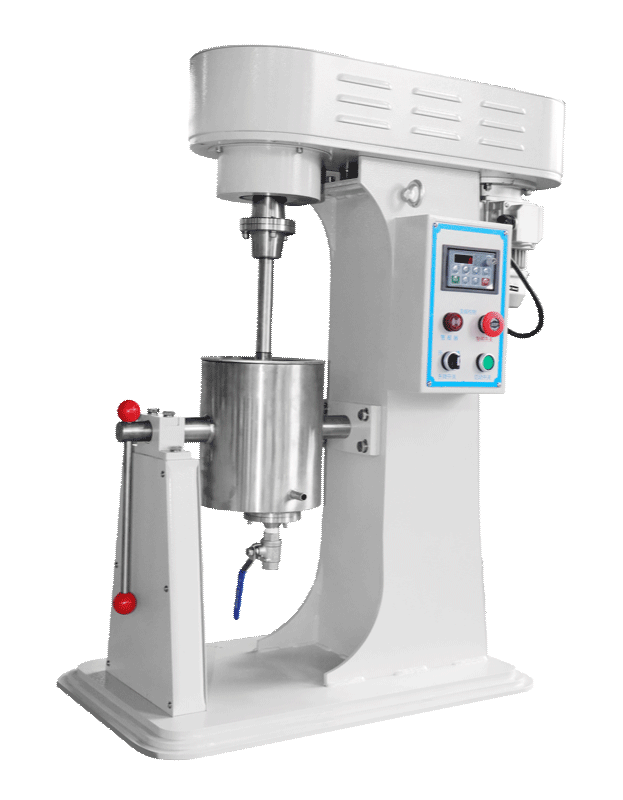
At its core, an electric lifting stirred ball mill is a specialized grinding and dispersing equipment used in laboratories and small-scale production lines to achieve ultra-fine particle sizes down to the nanometer range. It combines the energy-efficient stirring mechanism with an electric lifting system that allows easy access to the grinding chamber for cleaning, media replacement, and sample handling. This mill is widely applied in advanced materials research, ceramics, paints, pharmaceuticals, and battery materials.
Core Function and Working Principle
The electric lifting stirred ball mill transforms coarse powder or slurry into a homogeneous, ultra-fine suspension through intense mechanical agitation. Unlike traditional ball mills that rely on tumbling motion, stirred mills use a rotating agitator shaft with discs or arms to impart high-speed motion to the grinding media (e.g., 0.1–3 mm zirconia or steel beads). The media collide with the feed particles, generating shear, impact, and attrition forces that break down agglomerates and reduce primary particle size.
Key process parameters include agitator speed (typically 500–3000 rpm), media size and filling ratio, residence time, and solid concentration. Higher speed and smaller media yield finer particles but increase energy consumption. The electric lifting system, driven by a motorized screw, raises the entire grinding chamber above the base, allowing the operator to easily remove the lid, inspect the agitator, or replace the grinding media without manual lifting, thus improving safety and ergonomics.
Key Components and Technology
The mill consists of a stationary grinding chamber (often made of stainless steel, ceramic, or polyurethane-lined), a high-torque motor driving the agitator shaft, and a control panel for speed and timer settings. The electric lifting mechanism is integrated into the frame, providing smooth vertical movement of the chamber. A cooling jacket around the chamber prevents overheating during prolonged runs. The grinding media are retained by a gap separator or screen at the outlet, allowing the product to discharge while keeping the beads inside.
Advanced models may include programmable touchscreen interfaces, temperature sensors, and automatic shut-off features. The electric lifting system is particularly beneficial for wet grinding processes where the slurry is viscous or the chamber is heavy, making manual handling impractical.
Key Performance Indicators and Selection Criteria
When selecting an electric lifting stirred ball mill, consider the following:
- Processing Capacity: Laboratory models range from 0.5 L to 10 L, while production units can handle larger volumes. For R&D, a 1–2 L capacity is typical.
- Grinding Fineness: Achievable D50 from 1 μm down to 50 nm. The required particle size dictates media size, speed, and energy input.
- Material Compatibility: Chamber and agitator materials must withstand chemical corrosion and abrasion. Options include stainless steel, nylon, PU, and ceramic.
- Energy Efficiency: Stirred mills are more energy-efficient than conventional ball mills for fine grinding, but specific energy consumption varies with feed material and target fineness.
- Automation and Control: Digital speed control, timer, and safety interlocks enhance reproducibility and ease of use.
- Maintenance: The electric lifting feature simplifies cleaning and media replacement, reducing downtime.
Applications and Selection Advice
Electric lifting stirred ball mills are used in:
- Battery Material Research: Grinding and dispersing cathode/anode powders (e.g., LiCoO₂, graphite).
- Ceramic and Glaze Production: Achieving uniform fine particle distribution for sintering.
- Pigment and Ink Manufacturing: Deagglomeration and color development.
- Pharmaceutical and Cosmetic Formulations: Nano-suspensions and emulsions.
- Food and Chemical Industries: Fine grinding of spices, minerals, and polymers.
For laboratories focusing on R&D, the lab stirred ball mill is a cost-effective choice. For high-volume production, consider the production type stirred ball mill. If portability is a priority, the lightweight stirred ball mill offers a compact solution.
References
- Electric lifting stirred ball mill product page: https://www.labballmill.com/products/grinding-series/stirring-ball-mill/electric-lifting-stirred-ball-mill.html
- Lab stirred ball mill: https://www.labballmill.com/products/grinding-series/stirring-ball-mill/lab-stirred-ball-mill.html
- Lightweight stirred ball mill: https://www.labballmill.com/products/grinding-series/stirring-ball-mill/lightweight-stirred-ball-mill.html
- Production type stirred ball mill: https://www.labballmill.com/products/grinding-series/stirring-ball-mill/production-type-stirred-ball-mill.html