
What is a Continuous Planetary Ball Mill? A High-Efficiency Grinding Equipment for Continuous Production of Fine Powders
What is a Continuous Planetary Ball Mill?
At its core, a continuous planetary ball mill is a specialized grinding equipment designed for uninterrupted, high-throughput size reduction of solid materials. Unlike batch-type planetary ball mills that require stopping to load and unload materials, the continuous version allows for simultaneous feeding and discharging, making it ideal for industrial-scale production of fine and ultra-fine powders. It combines the high-energy planetary motion principle with a continuous material flow system, enabling efficient and consistent grinding over extended periods.
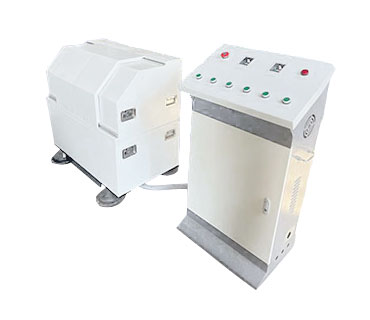
Core Function & Working Principle
The continuous planetary ball mill transforms coarse feed materials into fine powders through a three-dimensional planetary motion. The main rotating disk (sun wheel) carries several grinding jars (planetary jars) that rotate simultaneously around their own axes while orbiting the center. This creates powerful centrifugal and Coriolis forces, causing the grinding media (balls) within the jars to impact, shear, and frictionally grind the material continuously.
In the continuous design, the mill is equipped with a feeding system (e.g., screw feeder or peristaltic pump) that introduces raw material into the grinding chamber at a controlled rate. Simultaneously, a discharging mechanism (such as a screen or centrifugal classifier) allows ground product to exit while retaining the grinding media. This dynamic balance enables unattended, long-duration operation, significantly increasing throughput compared to batch mills.
Key process parameters include rotational speed (sun wheel and jar rotation ratio), feed rate, grinding media size and material, and residence time. These parameters directly influence the final particle size distribution, which can reach submicron or even nanometer levels with proper optimization.
Key Features & Structural Differences
Compared to standard batch planetary ball mills, the continuous version incorporates several critical design elements:
- Sealed continuous feeding system: Pneumatic or screw feeders ensure material enters without interrupting the grinding process, often with inert gas protection for oxidation-sensitive materials.
- Dynamic classification mechanism: A built-in classifier (e.g., sieve or air classifier) separates fine particles from coarse ones, returning oversize material for further grinding.
- Enhanced cooling system: Continuous operation generates heat; water jackets or forced air cooling maintain stable temperature to protect heat-sensitive materials.
- Automated control: Touch-screen PLC control allows real-time monitoring of speed, feed rate, temperature, and product quality, with data logging for process optimization.
Key Performance Indicators & Selection Guide
When selecting a continuous planetary ball mill, consider the following metrics:
- Throughput capacity: Typically expressed in kg/h or L/h, depending on material density and target fineness. For example, models from TENCAN offer capacities ranging from 0.5 L/h to dozens of L/h.
- Final particle size: Assess the minimum achievable d50 (median particle size). High-end mills can reach <100 nm with appropriate media and parameters.
- Energy efficiency: Compare specific energy consumption (kWh/kg) for your material. Continuous mills often have lower specific energy due to optimized media motion and reduced idle time.
- Material compatibility: Ensure the jar and media materials (stainless steel, zirconia, agate, etc.) are chemically compatible with your product and do not cause contamination.
- Automation & maintenance: Look for features like easy-clean designs, quick-change jars, and remote diagnostics to minimize downtime.
Applications & Recommendations
Continuous planetary ball mills are widely used in industries such as advanced ceramics, battery materials, pigments, pharmaceuticals, chemicals, and minerals. They are particularly suitable for mass production of nanomaterials, electrode materials for lithium-ion batteries, and high-purity fine powders.
For small-scale R&D or pilot production, a continuous planetary ball mill with a capacity of 0.5–2 L/h is ideal. For industrial-scale manufacturing, larger models with multiple jars and robust feeding systems are recommended. Always consult with the manufacturer to tailor the mill configuration to your specific material properties and production goals.
References
- Continuous planetary ball mill product page – TENCAN official website
- Planetary ball mill (semi-circular model) – Related product series